
980th Anniversary of Huang Tingjian's Birth: A Gathering of Elegant Scholars Among Ancient Books and Calligraphy
Huang Tingjian (1045-1105), courtesy name Luzhi, sobriquet Shangu Daoren, was a native of Xiushui, Jiangxi Province. He was a giant in the literary and calligraphic circles of the Northern Song Dynasty and the founder of the Jiangxi School of Poetry. Historically, he is often mentioned alongside Su Shi as "Su-Huang." The Paper has learned that this year marks the 980th anniversary of Huang Tingjian's birth. The "Shangu Gathering—A Special Exhibition Commemorating the 980th Anniversary of Huang Tingjian's Birth" will open to the public at the Jiangxi Provincial Museum on December 16th. The exhibition, in collaboration with 15 cultural and museum institutions, displays 85 pieces (sets) of cultural relics, including paintings, calligraphy, ancient books, inscriptions, and rubbings. Among them are 14 sets of first-class cultural relics, making it the largest exhibition in mainland China to showcase Huang Tingjian's calligraphy and calligraphic styles in one go.
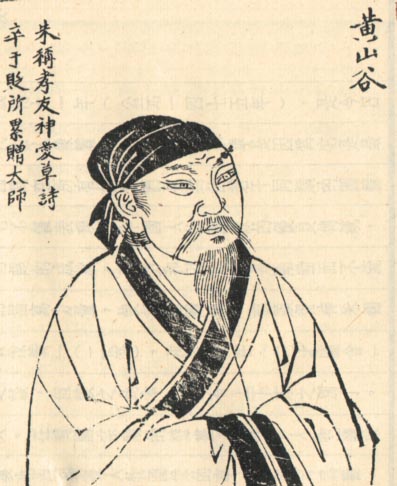
Portrait of Huang Tingjian in classical texts
Huang Tingjian (1045-1105), courtesy name Luzhi, sobriquet Shangu Daoren, commonly known as "Huang Shangu," was a poet of the Northern Song Dynasty. He, along with Zhang Lei, Chao Buzhi, and Qin Guan, studied under Su Shi and were known as the "Four Scholars of Su Shi's School," founding the Jiangxi School of Poetry. Huang Tingjian's life was marked by hardship and setbacks in his official career, much like Su Dongpo, and he was deeply devoted to Buddhism and Taoism. The *History of the Song Dynasty, Biographies of Literary Figures* states that "Tingjian's learning and writing were naturally gifted." Regarding calligraphy, he himself said, "I studied cursive script for over thirty years, initially learning from Zhou Yue, so for twenty years I couldn't shake off the vulgarity. Later, I saw the calligraphy of Su Caiweng (Shunqin) Zimei and finally grasped the essence of the ancients' brushwork. Afterwards, I obtained the calligraphy of Zhang Changshi, Huaisu, and Gao Xian, and thus glimpsed the wonders of brushwork."
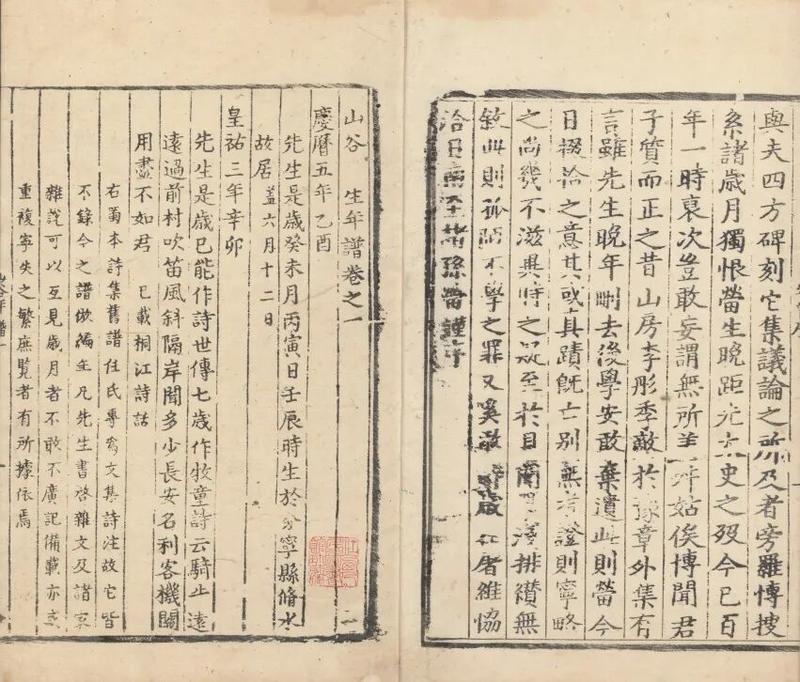
The "Chronological Biography of Mr. Shangu" compiled by Huang Yi of the Song Dynasty, was reprinted by Qiao Qian and Yu Zaishi in 1527 (the sixth year of the Jiajing reign of the Ming Dynasty) by Ye Tianjue during the Hongzhi reign of the Ming Dynasty.
The exhibition opens with the profound question, "To whom shall I turn?", drawing viewers into the first thirty years of Huang Tingjian's life. A revised edition of "Chronological Biography of Mr. Huang Tingjian," published in 1527 (the sixth year of the Jiajing reign of the Ming Dynasty), though its pages are yellowed, clearly outlines the early life trajectory of this great Song Dynasty cultural figure.
From his rural childhood in Fenning, Hongzhou (present-day Xiushui, Jiangxi), where he was deeply influenced by his scholarly family, to his extensive travels and broad learning during his youth, and finally to his entry into officialdom as a local official in his prime, the organizers revealed through his chronology and related documents that Huang Tingjian underwent an inner transformation from "debonair and dashing" to "mature and steady" during this period.
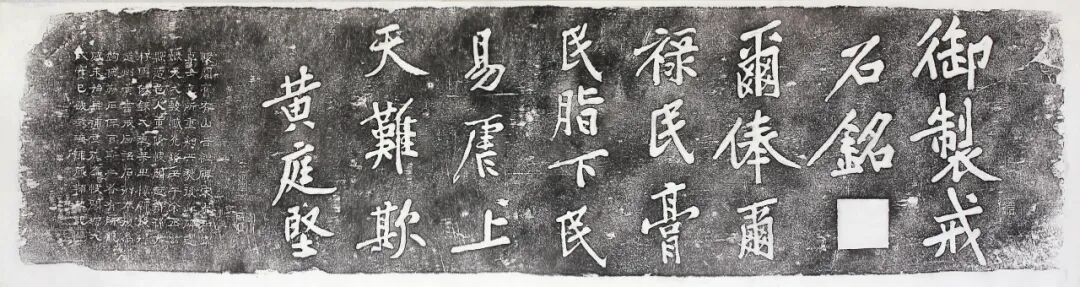
The inscription on the Imperial Admonition Stone Stele, written by Huang Tingjian of the Song Dynasty, was copied during the Guangxu reign of the Qing Dynasty.
A Qing dynasty Guangxu-era replica of the Imperial Admonition Stone Inscription, though not an original from the Song dynasty, accurately points to Huang Tingjian's core principles in his early official career. The inscription's admonition, "Your salary and emoluments are the people's blood and sweat," is a direct reflection of his Confucian ideals of serving the world and his spirit of integrity and self-discipline.
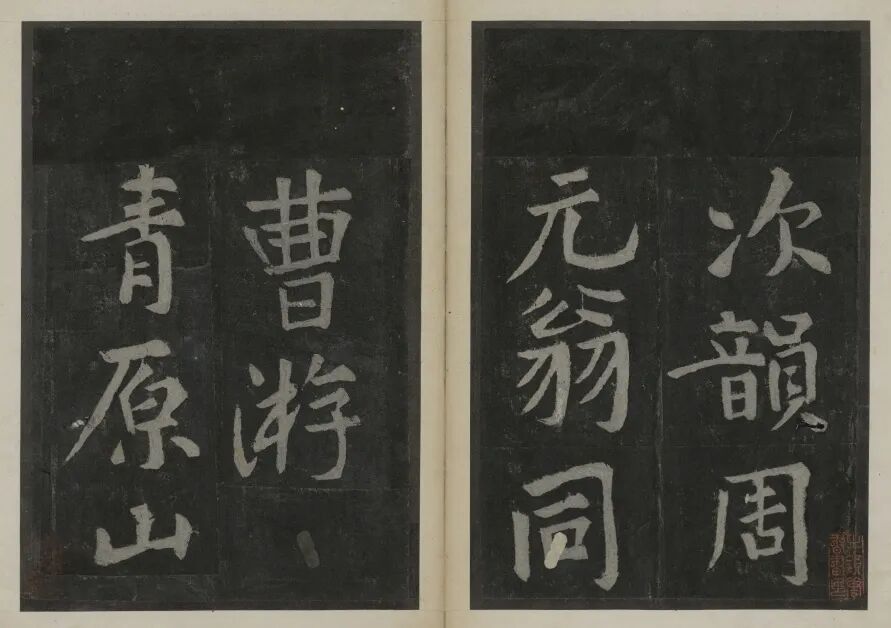
Rubbing of the poem "Visiting Qingyuan Mountain Temple" by Huang Tingjian of the Song Dynasty (Ming Dynasty)
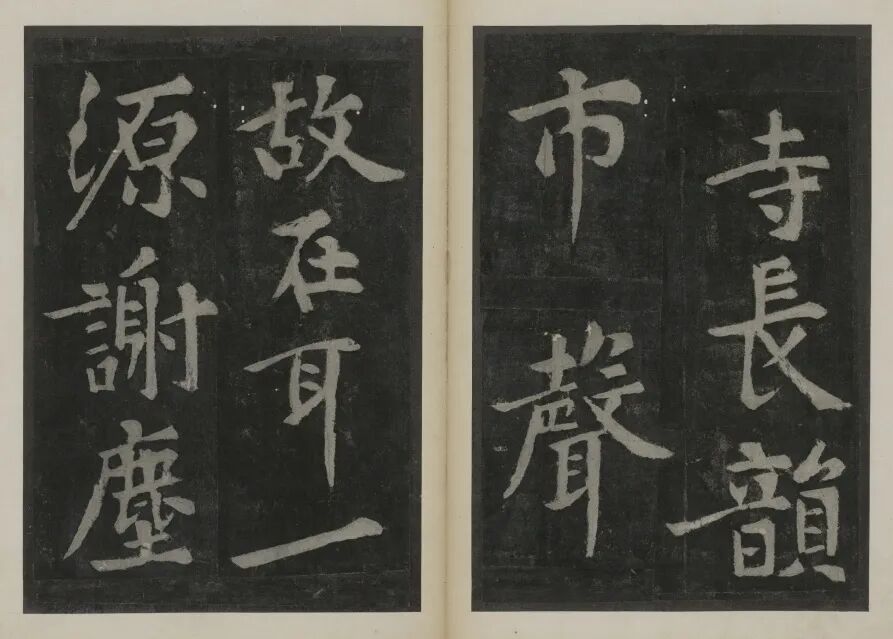
Rubbing of the poem "Visiting Qingyuan Mountain Temple" by Huang Tingjian of the Song Dynasty (Ming Dynasty)
One of the exhibits, a Ming Dynasty rubbing of the poem "Visiting Qingyuan Mountain Temple," is a highly information-dense artifact. Like a multifaceted prism, it reflects Huang Tingjian's early life in multiple dimensions, including thought, literature, and calligraphy. It serves as a valuable starting point for understanding how he transformed from a local official and scholar into a master of his generation. The poem's full title is "Following the Rhyme of Zhou Facao's Visit to Qingyuan Mountain Temple," written during Huang Tingjian's tenure as magistrate of Taihe County, Jiangxi (around 1083 AD). It is a response to his friend Zhou Yuanweng's poem about visiting the temple. Yuanweng is Zhou Shou, the son of the great Song Dynasty Confucian scholar Zhou Dunyi.
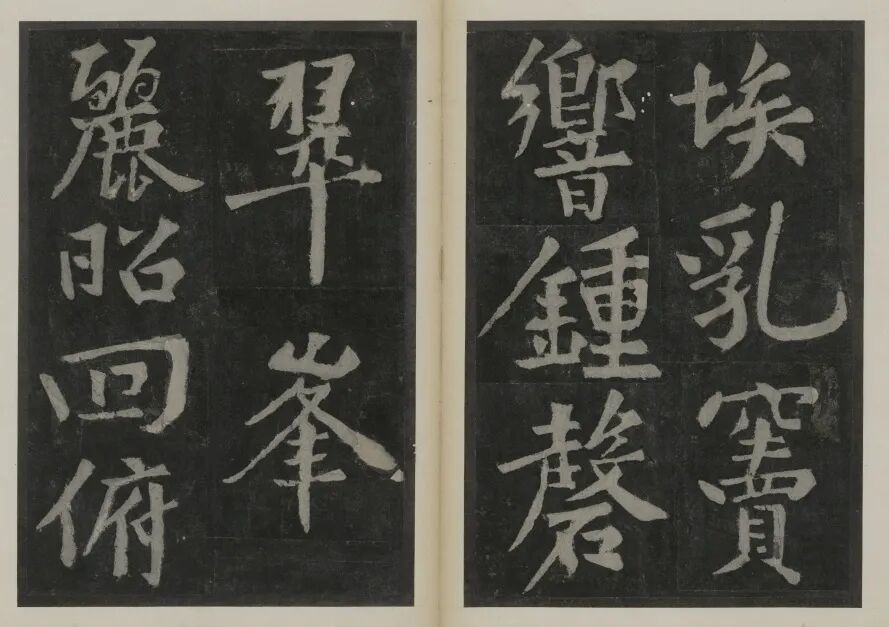
Rubbing of the poem "Visiting Qingyuan Mountain Temple" by Huang Tingjian of the Song Dynasty (Ming Dynasty)
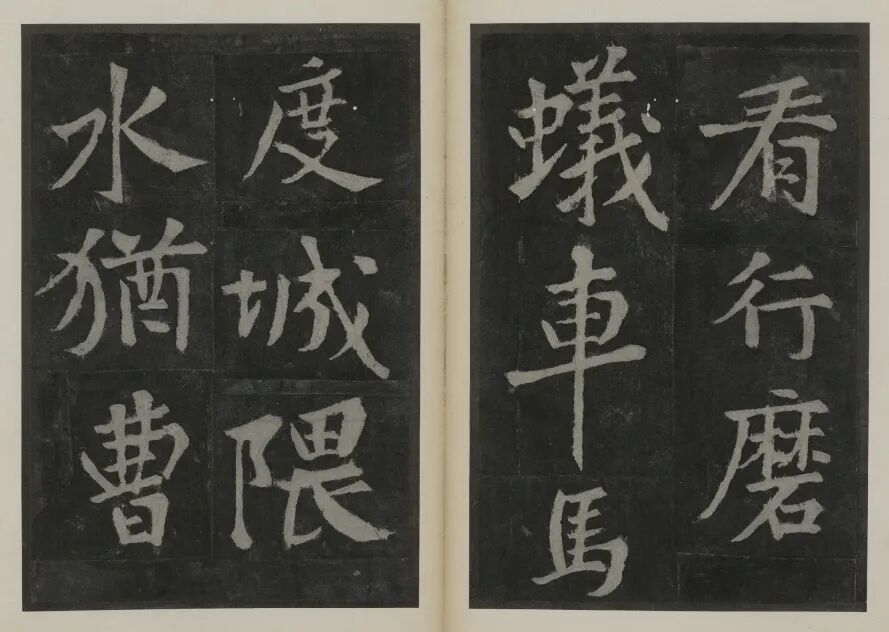
Rubbing of the poem "Visiting Qingyuan Mountain Temple" by Huang Tingjian of the Song Dynasty (Ming Dynasty)
For Huang Tingjian, Su Shi, who was eight years his senior, was not only a literary master but also a guiding light in his spirit. Huang Tingjian took Su Shi as his model but forged a completely different path. His poetic theories of "turning iron into gold" and "rebirth" emphasized creative transformation based on a thorough study of predecessors, which in itself was a literary proposition that demonstrated a strong scholarly awareness and self-confidence.
In 1085, the eighth year of the Yuanfeng era of the Song Dynasty, with the death of Emperor Shenzong, the young ascension of Emperor Zhezong, and the reign of Empress Dowager Xuanren, the "Yuanyou Reform" began, and the political climate shifted. A group of prominent figures from the Yuanyou era, including Huang Tingjian and Su Shi, were summoned back to Bianjing (Kaifeng). The second section of this exhibition will recreate that rare golden age of culture in Chinese history in a highly immersive way.
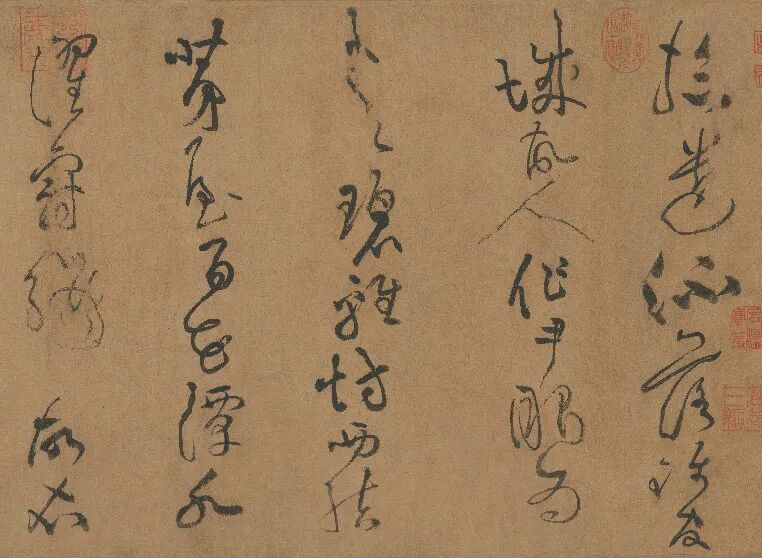
A partial view of the inscription on the scroll depicting the Huanhua Stream in cursive script by Huang Tingjian of the Song Dynasty.
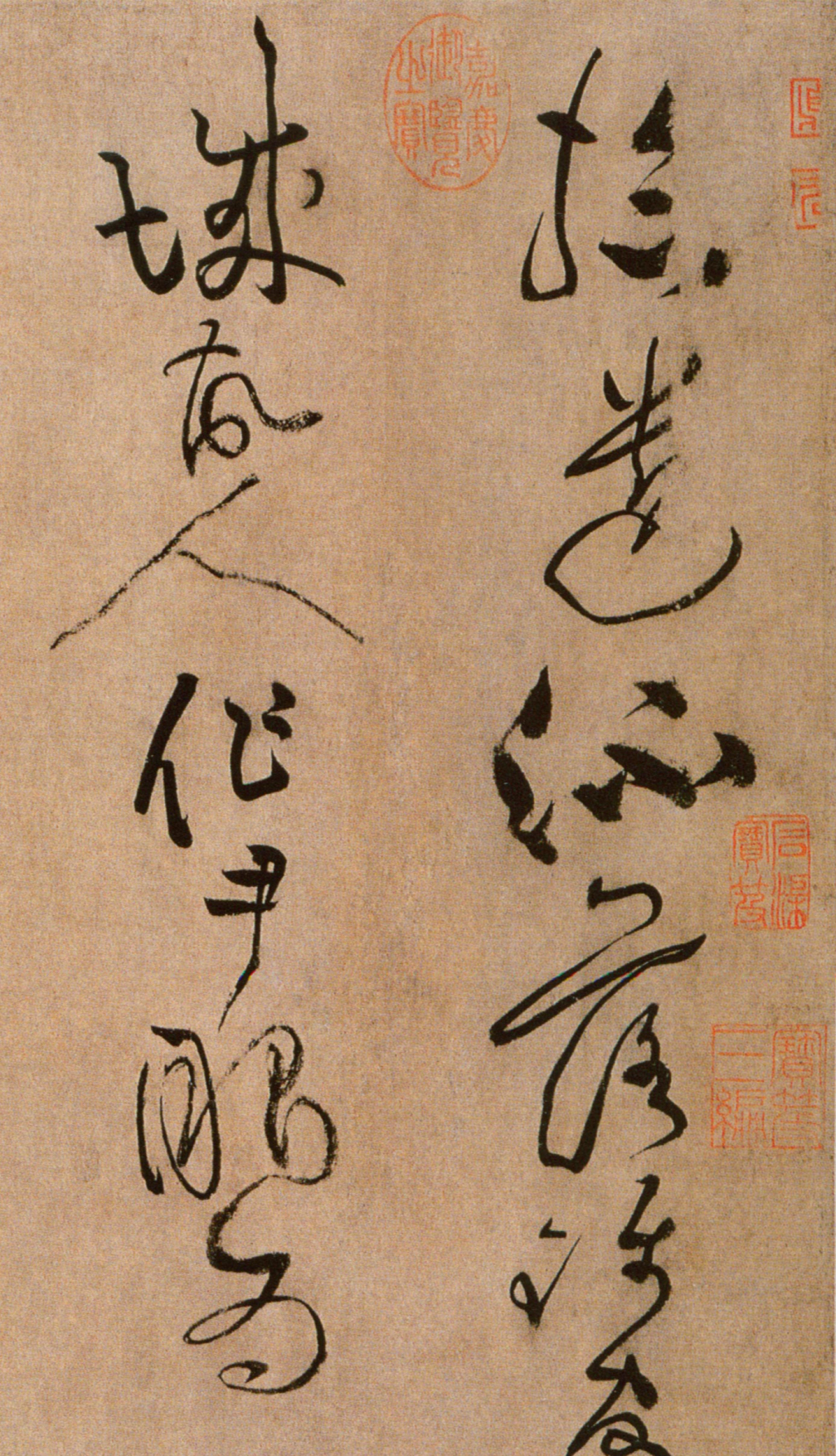
A partial view of the inscription on the scroll depicting the Huanhua Stream in cursive script by Huang Tingjian of the Song Dynasty.
According to exhibition materials released by the Jiangxi Provincial Museum, the visual impact of this section primarily comes from its exquisite calligraphy and paintings. Huang Tingjian's "Introduction to the Painting of Huanhua Creek in Cursive Script" is undoubtedly the focal point. This calligraphic work is housed in the Palace Museum, and the poem is included in "Shangu Waiji" (Collected Works of Huang Tingjian). It was written in the third year of the Yuan You era of the Northern Song Dynasty (1088), when Huang Tingjian was 42 years old. The work is characterized by its mature and vigorous brushwork, bold and unrestrained strokes, undulating lines, and continuous momentum, like the Yangtze River. Its structure is uniquely rugged and perilous, yet it achieves a delicate balance within its dynamism.
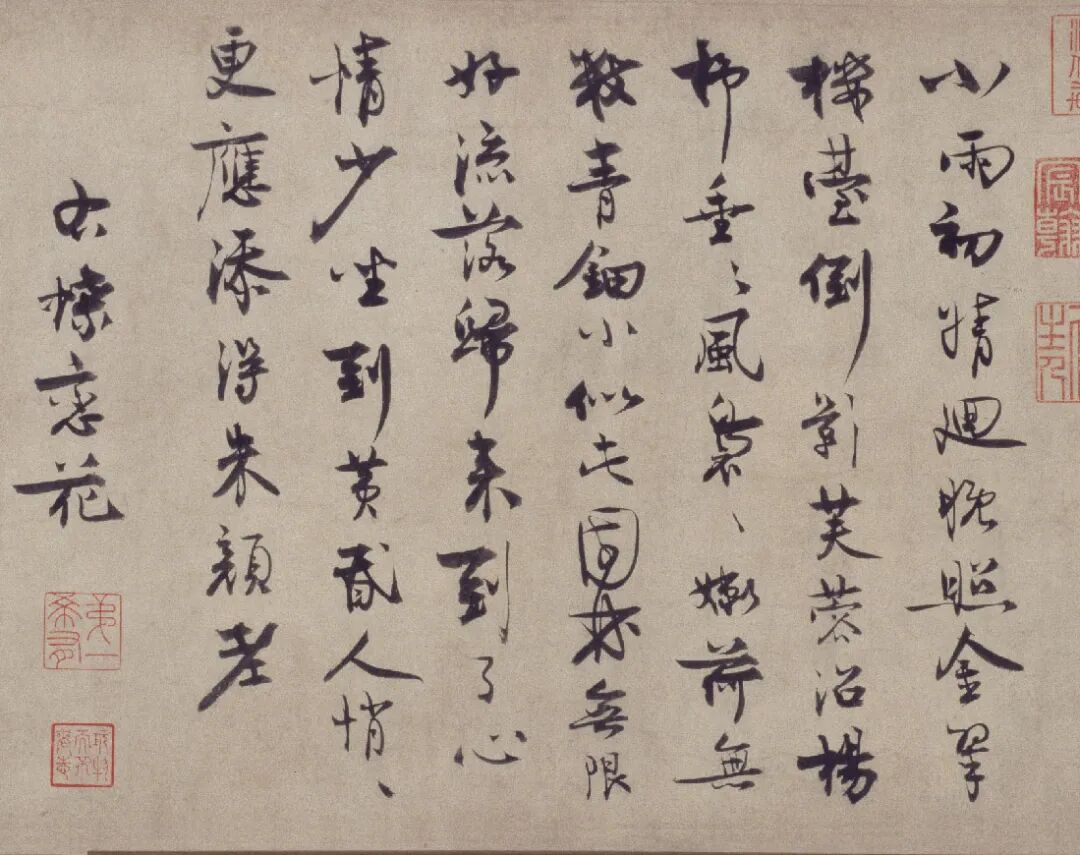
A partial scroll of poems and lyrics written in running-cursive script by Wang Shen of the Song Dynasty.
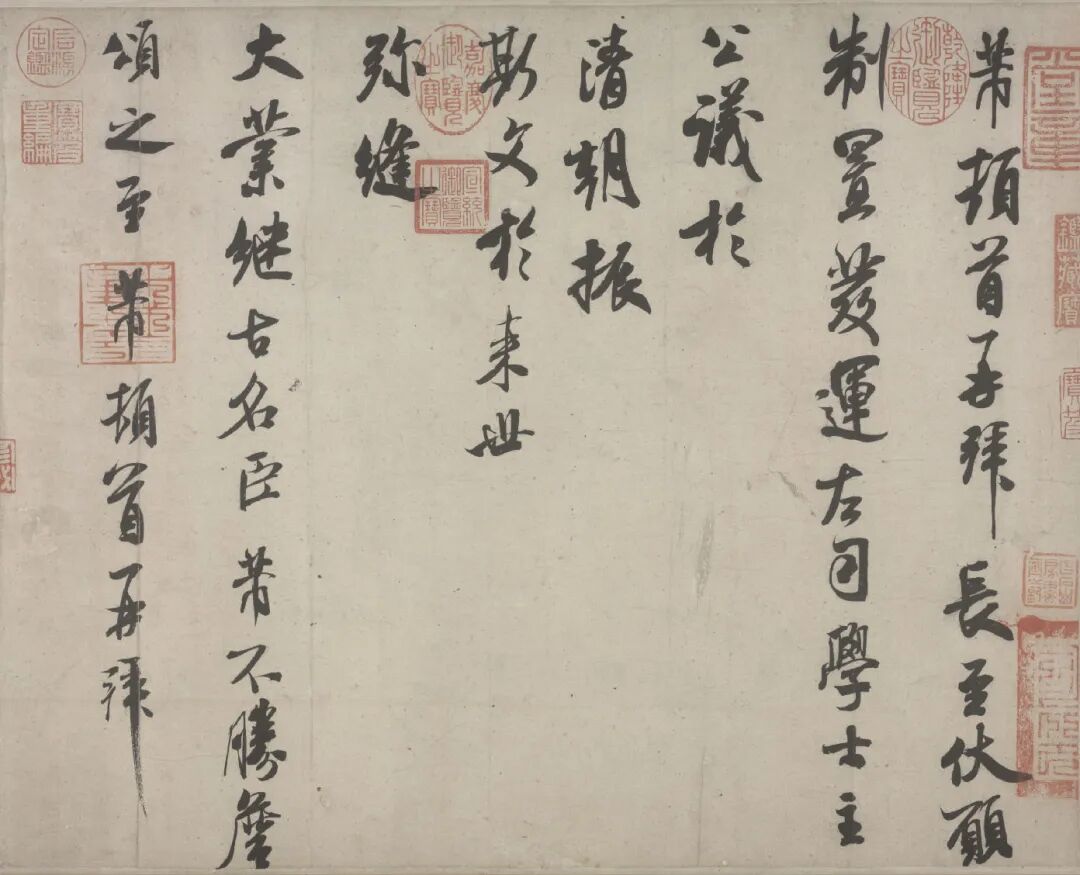
A partial scroll of three letters in running script by Mi Fu of the Song Dynasty.
In addition, Wang Shen, a prince consort and painter of the Northern Song Dynasty, is exhibiting his "Running-Cursive Script of Self-Written Poems" alongside Mi Fu, one of the "Four Masters of the Song Dynasty," in "Running Script of Three Letters." The three scrolls of calligraphy and painting complement each other, instantly transporting viewers to the scene of a literary gathering in Bianjing (Kaifeng) in those days: they appreciated calligraphy and painting, composed poems and exchanged verses, and admired ancient artifacts. Through the collision of ideas and the resonance of emotions, they jointly shaped the aesthetic peak of an era.
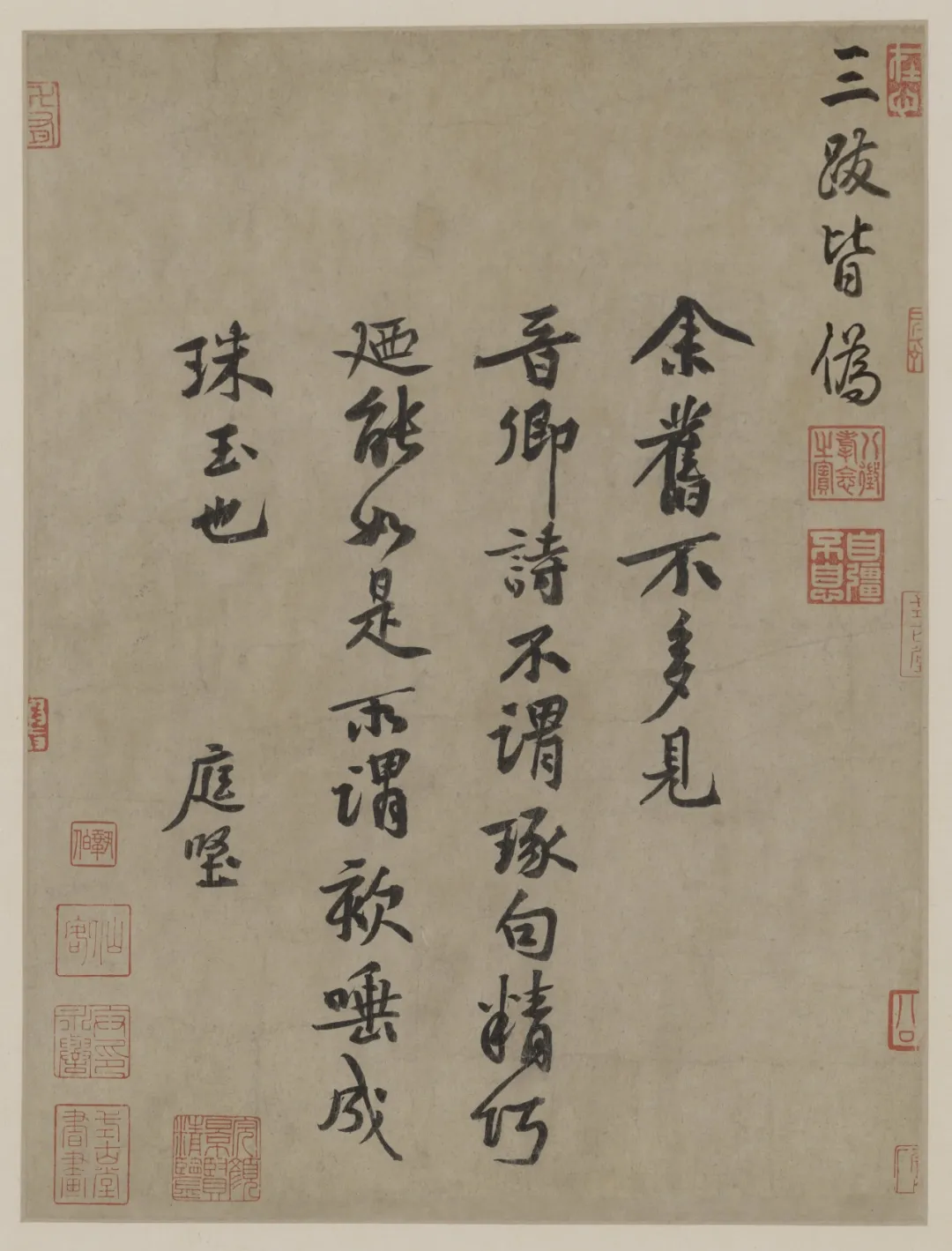
Huang Tingjian wrote a postscript for Wang Shen's self-written poetry scroll.
In the first year of the Yuan You era (1086), both Huang Tingjian and Su Shi wrote postscripts for Wang Shen's self-written poetry scroll, revealing their sincere admiration for Wang Shen's poetic sentiments. This work is a rare example of Huang Tingjian's early running-regular script. Overall, it is quite regular and upright, almost devoid of the slant, verticality, and dynamism found in his other works. However, upon closer inspection, it is not difficult to see the distinctive characteristics of Huang's calligraphy: a tight structure, a compact central area, close spacing between characters, and ample space between lines.
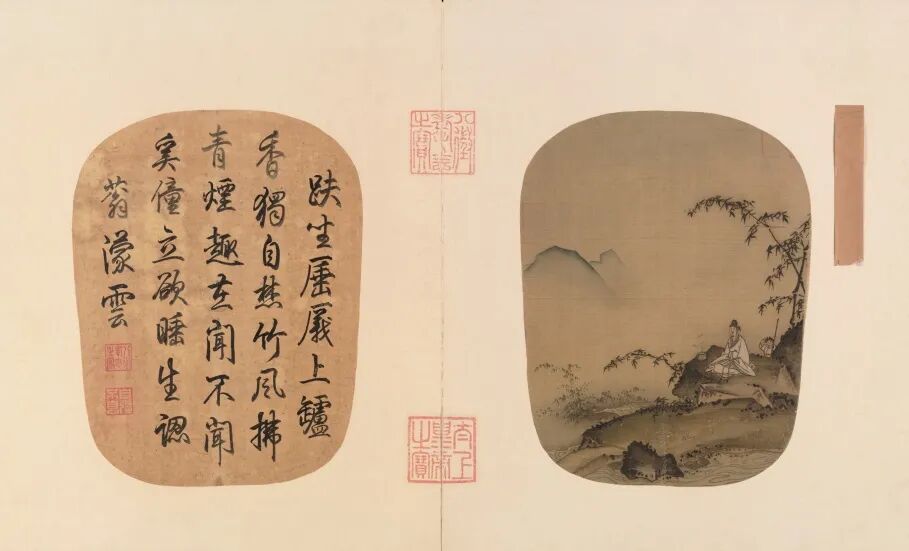
Incense burning pages in bamboo groves during the Song Dynasty
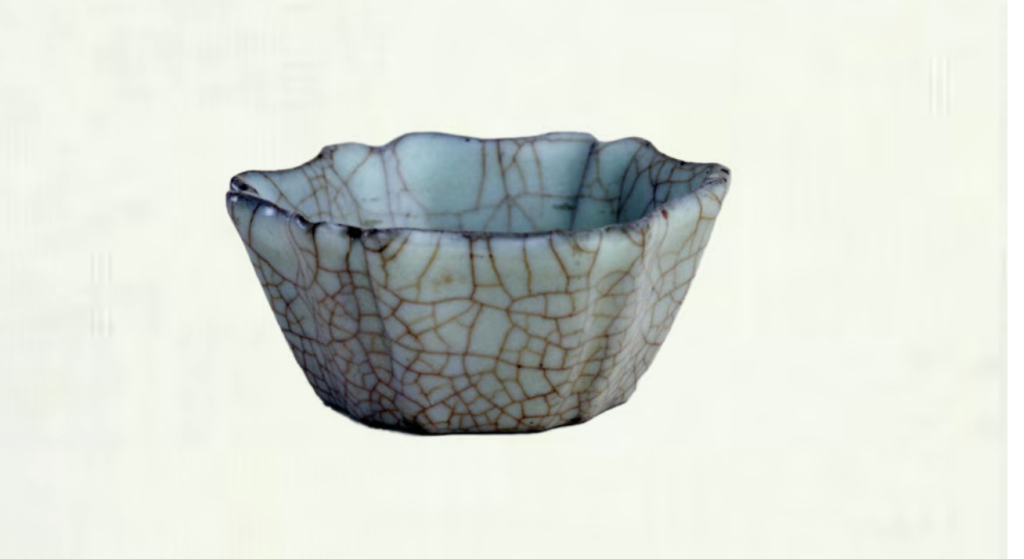
Song Dynasty official kiln celadon lobed washer
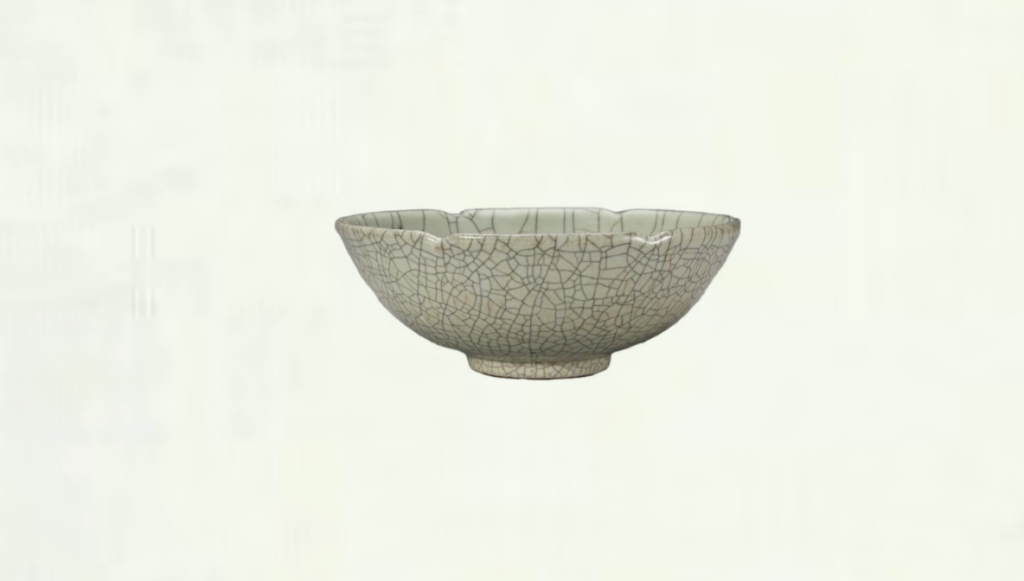
Song Dynasty Ge Ware Celadon Flower-Shaped Bowl
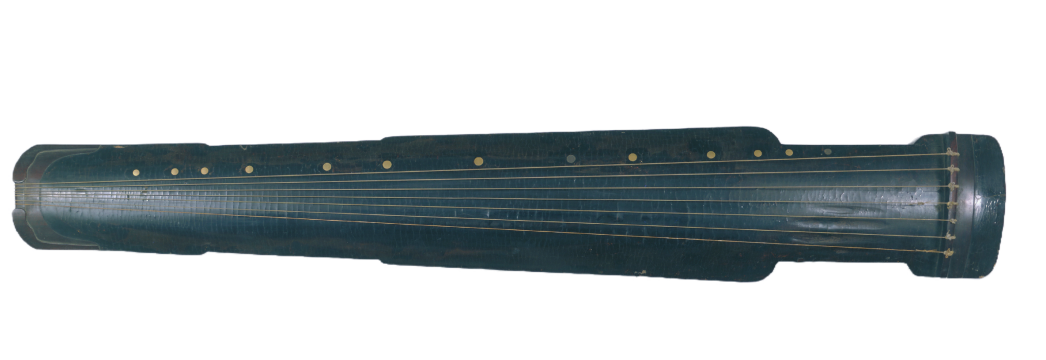
Song Linglong Yuqin
In addition to calligraphy and paintings, the exhibition will feature a special collection of exquisite artifacts: from a square ding vessel with animal-face patterns from the Shang Dynasty, to the sky-blue glaze of a Ru ware celadon plate (after rain), the purple rim and iron foot of a Guan ware celadon washer, the gold and iron wire patterns of a Ge ware celadon bowl, the kiln-transformed iridescent colors of a Jun ware sky-blue glazed jar, the lustrous white of a Ding ware white-glazed inkpad box, and a delicate jade zither from the Song Dynasty. These are not Huang Tingjian's works, but together they constitute the aesthetics and spiritual atmosphere of the era in which he immersed himself. The exquisite craftsmanship, classical taste, and elegant lifestyle represented by these artifacts are indispensable material carriers of the spiritual world of the Yuan You literati, allowing viewers to understand how Huang Tingjian's art was nurtured and generated in such a rich and fertile cultural soil.
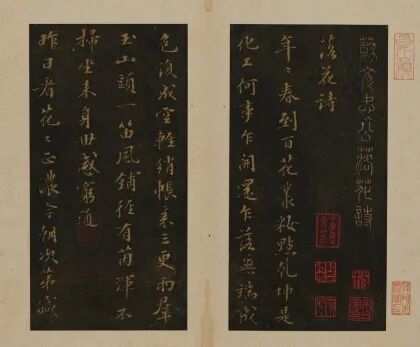
Song Dynasty Su Shi's calligraphy of "Fallen Flowers Poem" - Ming Dynasty rubbing
Within this Yuanyou cultural community, the pairing of "Su Shi and Huang Tingjian" became the most prominent voice of the era. The exhibition will specially present a Ming Dynasty rubbing of Su Shi's "Falling Flowers Poem," creating a stark contrast with Huang Tingjian's cursive script. Su Shi's calligraphy is innocent and unrestrained, flowing like clouds and water, a natural expression of his talent; Huang Tingjian's calligraphy, on the other hand, is rugged and vigorous, adhering strictly to rules, a crystallization of his scholarship and will. Their distinct styles represent the grand landscape of two peaks standing side by side, harmonious yet different, in the Northern Song Dynasty. During this period, Huang Tingjian not only reached the pinnacle of his creative output, but his artistic thought and personal influence also expanded, attracting a group of like-minded literati and laying the foundation for the later "Jiangxi School of Poetry."
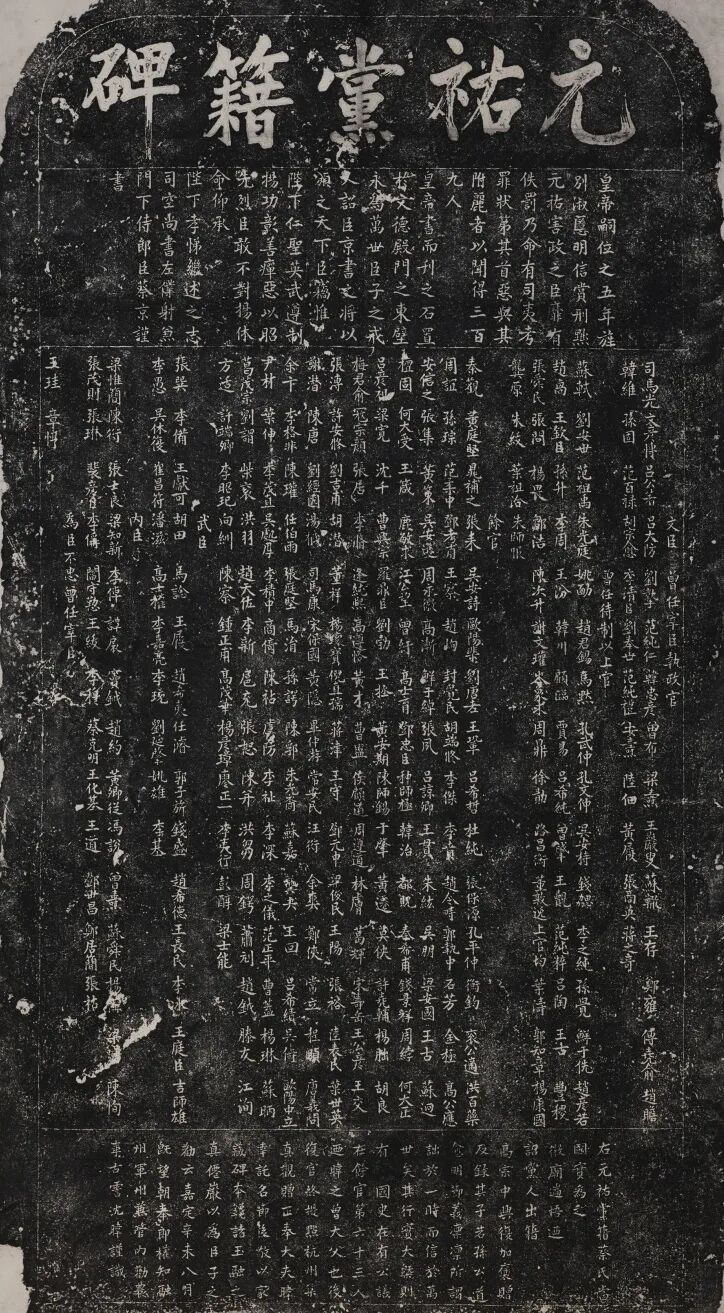
Rubbing of the Yuanyou Party Membership Stele by Cai Jing of the Song Dynasty
In the first year of the Shaosheng era (1094), factional strife reignited, and the New Party regained power, launching a purge of the "Yuanyou Party members." The exhibition opens with a massive rubbing of the "Yuanyou Party Members Stele," beginning its somber yet magnificent final chapter—"Wandering and Singing by Lakes and Seas." Huang Tingjian's name is prominently listed, marking the beginning of his more than ten-year exile that lasted until the end of his life, from Qianzhou (Pengshui, Chongqing) to Rongzhou (Yibin, Sichuan), enduring the dual suffering of political oppression and geographical displacement.
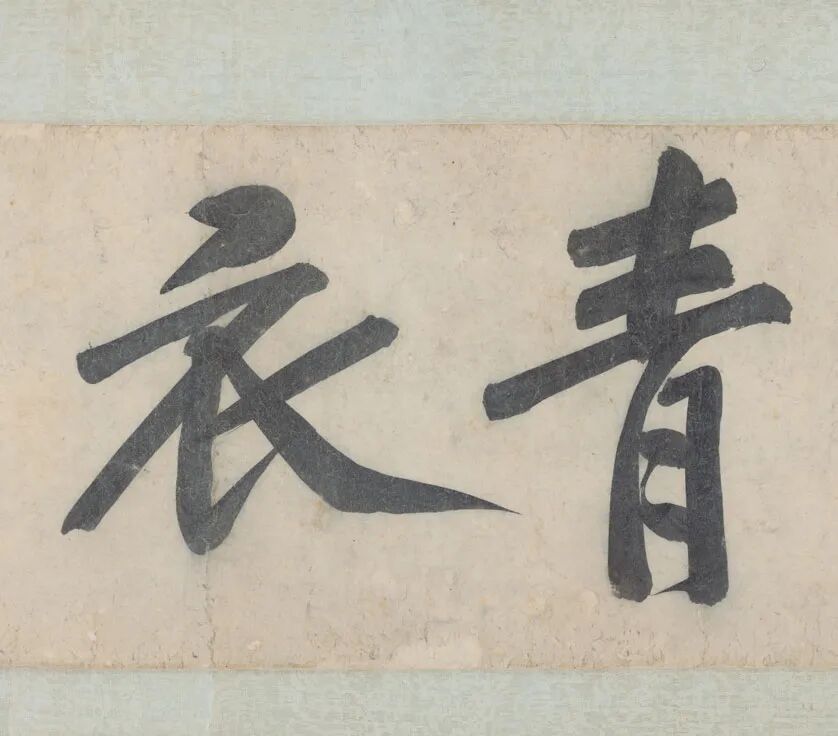
A partial view of Huang Tingjian's running script calligraphy scroll inscribed on the Qingyi River during the Song Dynasty.
The exhibition clearly reveals Huang Tingjian's inner transformation through his authentic calligraphy from his later years. A stark contrast is found between his early works, such as the "Running Script Inscription on the Qingyi River Scroll," and the flamboyant and unconventional style of his middle-aged "Cursive Script Introduction to the Huanhua Creek Scroll." His later brushwork became more subtle, understated, and natural, possessing an inner strength within its composure, truly reaching the realm of "both the man and his calligraphy have matured with age," and "a profound depth within simplicity."
Valley Gathering – A Special Exhibition Commemorating the 980th Anniversary of Huang Tingjian's Birth
Exhibition Dates: December 16, 2025 – March 1, 2026
Exhibition Location: Exhibition Hall 1, First Floor, Jiangxi Provincial Museum
(Some information in this article is from Jiangxi Provincial Museum)

From the "House of Gods" in Yongle Palace, to see the imagery of images, architecture and space
Most of the ancient Chinese buildings are the "overall space" composed of environmental landscape, structural body, additional decoration and auxiliar...

Bada Shanren's giant flower-and-bird painting "Flowers on the River" and other exhibitions in New York
"Flowers on the River" collected by Tianjin Museum is a masterpiece of Bada Shanrenda's freehand flower-and-bird painting. With its strong artisti...

Why is Foguang Temple a Tang Dynasty structure? The "Liang Sicheng and Lin Huiyin Documentary Exhibition" has solid evidence
"Liang Sicheng and Lin Huiyin's Journey of Exploring Ancient Architecture" - A light and shadow story of "Dule Temple". Provided by Quka...