With the ancient sounds of the pottery flute and the clear, resonant notes of the bone flute, the scene of ancient ancestors worshipping the mountains and rivers is recreated. On December 6th, the Dahecun National Archaeological Site Park, carrying 7,000 years of Yangshao culture's civilizational memory, reopened after a renovation. In June of this year, the park was selected as a national archaeological site park, and its reopening marks a new stage in the protection and utilization of the Dahecun site. The opening of the site park brings the Yangshao culture, dating back 7,000-5,000 years, to life, opening a "prehistoric window" for the public to explore the origins of Chinese civilization.
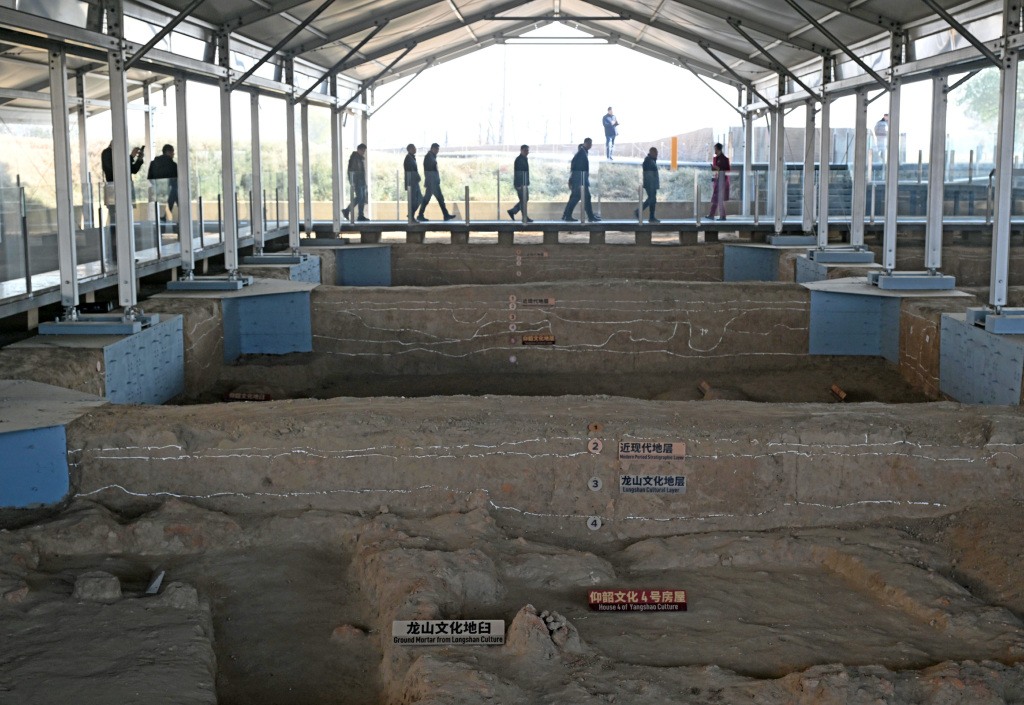
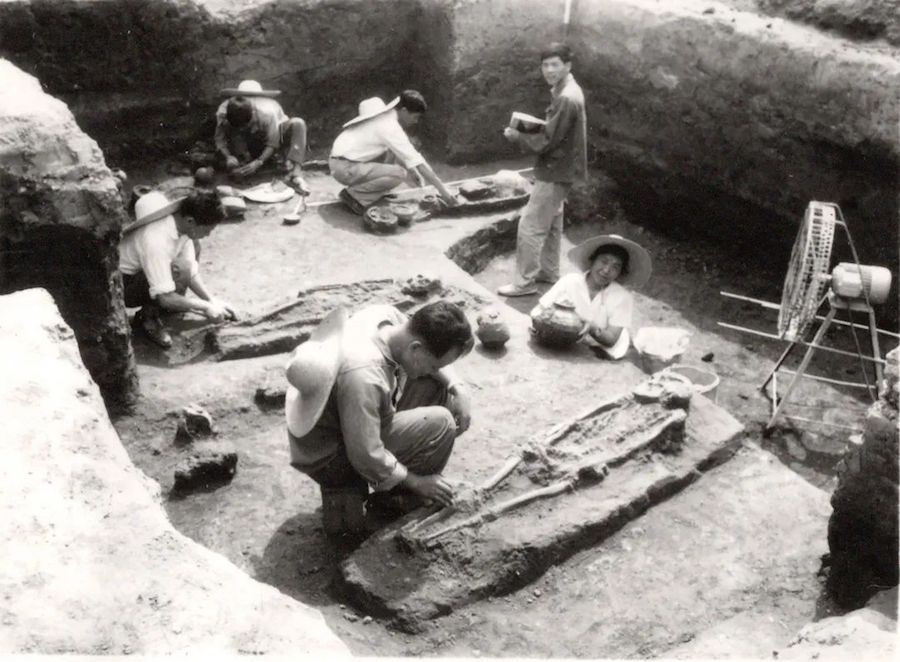
The Dahecun Site is hailed as a "benchmark of Yangshao Culture," providing concrete evidence of the complete trajectory of Yangshao Culture's "origin—formation—development—demise." The site covers a total area of 530,000 square meters, encompassing four archaeological cultures: Yangshao, Longshan, Xia, and Shang. The remaining city ruins, moat, residential areas, and pottery kiln areas clearly recreate the overall layout and daily life of a large prehistoric settlement.

Dahecun Site
Among the sites, the Yangshao culture house foundation F1-4 is the best-preserved house foundation of the same period discovered in my country to date. Despite enduring more than 5,000 years of wind and rain, it still retains a complete floor plan and walls more than 1 meter high. The "wooden frame and whole-house pottery" construction technique it adopted is of milestone significance in the history of ancient Chinese architecture.
The site yielded a large number of exquisite painted pottery pieces, vibrant in color and rich in decoration. The famous double-necked painted pottery vessel was also unearthed here. The celestial patterns painted on the pottery, including sun motifs, halos, and constellations, represent the earliest known astronomical artifacts in my country. Furthermore, the remains of city walls, moats, tombs, and earthquake relics provide invaluable material evidence for the study of the origins of Chinese cities, prehistoric geological activities, and the evolution of civilization.
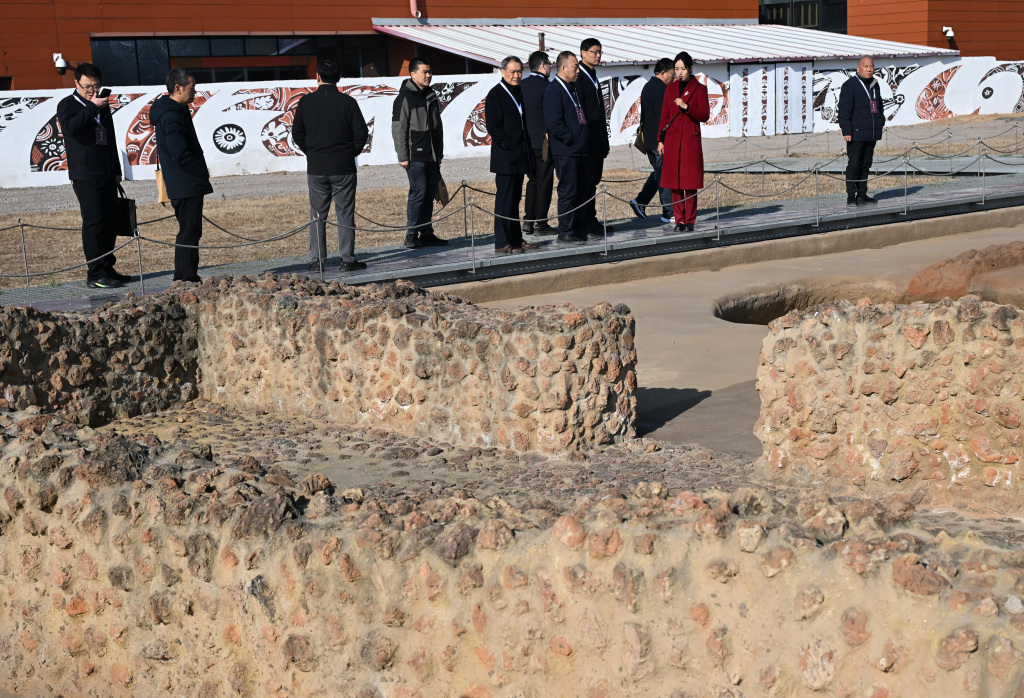
On December 6, the Dahecun Ruins reopened after a renovation.
The Dahecun National Archaeological Site Park covers a total planned area of 2,373 mu (approximately 158 hectares), structured around "one core" (the core area for site protection), "two nodes" (the new Dahecun Site Museum and the Central Plains Archaeological Research and Exhibition Center), and "three zones" (the original ecological restoration zone, the original agricultural planting zone, and the interactive experience and leisure zone). Integrating heritage protection, archaeological excavation, cultural display, education and research, and leisure experiences, the park's opening brings the Yangshao culture, dating back 7,000 to 5,000 years, to life, opening a "prehistoric window" for the public to explore the origins of Chinese civilization.
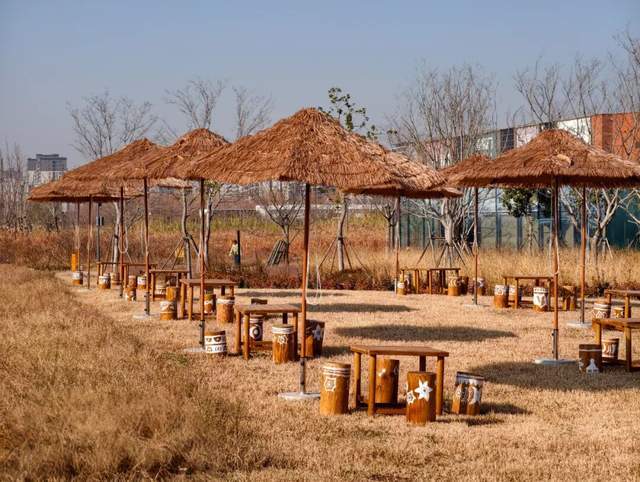
Rest area in the archaeological park
The park features nine landscape sculptures across three main categories, using figurative artistic language to enhance the spatial narrative tension and allow visitors to deeply immerse themselves in the cultural fabric of ancient civilization. At the south gate, the "Great River - Double-Linked Pot" sculpture, with its emerging form, recreates the archaeological site, directly conveying the historical weight of the unearthed artifacts. Also located at the south gate, "Great River - Symbiosis of Mountains and Water" conveys the cultural context and historical messages inherent in the landscape pattern throughout the ages, and tells the story of the enduring Chinese civilization nurtured by the majestic mountains and rivers. The 7-meter-high "Great River - Colorful Boat" sculpture in the plaza, modeled after the white-slipped painted pottery basin, a representative artifact from the site, conveys the vitality of civilization's continuation. The "Great River - Celestial Ode" sculpture in the core area echoes the astronomical elements of the site, vividly showcasing the early understanding of the universe by our ancestors.
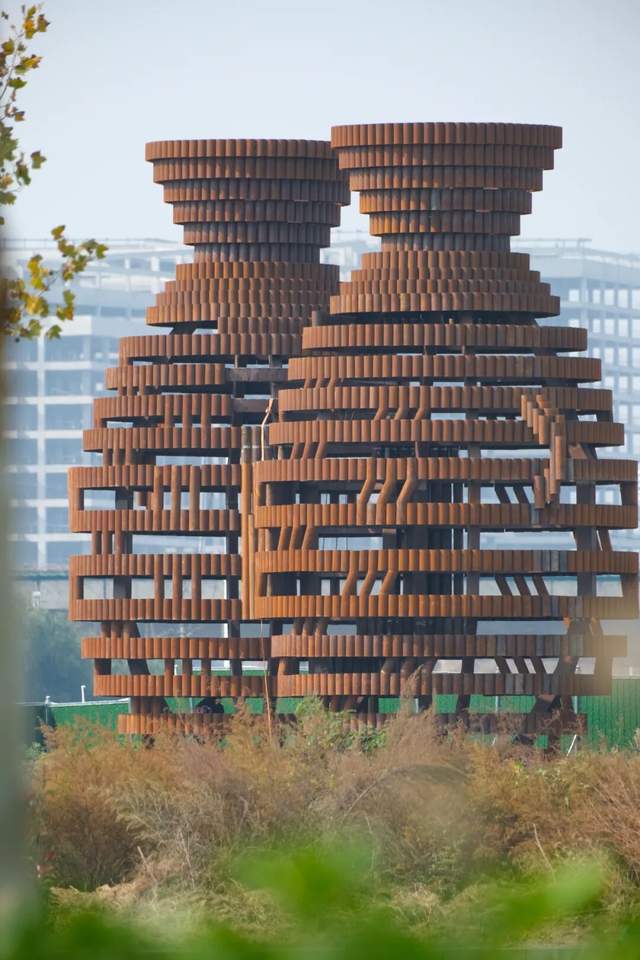
Landscape sculpture
A relevant official from the Zhengzhou Municipal Bureau of Cultural Relics stated that the Dahecun National Archaeological Site Park and the Dahecun Site Museum are important pieces of Zhengzhou's "museum cluster + large archaeological site park" display system. They drive the harmonious coexistence of site protection and urban development, and promote deep interaction between cultural tourism and public education. To better promote the development of the Dahecun National Archaeological Site Park and transform static historical relics into a perceptible, participatory, and experiential cultural feast, the park has designed an operating model of "one circulation route + six themed scenes + ten full-chain business formats + one study tour package," achieving a transformation and upgrade from "static viewing" to "dynamic experience."
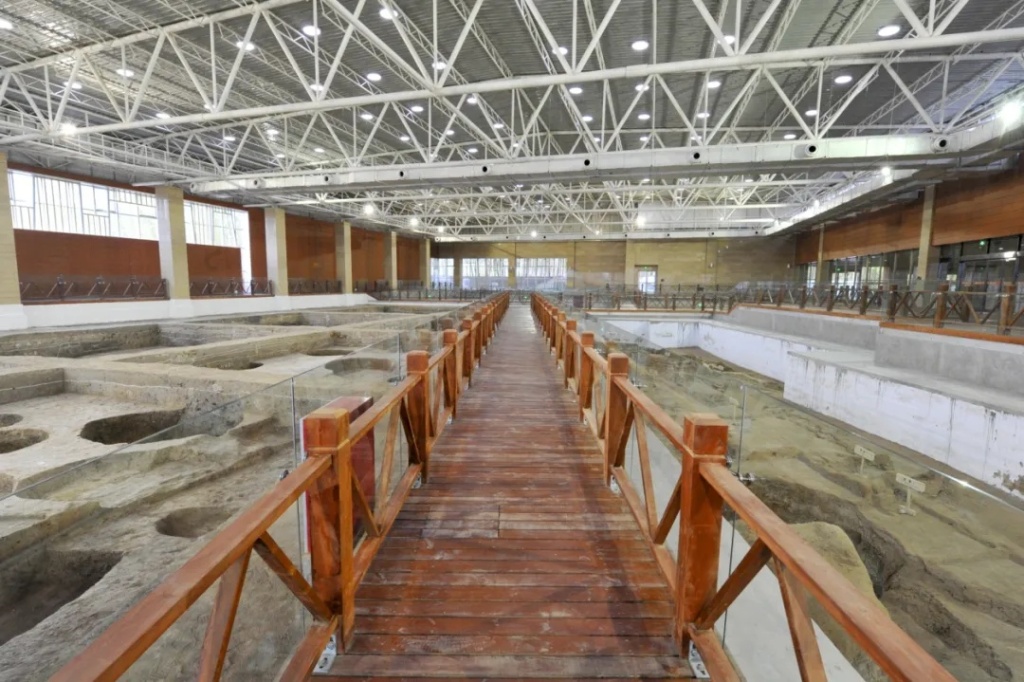
Dahe Village Archaeological Site
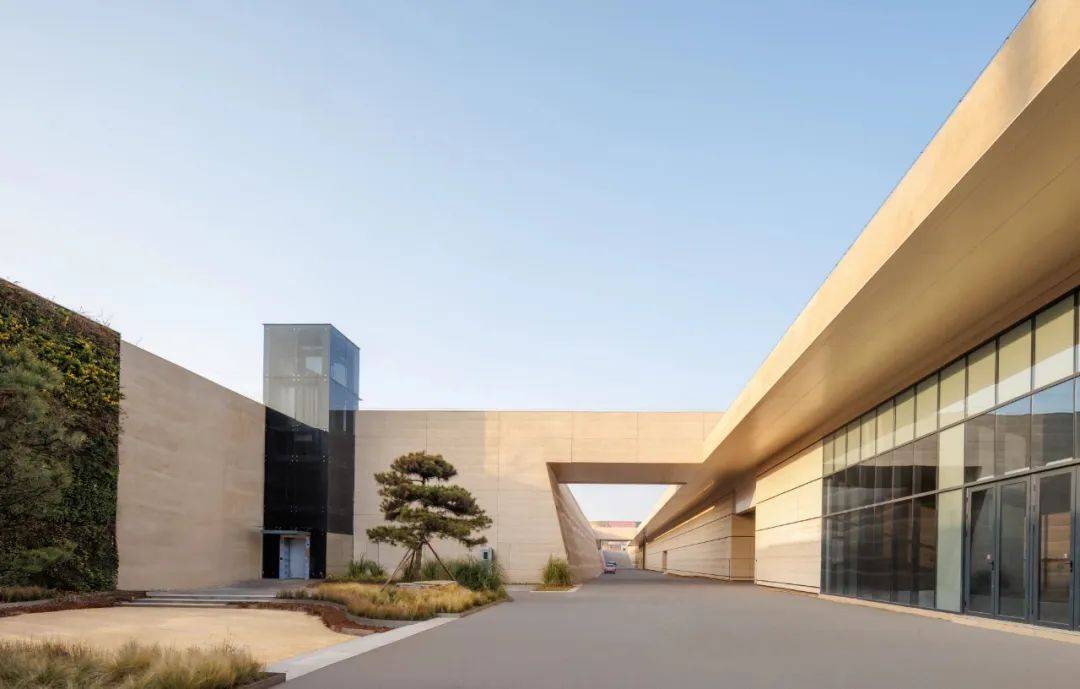
As the core cultural carrier of Dahecun National Archaeological Site Park, the Dahecun Site Museum features "The Mighty River" as its basic exhibition, showcasing more than 1,600 prehistoric artifacts. It comprehensively utilizes restoration displays, immersive interpretations, and other methods to break through the limitations of traditional static exhibitions and vividly interpret the connotations of prehistoric culture.

Basic Display
"As the first museum in China to comprehensively showcase the Yangshao culture, the Dahecun Site Museum, with its new building completed and opened, now boasts 18 archaeological site museums in Henan Province, fully demonstrating the achievements of archaeological excavation and historical and cultural research," said a relevant official from the Henan Provincial Cultural Relics Bureau. The official added that Henan Province has consistently prioritized developing archaeological site parks and museums into key windows for cultural relics departments to promote the achievements of civilization exploration to the public and important cultural facilities to serve the public.
Getting close to deer, farming in the fields, simulating fishing and hunting, making pottery by hand, experiencing house building... each interactive activity becomes a vivid entry point to understanding Yangshao culture. This park, connecting the past and present, vividly interprets the stories of civilization along the Yellow River.
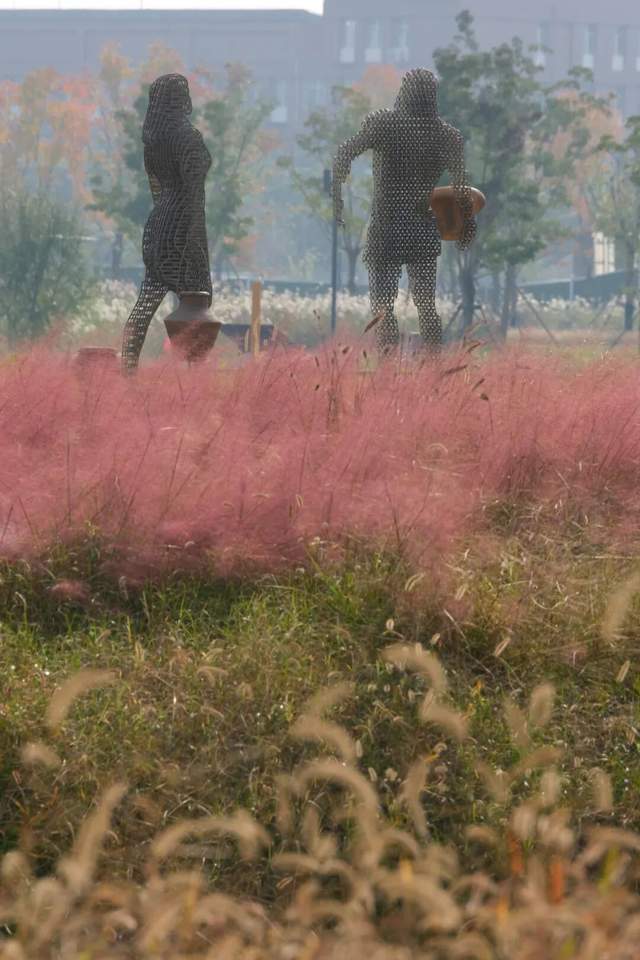
Landscape sculpture