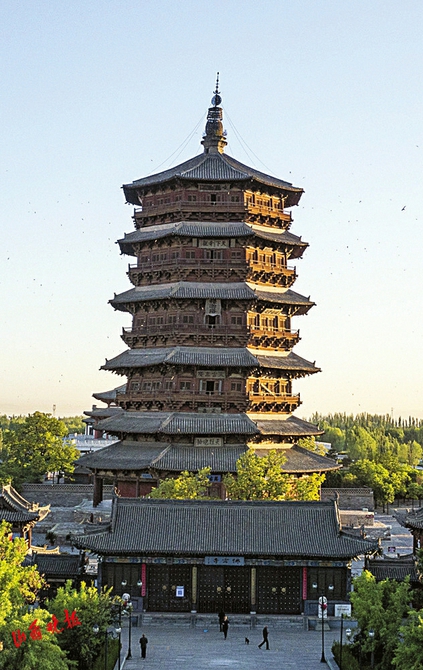
The Paper learned that a new edition of "A History of Chinese Religious Art," co-authored by Professors Jin Weinuo and Luo Shiping of the Central Academy of Fine Arts, was recently published by Shanghai Calligraphy and Painting Publishing House. As a key national book publishing project during the 12th Five-Year Plan period, the book constructs a grand system covering 18 chapters, 600,000 words, and more than 600 images, from prehistoric rock paintings to folk beliefs in the Ming and Qing dynasties.
A symposium on the book's publication was held in Shanghai on November 29. Experts and scholars attending the meeting stated that the new edition of *A History of Chinese Religious Art* not only fills several research gaps but also reshapes the narrative paradigm of traditional art history through an integrated perspective that transcends ethnicity, region, and religion.
As an important component of the magnificent chapter of Chinese civilization, Chinese religious art, with its rich forms that transcend ethnicity and region, profoundly interprets the "pluralistic unity" pattern of civilization. For a long time, the complexity of its cultural background and artistic expression has presented challenges to systematic academic analysis.
In the 1990s, Jin Weinuo and Luo Shiping co-authored "A History of Chinese Religious Art" (1995), which for the first time constructed a complete academic system, realizing an important leap from case analysis to discipline construction and laying the foundation for this field.

The inner pages of "A History of Chinese Religious Art"
With the continuous advancement of archaeological discoveries and academic research, the emergence of numerous new archaeological finds and interdisciplinary research results has made a comprehensive revision and academic upgrade of the first edition of the work an urgent task. For example, the tombs of Zoroastrian priests who entered China and were unearthed in Xi'an, Taiyuan, Luoyang and other places have greatly enriched the materials on Zoroastrian art; the newly discovered hoards of Buddhist statues in Qingzhou, Shandong, Xi'an, Shaanxi, Linzhang, Hebei and other places have provided new perspectives for studying the interaction between the styles of Buddhist statues in the North and South during the late Northern and Southern Dynasties, as well as academic topics such as Han style and Hu influence; the new discoveries of painted sculptures and murals in Chinese grottoes, temples and palaces in recent years, as well as the investigation and research on painted sculptures and murals lost overseas, have continuously enriched the results, demonstrating the diverse and symbiotic cultural endowment of China's art ecology on multiple cultural levels.
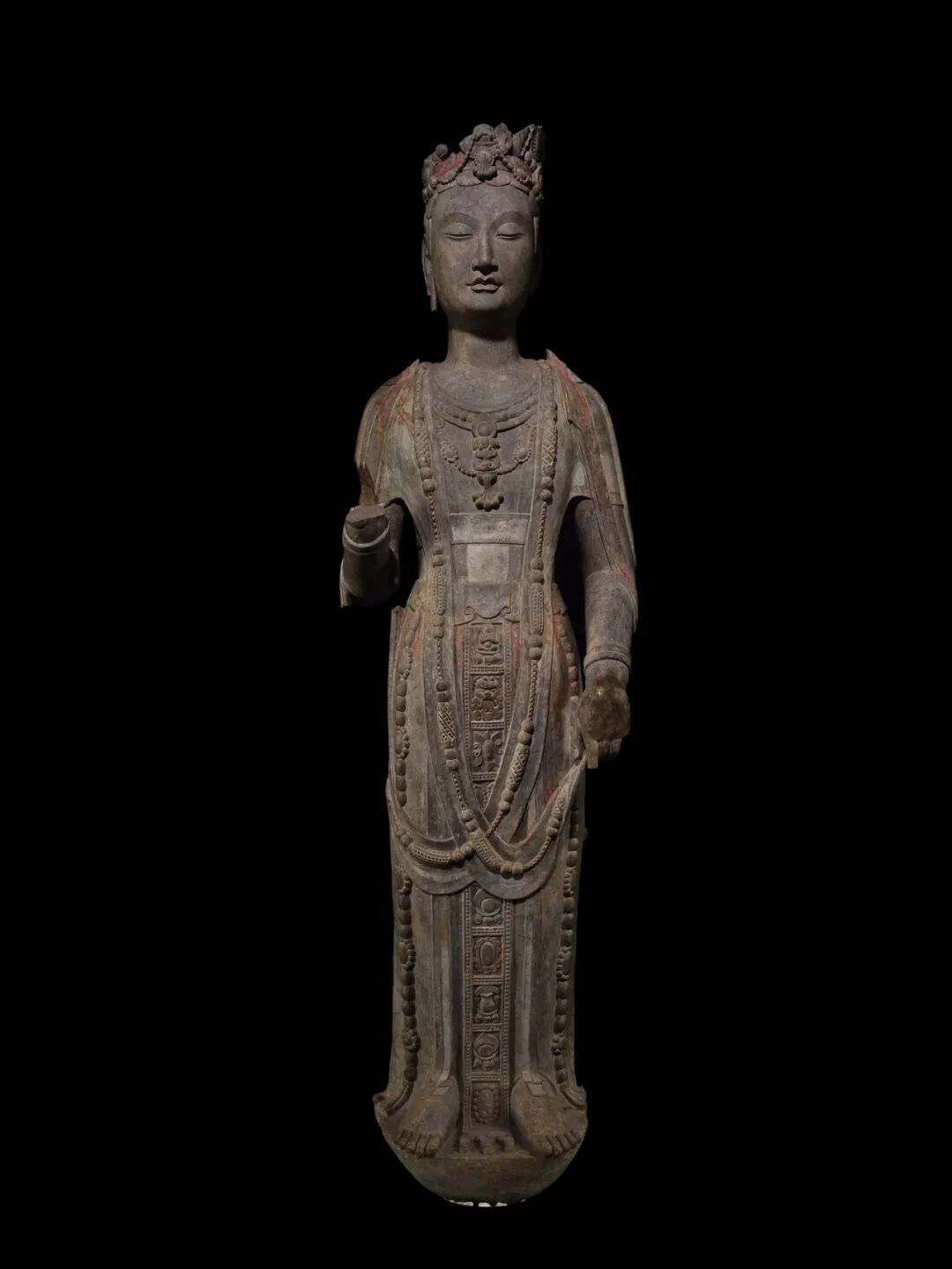
Standing Bodhisattva statue, Northern Qi Dynasty, unearthed from the Longxing Temple site in Qingzhou, Shandong Province.
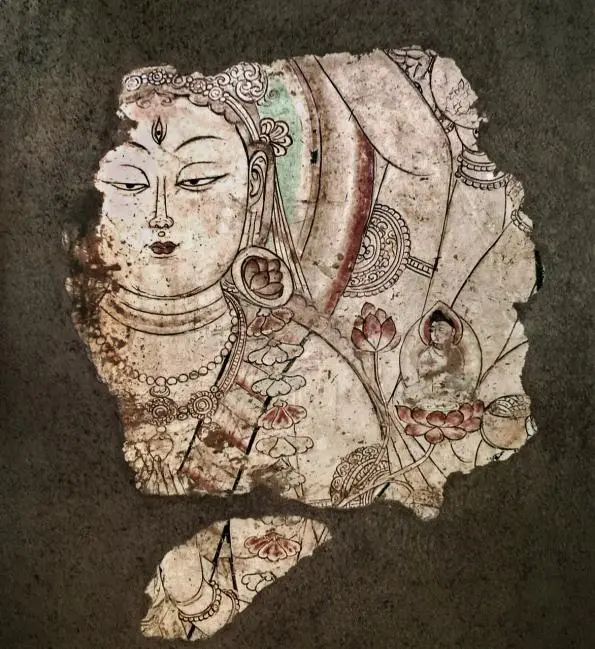
A mural of the Thousand-Hand Guanyin was unearthed at the Topulukdun Site No. 1 in Hotan, Xinjiang.
Luo Shiping, one of the original authors of the book, the first doctoral student trained by Professor Jin Weinuo, and a professor and doctoral supervisor at the Central Academy of Fine Arts, undertook the important task of revising the new edition, which took more than ten years to complete. After systematic revision, the new edition of "A History of Chinese Religious Art" provides a macro-level understanding of the development and evolution of Chinese religious art, expanding its size to three times that of the original book, with more than 600 illustrations; in terms of research methods, it expands from unidirectional art history writing of each category to interdisciplinary research, and in terms of academic vision, it completes the transformation from linear narrative to multi-dimensional interpretation, and is regarded as a culmination of the study of Chinese religious art in the new century.

Nirvana Transformation (partial view), Tang Dynasty, North wall of the Reclining Buddha Cave at Qianfo Cliff, Guangyuan, Sichuan
From prehistoric rock paintings to folk beliefs in the Ming and Qing dynasties, *A History of Chinese Religious Art* constructs a grand system encompassing 18 chapters, 600,000 words, and over 600 images. Based on a deep integration of literature, archaeology, and field research, it not only outlines the temporal and spatial evolution of various forms of religious art but also, using the interaction between native Chinese culture and foreign cultures as its axis, profoundly interprets the complex relationship between artistic styles, aesthetic tastes, and cultural context, demonstrating the enduring cultural resilience and innovative capacity of Chinese religious art throughout history.
Speaking about the compilation of the new edition of *A History of Chinese Religious Art*, Luo Shiping stated that the predecessor to *A History of Chinese Religious Art (Revised Edition)*, *A History of Chinese Religious Art*, was published in 1995, thirty years ago. The new edition incorporates the latest academic findings from various fields, including archaeology, cultural heritage, religion, and Dunhuang studies, and has been revised and supplemented accordingly. However, its core purpose remains consistent, possessing a broad perspective while also considering the specific professional aspects. As a comprehensive work of art history, *A History of Chinese Religious Art* can be used in art schools for teaching purposes, and can also serve as learning and reading material for art enthusiasts and researchers in the fields of art and cultural heritage.

Mural depicting the sutra of the wise and the foolish, Tang Dynasty, Mogao Grottoes, Dunhuang, Gansu, Cave 237
Rong Xinjiang, a professor in the Department of History at Peking University, stated that as a history of Chinese religious art, it breaks through the single-discipline narrative of Buddhist, Taoist, and folk religious art history, making it a comprehensive and general work. A major advantage of this work is its ability to integrate documentary and archaeological data. "It continuously tracks new archaeological discoveries, supplementing them with a large number of new findings. For example, the chapter on Zoroastrian art history fills a gap in the field, and its discussion is very comprehensive."
"The compilation and publication of 'A History of Chinese Religious Art' is a pioneering work," said Li Yuqun, a researcher at the Institute of Archaeology, Chinese Academy of Social Sciences. "It can be used as a textbook in universities and can also benefit scholars and the general public. It is a very good thematic work."
The realm of religious art extends far beyond two-dimensional images such as paintings and murals, encompassing three-dimensional spaces like grottoes, temples, architectural spaces, and ceremonial venues, greatly expanding the dimensions of art history research. Numerous religious and cultural relics that integrate nature and humanity, such as the Mogao Grottoes in Dunhuang, the Yungang Grottoes, the Longmen Grottoes, as well as Mount Tai and Mount Emei, have been inscribed as World Heritage Sites. Their protection, research, and interpretation have long transcended the understanding of the art itself, and are now crucial to the sustainable transmission of cultural heritage and the in-depth advancement of international cultural exchange.
The publication of "A History of Chinese Religious Art" not only provides a systematic and solid foundation of documents and images for multiple disciplines such as Chinese art history, cultural heritage studies, archaeology, and anthropology, but also contributes important academic references for understanding the unique continuity, inclusiveness, and creativity of Chinese civilization from a global perspective.

Launch of the general edition of "A History of Chinese Religious Art"
The conference invited more than ten experts and scholars from the fields of art history, history, archaeology, anthropology, and cultural heritage, including Luo Shiping from the Central Academy of Fine Arts, Rong Xinjiang from Peking University, Zhou Feng from Hubei Academy of Fine Arts, Li Yuqun from the Chinese Academy of Social Sciences, Weng Lianxi from the Palace Museum, Xie Jisheng from Zhejiang University, Uzhev from Minzu University of China, Liu Zhongyu from the Chinese Academy of Social Sciences, Liao Yang from the Chinese Academy of Social Sciences, Wu Guangzheng from Wuhan University, Shao Jun from the Communication University of China, Peng Lai from Shanghai Normal University, and Qi Ziyu from Fudan University, to discuss the compilation experience of the book and explore in depth the construction of the academic system of Chinese religious art, the innovation of research paradigms, and the path of interdisciplinary integration and development.
Concurrently with the symposium, Shanghai Calligraphy and Painting Publishing House officially released the general reader edition of "A History of Chinese Religious Art." This edition aims to break down academic barriers, allowing the profound and extensive knowledge of Chinese art and cultural heritage to reach a wider, non-specialist readership.