
Wen Zhengming’s spring after mountain rain
Empty mountain, rain just stopped—listening for the spring in Wen Zhengming’s painted sound.
Since Su Shi, literati spoke of painting as silent poetry and poetry as painting with sound. Wen Zhengming’s landscapes invite that listening—empty mountains after rain, a spring you almost hear. The Taipei hang asks viewers to read brush rhythm as weather and water, not only as scenery.
Starting from the 19th of this month, the National Palace Museum in Taipei will launch a new exhibition "Pleasant Ears - Listening to the Sounds in Paintings", where visitors can stop and listen to the wonderful sounds in ancient paintings. The exhibition displays 16 collections of the National Palace Museum in Taipei, including "Dragging a Stick under a Pine Tree" by Xu Daoning of the Song Dynasty, "Writing Quatrains at Tingquan Pavilion" by Zhang Yu of the Yuan Dynasty, "Listening to the Spring" by Wen Zhengming of the Ming Dynasty, "Listening to the Rain on the Autumn River" by Wen Jia, "Sitting and Listening to the Pine Wind" by Li Shida, "Painting Xiaoxiang and Listening to the Rain" by Wang Hui of the Qing Dynasty, "Reading under Autumn Trees" by Zhang Daqian of the Republic of China, and "Listening to the Zither" by Pu Ru.
Let us appreciate a few of the collections together.
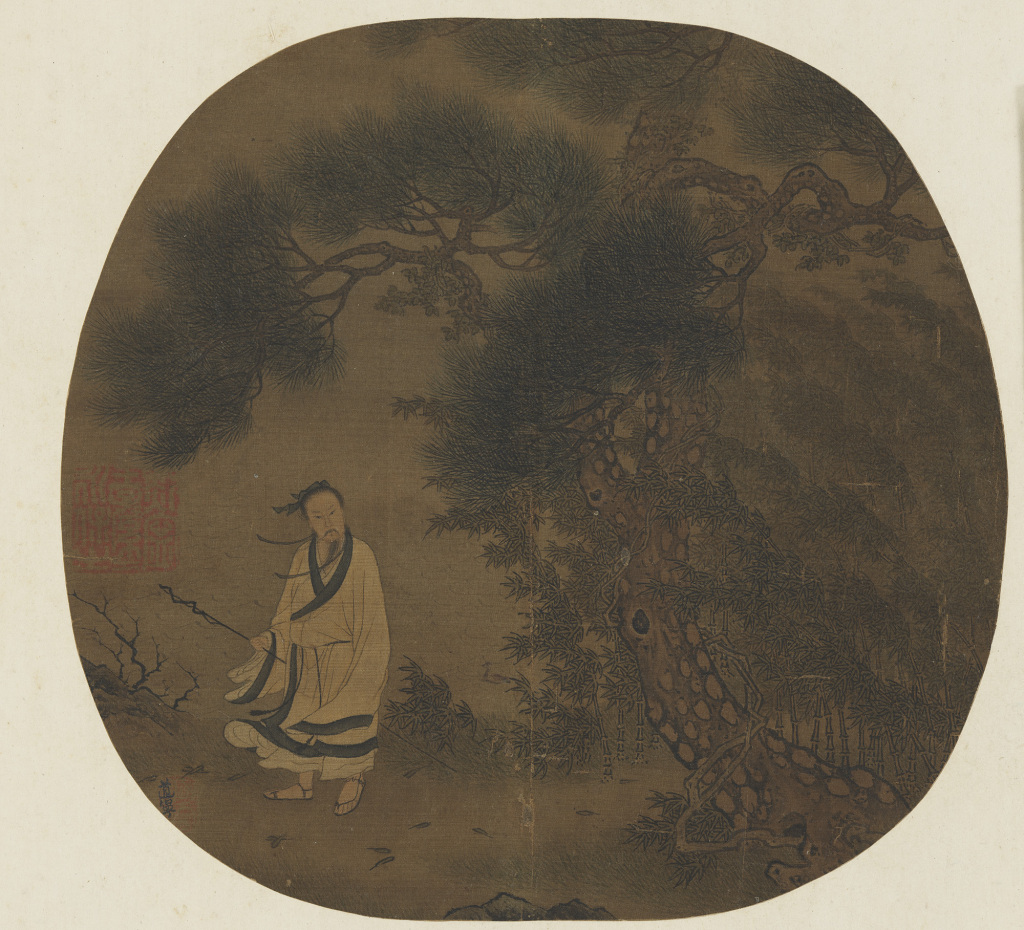
"Drag a Cane Under a Pine Tree" by Xu Daoning of the Song Dynasty
In the context of the Northern Song Dynasty, "sound painting" originally referred to "poetry", for example, Monk Huihong (1070-1128) said, "Song Di painted eight scenes that are wonderful. People call them silent poems. Master Yan joked with me and asked, 'Can a Taoist paint a picture with sound?' So I composed a poem for each of them." But according to art critic Deng Chun's "Huaji": "The Eight Scenes of Song Fugu (Song Di) are all evening scenes. Among them, "Smoke-filled Temple and Evening Bell" and "Night Rain in Xiaoxiang" are quite difficult to describe. The sound of the bell is indeed impossible to create, and it is already night in Xiaoxiang, and it is raining again, so what can we see? It is because Fugu painted first and then gave it meaning, and it is just a slight depiction of the bleakness and mist. Later, mediocre artists learned to paint this subject, using torches to illuminate the cables and solitary lamps to illuminate the boats. Their shallowness is disgusting." It can be seen that Deng Chun has paid attention to some poetic painting subjects. For example, it is difficult to convey the sound and artistic conception of "Night Rain in Xiaoxiang" and "Evening Bell in Smoke-filled Temple" in "Eight Scenes of Xiaoxiang" in the form of painting. However, existing Southern Song Dynasty paintings, such as Xu Daoning's "Driving a Stick under a Pine Tree", reveal an attempt to express the melody of pine trees and the sounds of nature, and are "sound" paintings created in the Southern Song Dynasty.
The painting is inscribed with "Daoning" on the lower left, and the old signature states that it was created by Xu Daoning of the Northern Song Dynasty (around the 11th century). However, judging from the fact that the style of painting pine, bamboo and figures was influenced by the Southern Song court painter Liu Songnian (active in the late 12th century), it should be a work from the late Southern Song Dynasty. In the painting, the lakeside is shaded by green pines and bamboos. A scholar with a walking stick walks out from the path and stops to listen to the natural music of the pine trees. The scholar's scarf, hat, and clothes are also slightly lifted by the wind. This type of flat painting attempts to present the audible mood of "listening to the pines" in poetry, which is quite challenging for Southern Song painters.
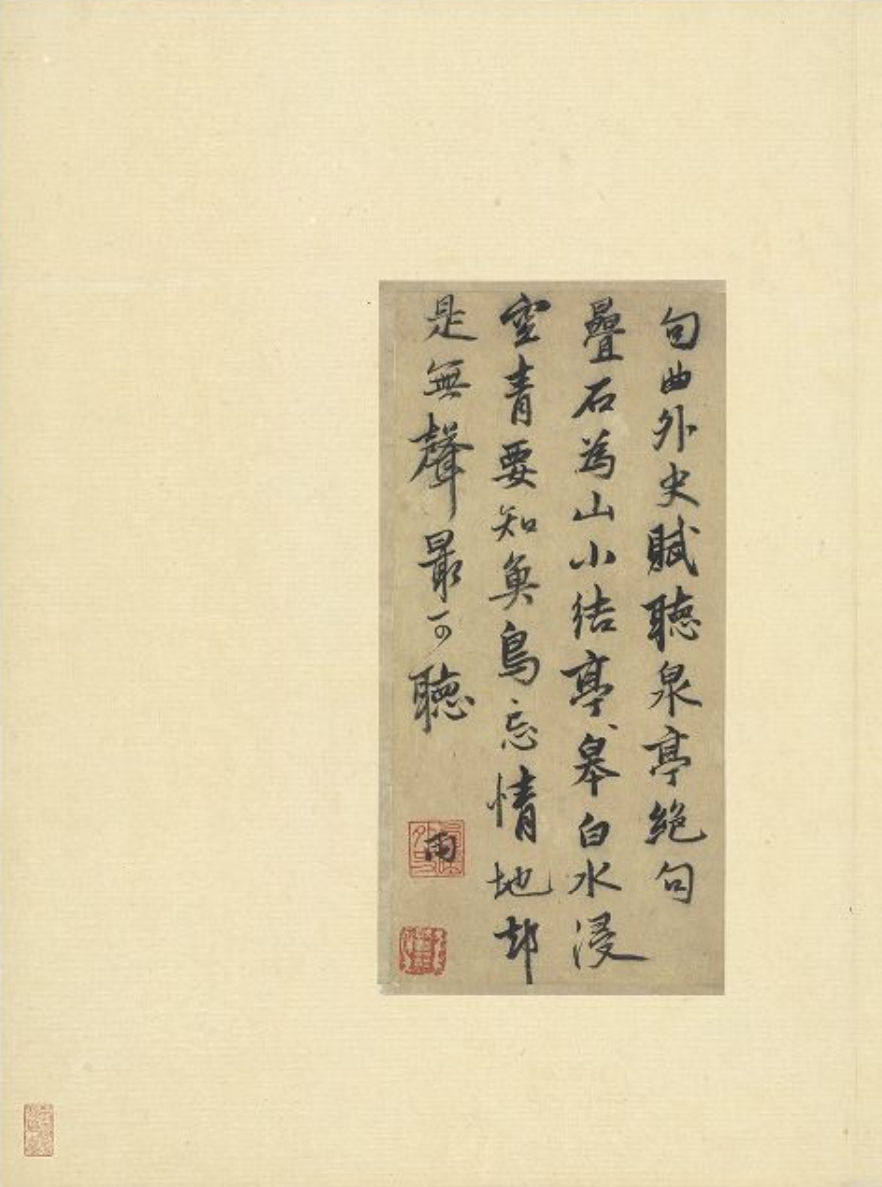
The Yuan Dynasty calligrapher Zhang Yu's "Quatrains on Tingquan Pavilion": The Juqu Waishi Fu Queju on Tingquan Pavilion. Stacking stones to form a mountain and a small pavilion. The white water of Tinggao soaks the blue sky. To know the place where fish and birds are forgetful. But silence is the most audible. rain.
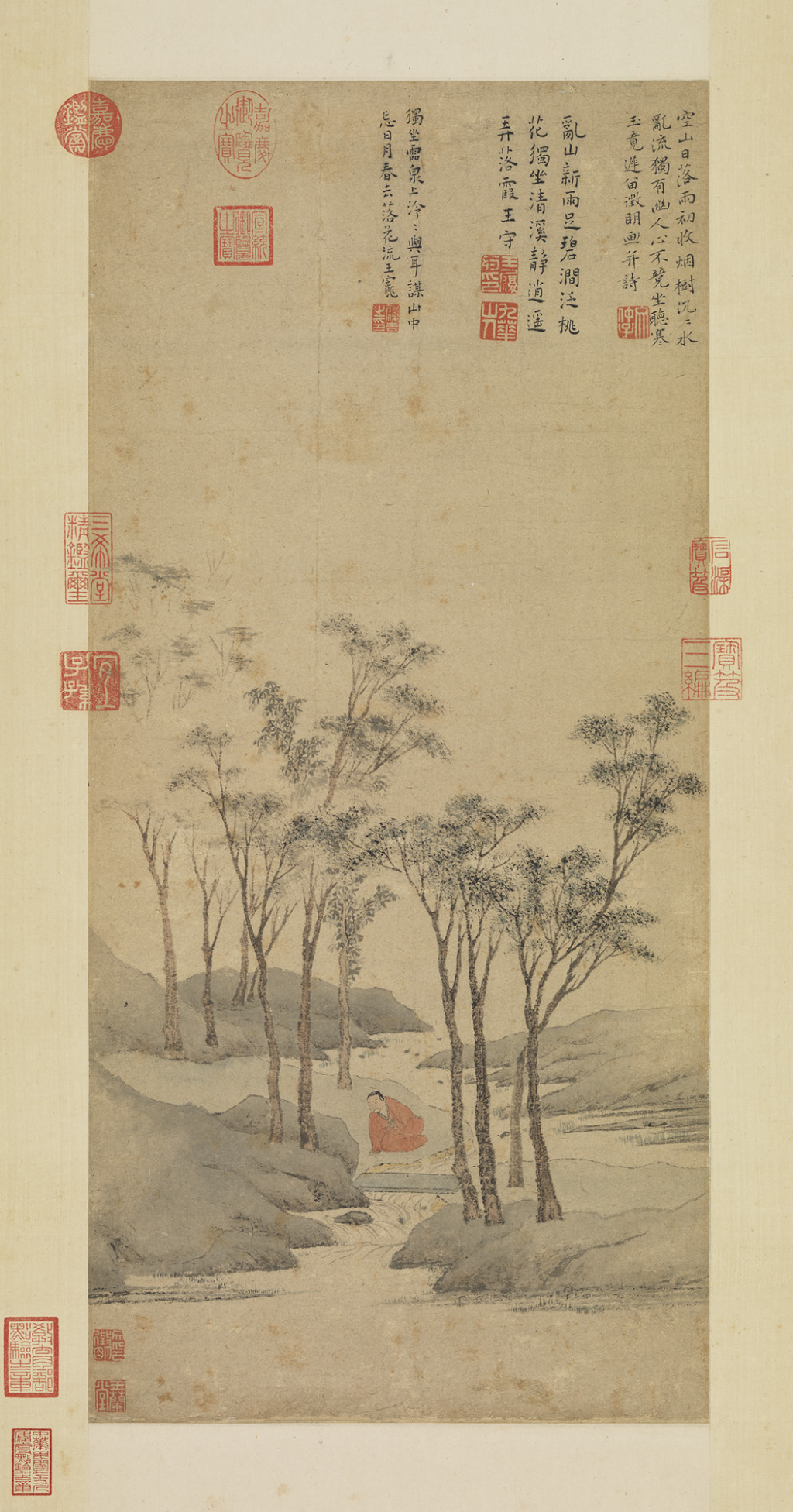
Ming Wen Zhengming "Listening to the Spring" scroll
In "Listening to the Spring", a clear spring comes from afar, passing through sparse woods and hillsides. The background is a mist, and the sparse woods gradually disappear into it. The scholar in red sat on the bank, leaning slightly forward and listening attentively to the sound of the spring. The artist Wen Zhengming (1477-1559) wrote a poem and inscribed it above the painting: "The sun sets on the empty mountain and the rain has just stopped. The trees are covered in mist and the water is turbulent. Only the hermit has a calm mind and sits to listen to the cold jade that lingers." The poem uses the coldness of jade to metaphorically represent the clear, elegant and clean flowing water. The whole painting shows a hermit far away from fame and fortune after dusk, feeling the tranquility of the forest alone, and even reaching a state of ecstasy. The brothers Wang Shou (ca. 1493-1550) and Wang Chong (1494-1533) were close friends of Wen Zhengming regardless of age difference, and they also wrote poems on the paintings. This work was created when Wen Zhengming was about fifty years old.
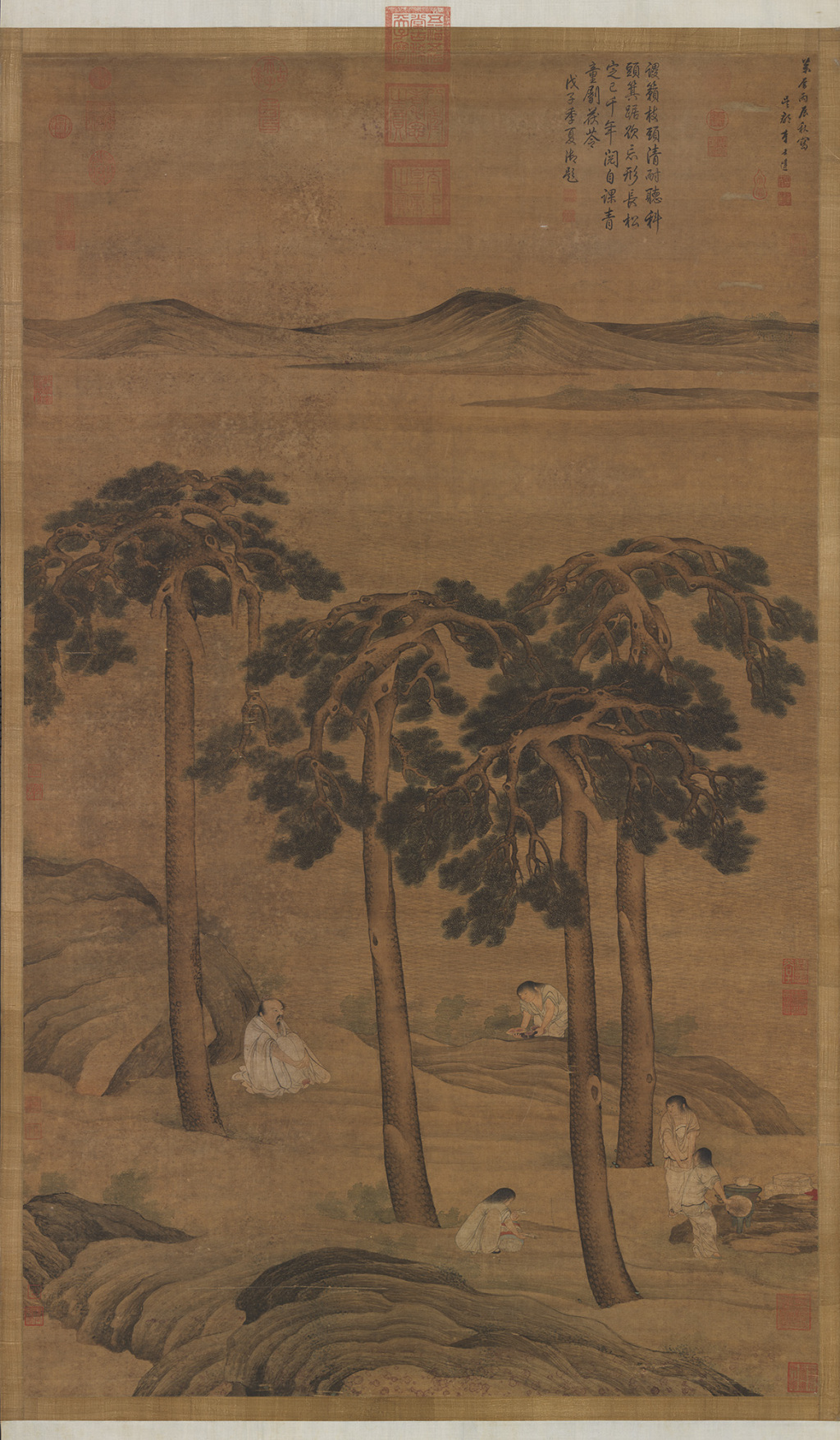
Ming Li Shida "Sitting and Listening to the Pine Wind" scroll
Li Shida (ca. 1550-1621) was a native of Wuxian (now Suzhou, Jiangsu). He became a Jinshi in the second year of Wanli (1574) and was good at painting landscapes. This painting was created in the autumn of the Bingchen year of the Wanli reign (1616). Li Shida advocates the five characteristics of landscape painting: "darkness, elegance, strangeness, distance and charm". In the foreground of the painting are four pine trees of strange shapes. A scholar sits among the pines and rocks, hugging his knees, listening leisurely to the pine wind. The boys nearby were either picking herbs on the slope, or squatting and unrolling books, or fanning the fire and making tea in front of the stove. On the slope are placed tea utensils such as a wind stove, yellow clay teapot, vermilion lacquer tea tray, white porcelain tea cup, and water jar. The whole painting has a beautiful artistic conception, far away from the hustle and bustle, where you can enjoy the pleasure of listening to the pine trees and sipping tea.
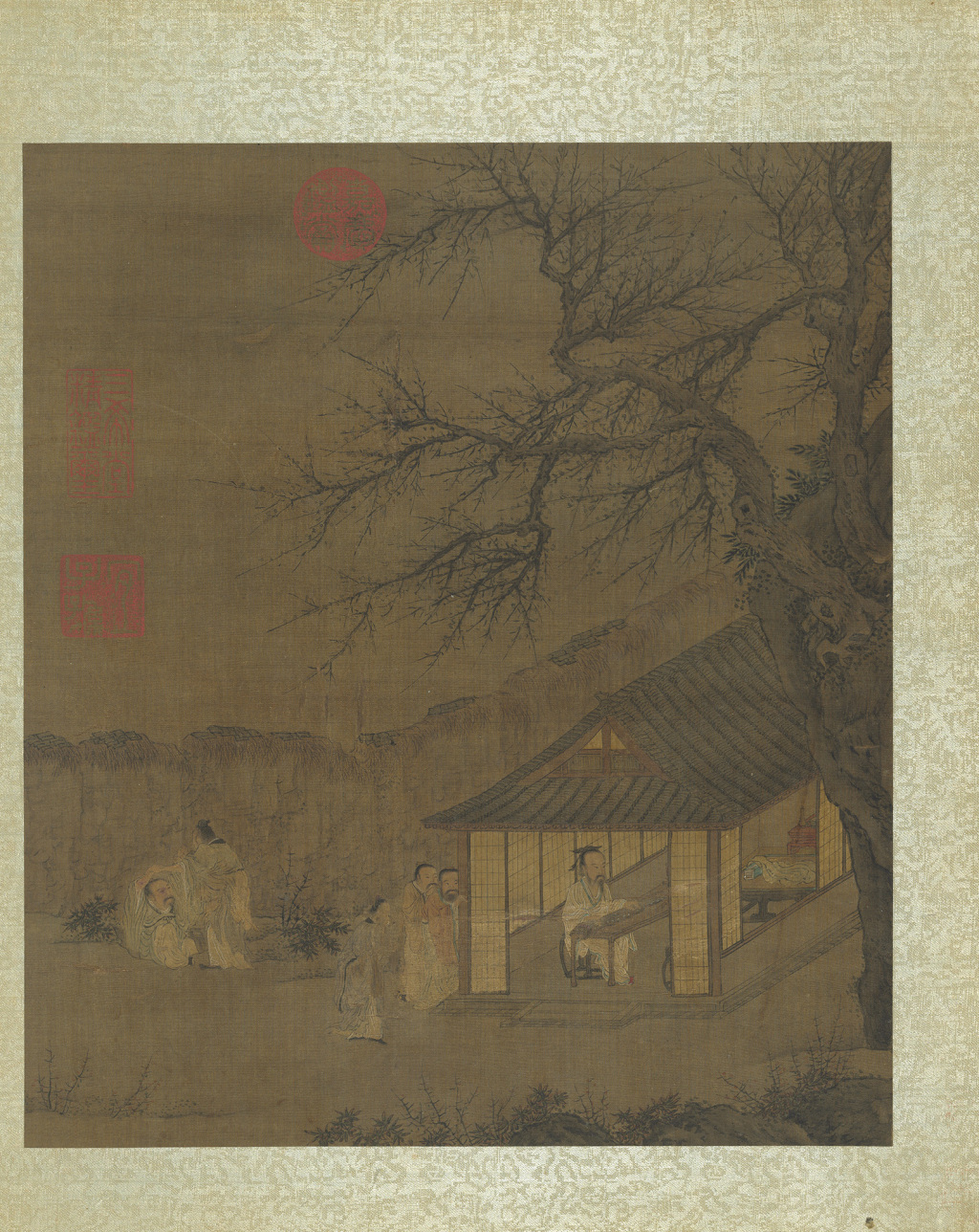
Ming Dynasty Unsigned "Listening to the Piano in the Moon House" Album
In the unsigned Ming Dynasty painting "Listening to the Piano in a Moonlit House", the moon is dim at night, and a scholar has set up a piano table in the house and is sitting on a round stool playing the piano. A group of people outside the house were attracted by the sound of the piano and moved closer to listen. One of them fell to the ground in the dark, and others were trying to pull him up. The whole painting is filled with melodious piano sounds and folk interest. This painting is unsigned and its style is similar to that of Zhou Chen (ca. 1450-1535), a professional painter from Suzhou during the Ming Dynasty. It was painted around the 16th century.
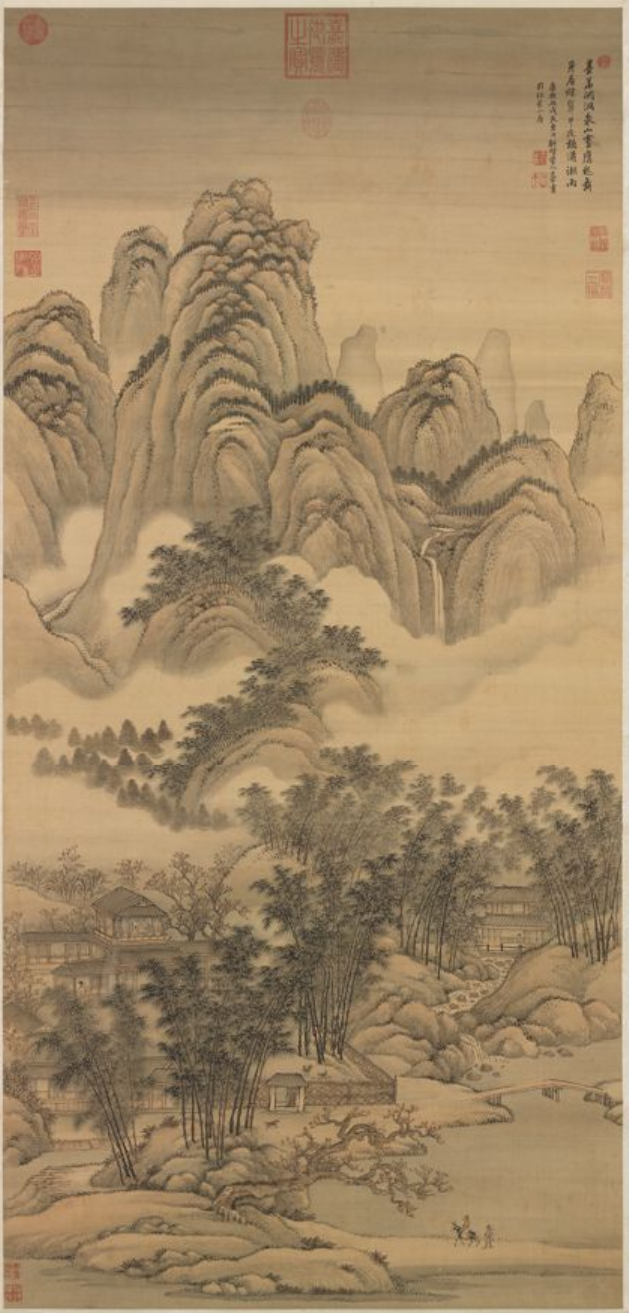
Wang Hui, Qing Dynasty, Listening to the Rain at Xiaoxiang, scroll
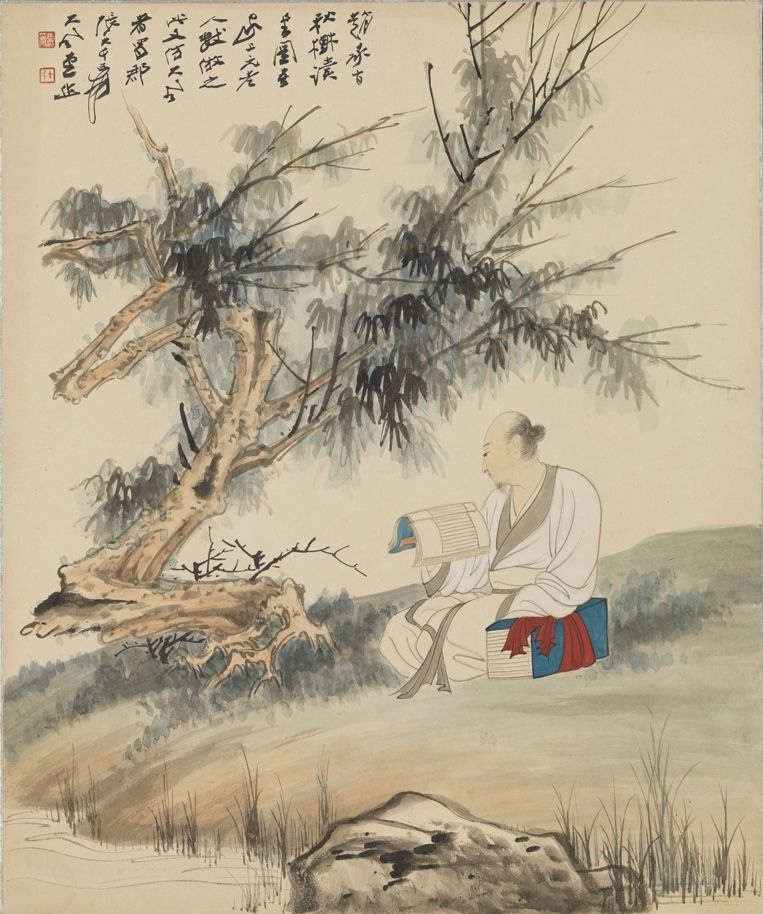
Zhang Daqian, "Reading under Autumn Trees" in the Republic of China
Exhibition Information
Pleasant to the ears - Listen to the sound in the painting
Time: 2025.4.19-2025.6.22
Location: Exhibition Room 202 212, National Palace Museum, Taipei
Filed under

Rare 3-meter Wen Zhengming landscape unveiled in Taipei
A rare Wen Zhengming landscape more than three meters high joins Taipei’s giant-masterpiece hall.

Tang Yin’s milk cakes and gifts among Ming painters
Friendship inside the brush world—milk cakes, courtesy, and human touch in Ming calligraphy.

Ni Zan, Wang Meng and other famous relics of the Yuan Dynasty are on display, and the exhibition of "Bi Song Mo Wu" in Taipei is renewed
Yuan masters Ni Zan and Wang Meng return as Taipei renews its “Bi Song, Ink and Dance” hang.