
Yuan cursive by Rao Jie sells for HK$250m
A rare Yuan cursive handscroll by Rao Jie clears HK$250 million—why this brush still moves the market.
On the afternoon of April 10, a rare Yuan calligraphy scroll—Rao Jie’s cursive after Han Yu and Liu Zongyuan—sold for HK$213.5 million at Sotheby’s Hong Kong, with premium pushing the result past the quarter-billion mark. The market was pricing not only ink, but a scarce Yuan hand with a long pedigree.
Why does Rao Jie still command that attention? The scroll’s energy, rarity, and transmission history offer one answer.
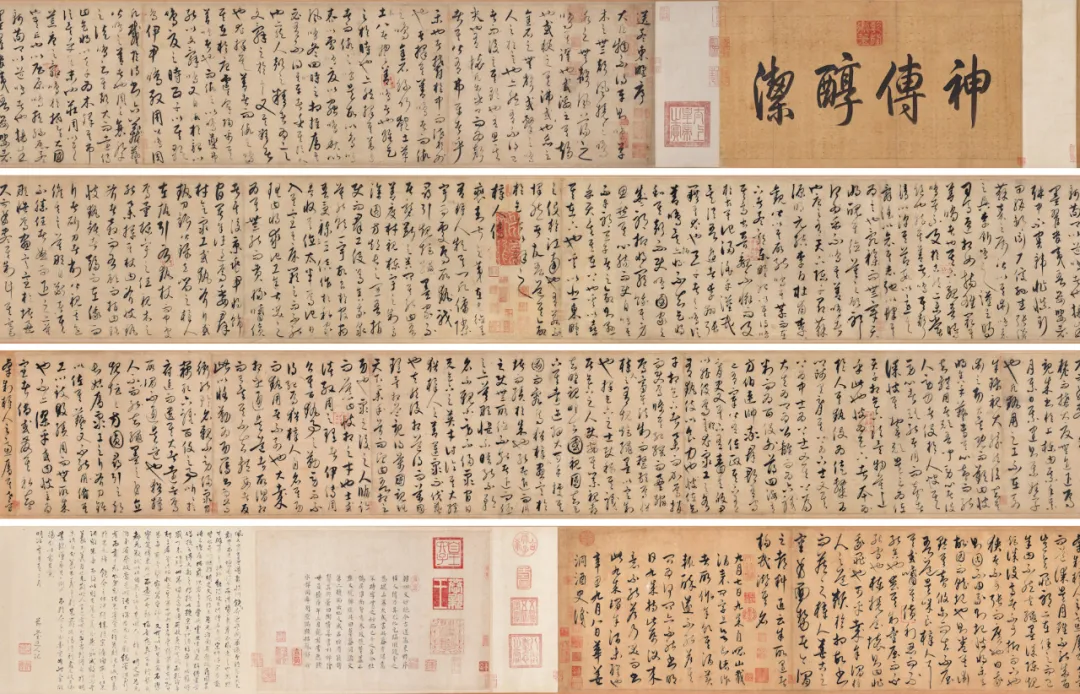
Rao Jie's "Cursive Writings of Han Yu and Liu Zongyuan" (Complete Volume)
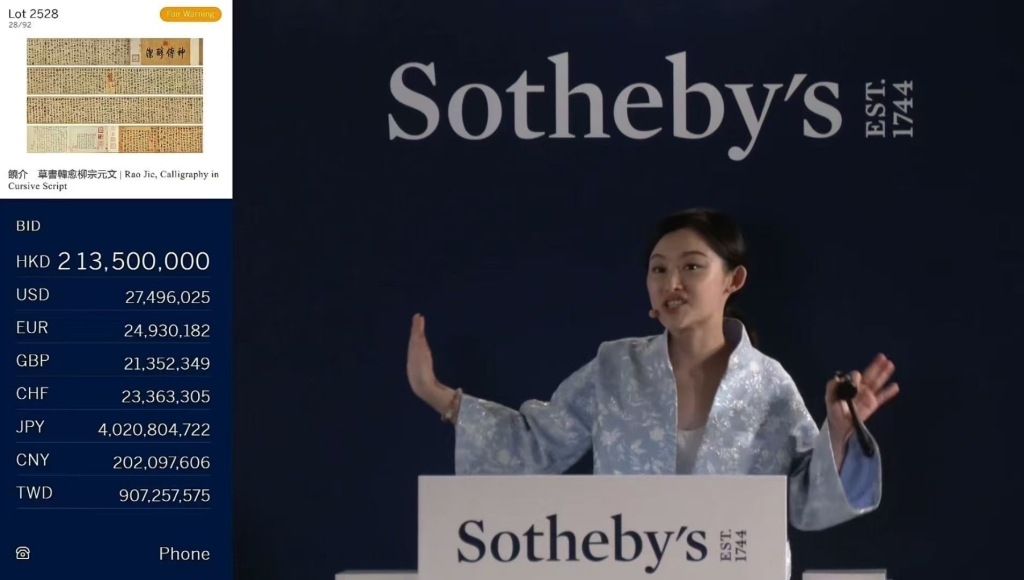
Auction site
According to research, Rao Jie (?-1367), with the courtesy name Jiezhi and the pseudonym Jiesou, was a native of Linchuan (in Jiangxi Province). At the end of the Yuan Dynasty, he was appointed as the Zhejiang Provincial Commissioner from the Hanlin Academy, and was promoted to the position of the Huainan Provincial Councillor. When Zhang Shicheng occupied Wu, he came to ask for his name and was allowed to remain in his original position. After Wu was destroyed, he was captured and executed in Nanjing. Rao Jie was a famous writer and calligrapher in the late Yuan Dynasty, with a high reputation and influence. His friend Shi Daoyan once commented on him: "Jiezhi is a man of unrestrained and bold character, and he is a friend of all the talented people of the time. His calligraphy is like Huaisu, and his poetry is like Li Bai, with a brilliant and dazzling aura."
The collection of "Cursive Script of Han Yu and Liu Zongyuan" has a long history. It was first collected by Xiang Yuanbian, a great collector in the Ming Dynasty, and later passed to Dong Guangyu, Chen Ding, and An Qi. It entered the imperial palace in the Qing Dynasty and was collected by Emperor Qianlong. The preface of the book is inscribed with "God-transmitted Pure and Clean" for Emperor Qianlong. It was included in the 24th volume of "San Xi Tang Calligraphy Collection" and is one of the original ink copies of "San Xi Tang". The press used for calligraphy is a rare Tibetan Buddhist scripture paper printed by Jingde Temple in Kunshan during the Song Dynasty, with the seals "Disciple Zhang Ziyuan donated 5,000 pieces of Tibetan Buddhist scripture paper" and "Jingde Tibetan Buddhist Scripture" printed on it.
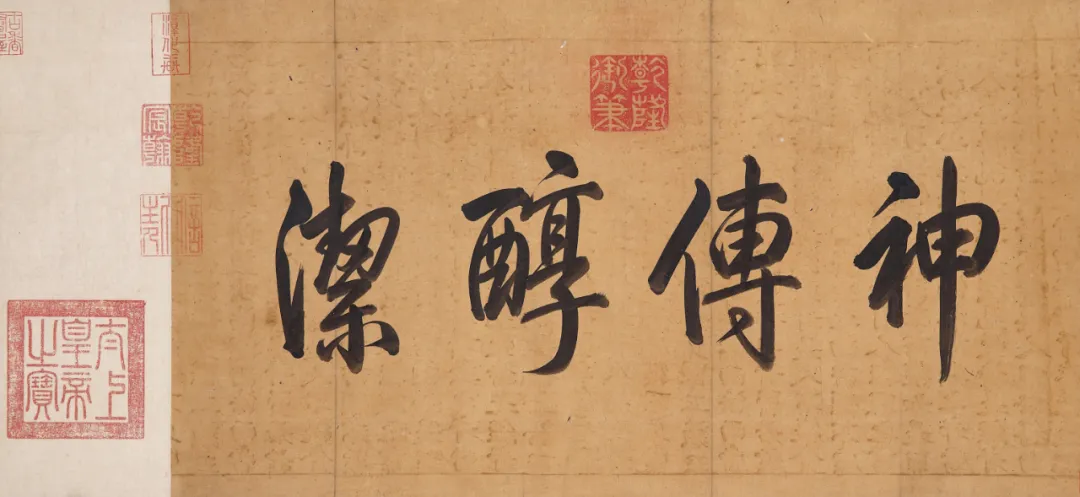
Qianlong's inscription at the beginning of Rao Jie's "Cursive Script of Han Yu and Liu Zongyuan"
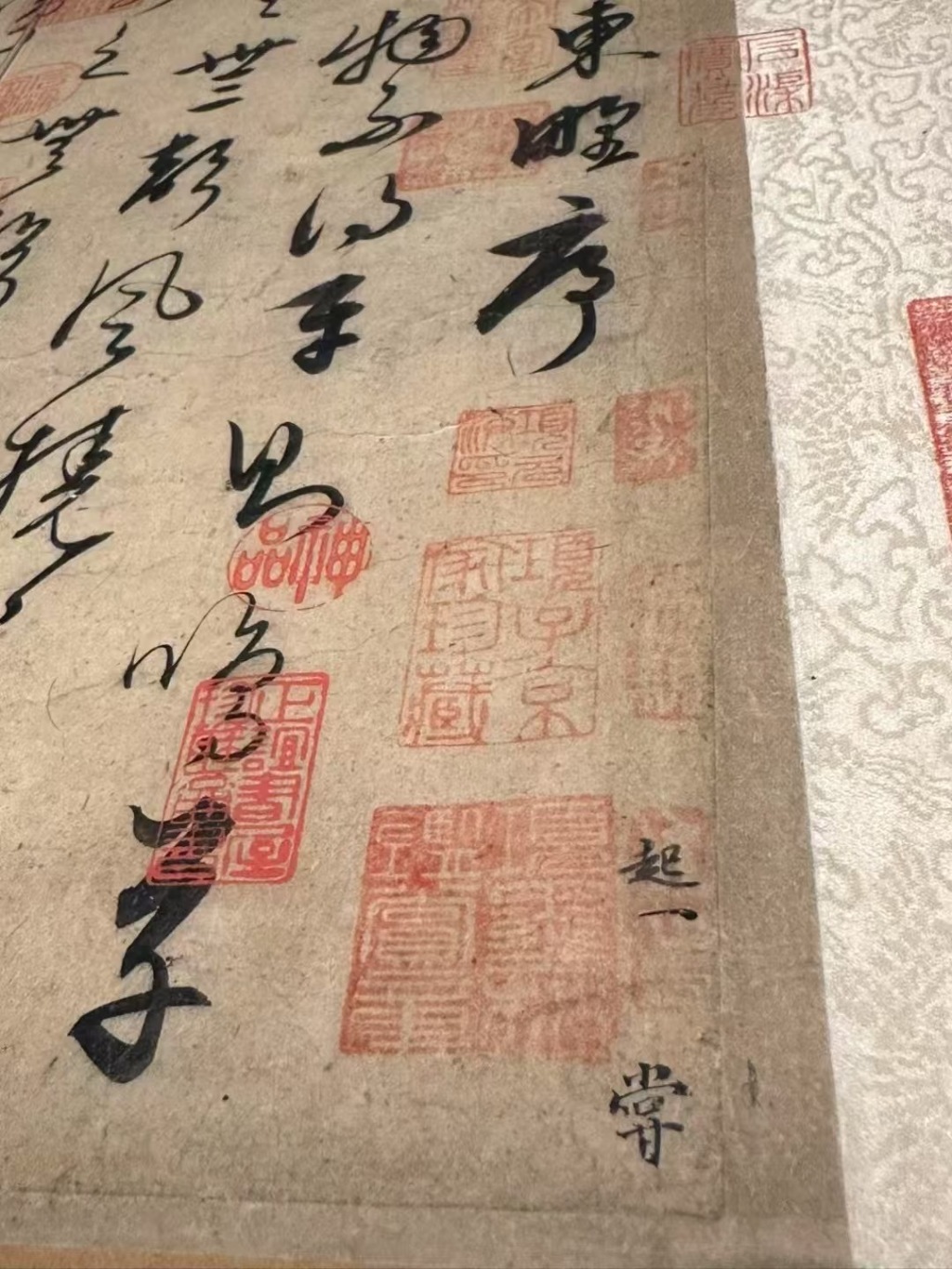
Part of Rao Jie's "Cursive Script of Han Yu and Liu Zongyuan"
It may have been owned by Prince Gong Yixin during the Xianfeng to Guangxu period. After the Revolution of 1911, his descendant Pu Wei sold off the palace collections one after another. This scroll was eventually purchased by the Yamanaka Chamber of Commerce in Japan and eventually came into the collection of Ishikawa Shuntai, a famous figure in the Japanese Buddhist community. Ishikawa even wrote a postscript on the back of the scroll, detailing its origin and evaluation.
According to Zuo Xinyang, head of Sotheby's Asia's Chinese Ancient Painting and Calligraphy Department, Rao Jie was a link between the past and the future in the history of Yuan Dynasty calligraphy. Although he was not as great as Zhao Mengfu, he played a very important role in the inheritance of calligraphy and had a certain status in the history of calligraphy. His students Song Ke and Song Guang were both important calligraphers in the early Ming Dynasty.
This calligraphy scroll is unrestrained and full of energy, showing the artistic achievement of Rao Jie in integrating the calligraphy traditions of the "Two Wangs", Zhang Xu, Huaisu, etc., and also provides a valuable physical model for the development of cursive script in the Yuan Dynasty. According to relevant reports, after the auction started at 9 million Hong Kong dollars, it quickly exceeded 30 million Hong Kong dollars in just a few rounds, and then reached 50 million Hong Kong dollars... In the end, it was sold for 250.1 million Hong Kong dollars including commission.
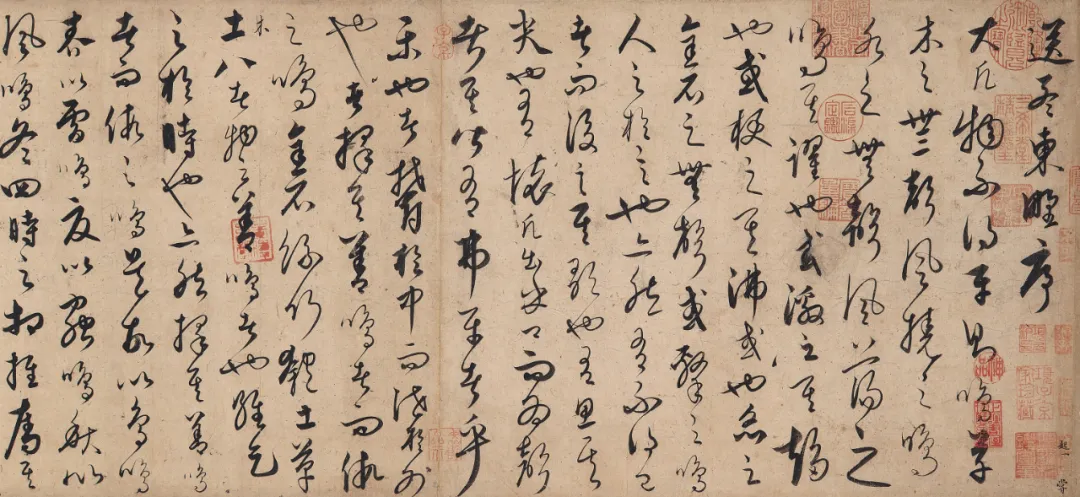
Part of Rao Jie's "Cursive Script of Han Yu and Liu Zongyuan"
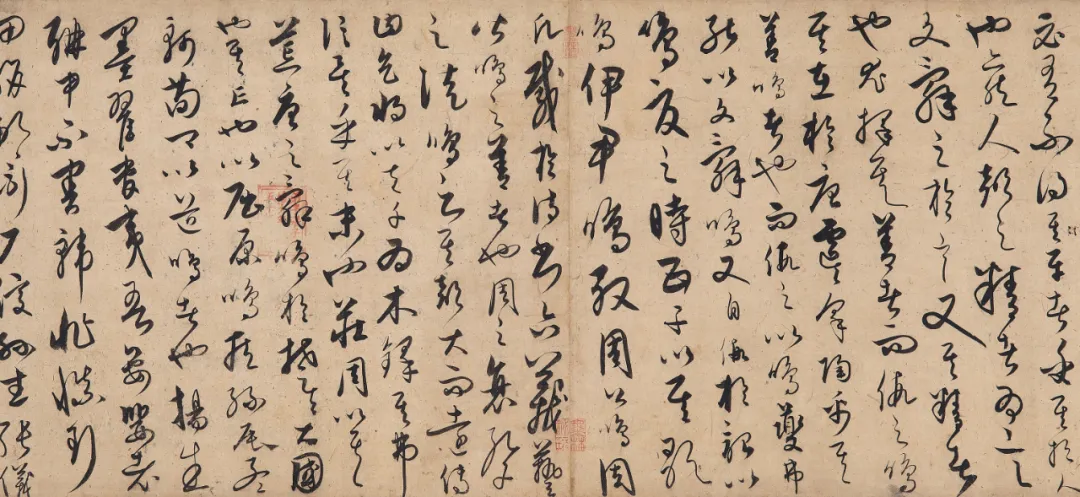
Part of Rao Jie's "Cursive Script of Han Yu and Liu Zongyuan"
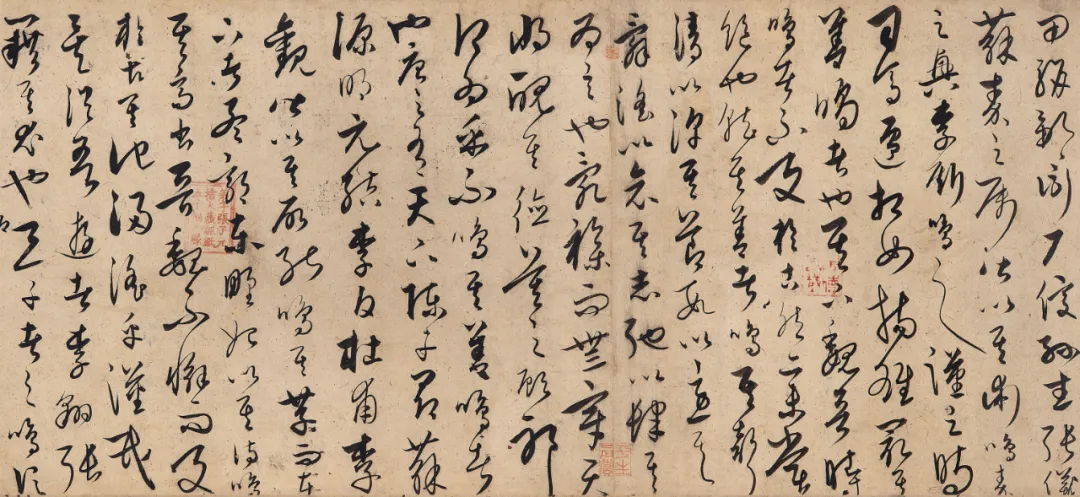
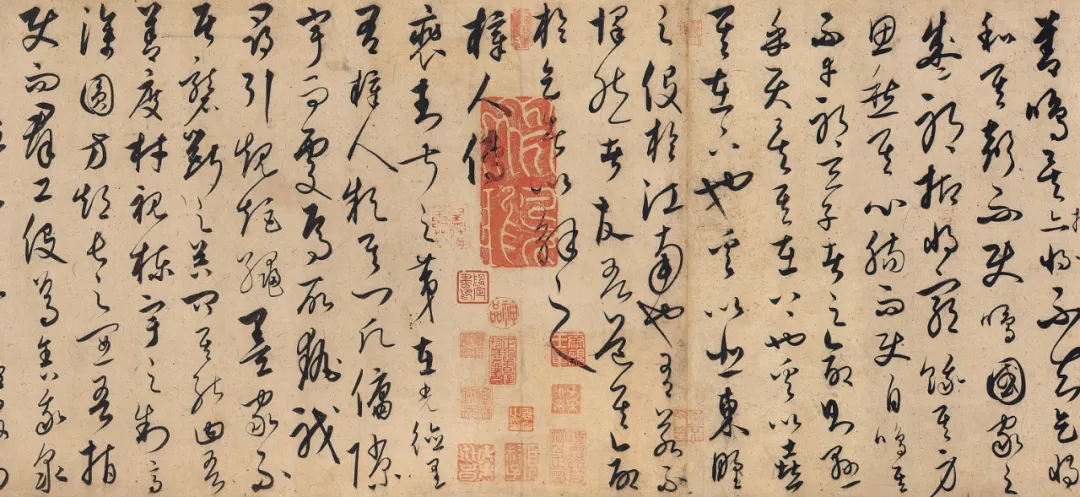
Part of Rao Jie's "Cursive Script of Han Yu and Liu Zongyuan"
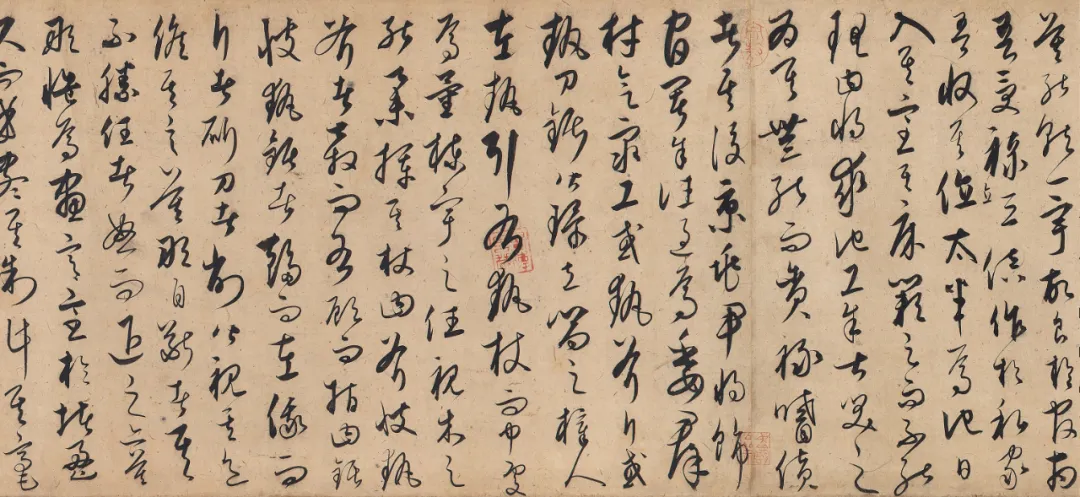
Part of Rao Jie's "Cursive Script of Han Yu and Liu Zongyuan"
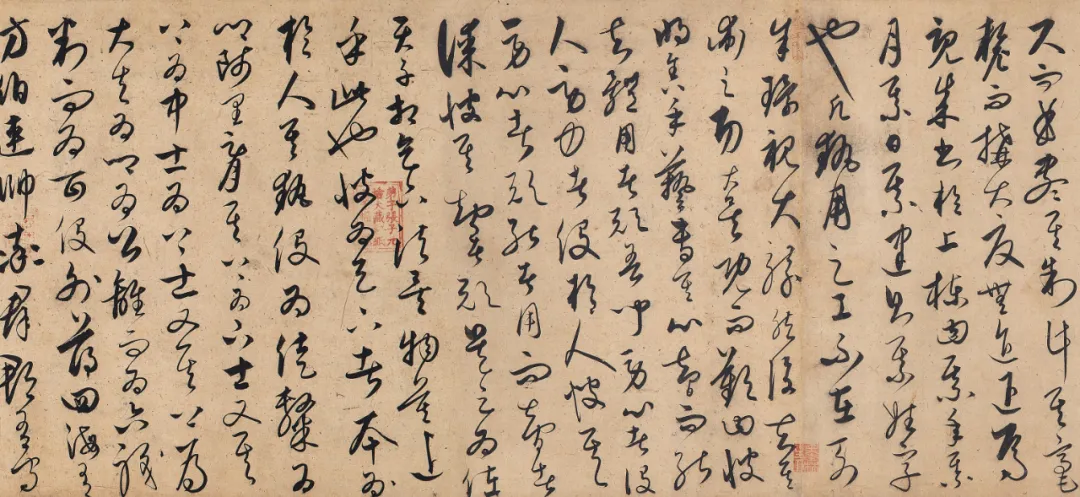
Part of Rao Jie's "Cursive Script of Han Yu and Liu Zongyuan"
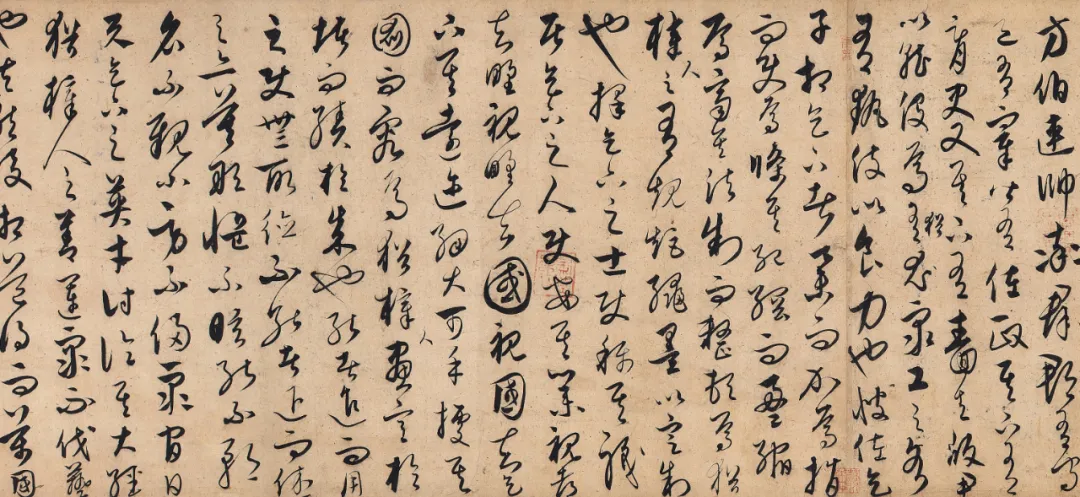
Part of Rao Jie's "Cursive Script of Han Yu and Liu Zongyuan"
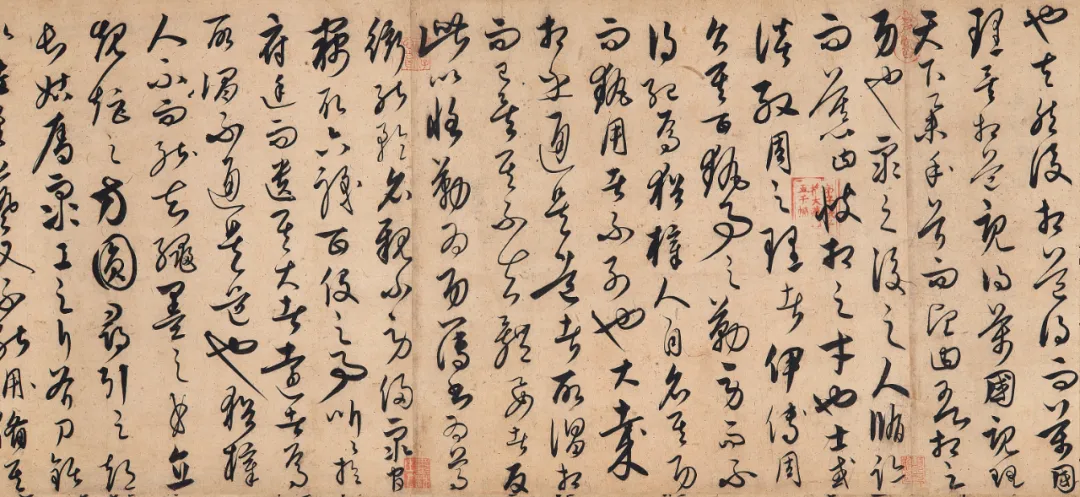
Part of Rao Jie's "Cursive Script of Han Yu and Liu Zongyuan"
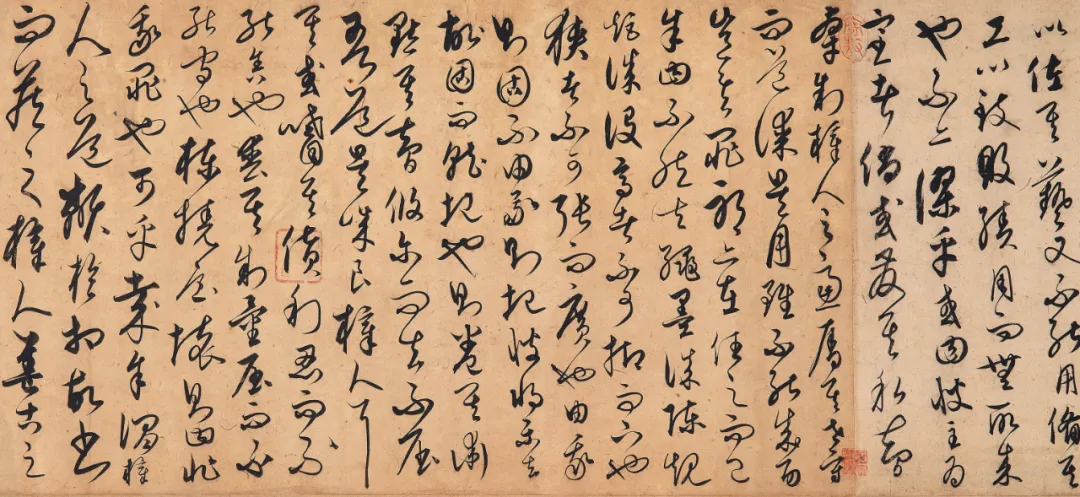
Part of Rao Jie's "Cursive Script of Han Yu and Liu Zongyuan"
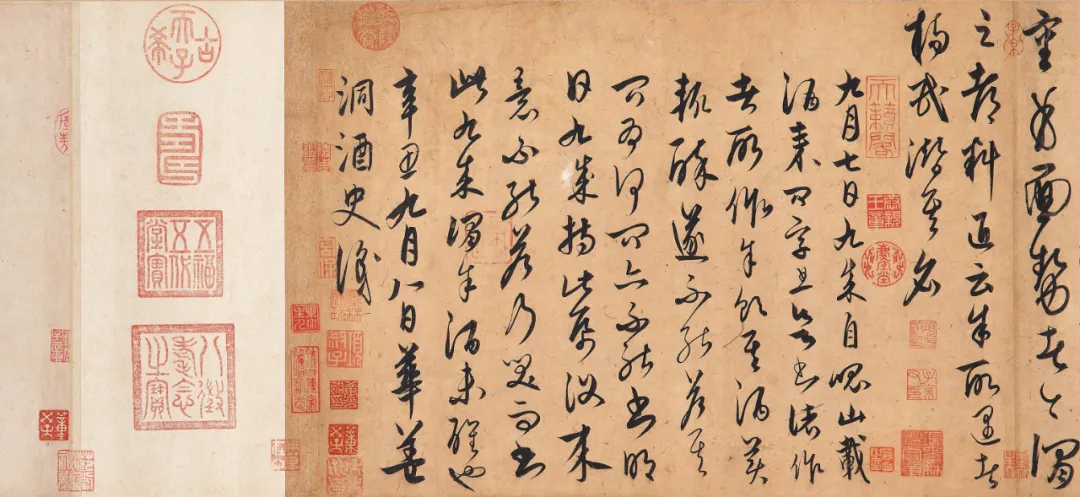
Part of Rao Jie's "Cursive Script of Han Yu and Liu Zongyuan"
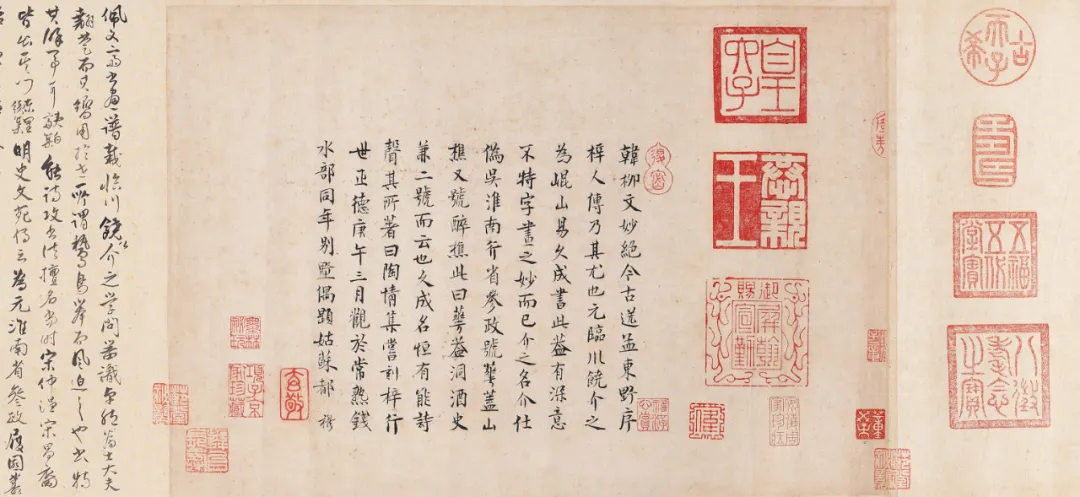
Part of the postscript to Rao Jie's "Cursive Script of Han Yu and Liu Zongyuan's Essays"
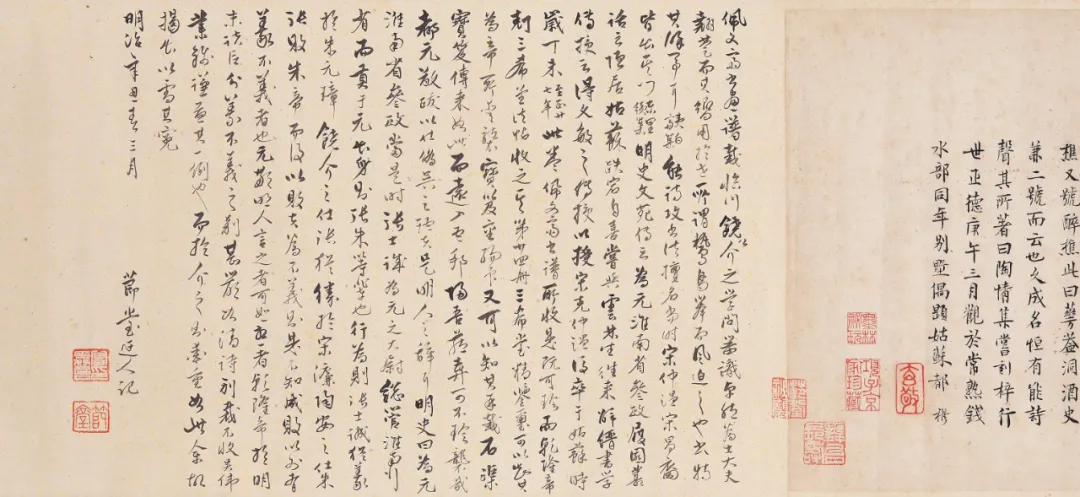
Part of the postscript to Rao Jie's "Cursive Script of Han Yu and Liu Zongyuan's Essays"
Rao Jie's surviving calligraphy works include "Shixing Tie Ye" (collected by the Palace Museum in Beijing), "Writing Two Seven-Character Regulated Verses" (collected by the National Palace Museum in Taipei), etc.
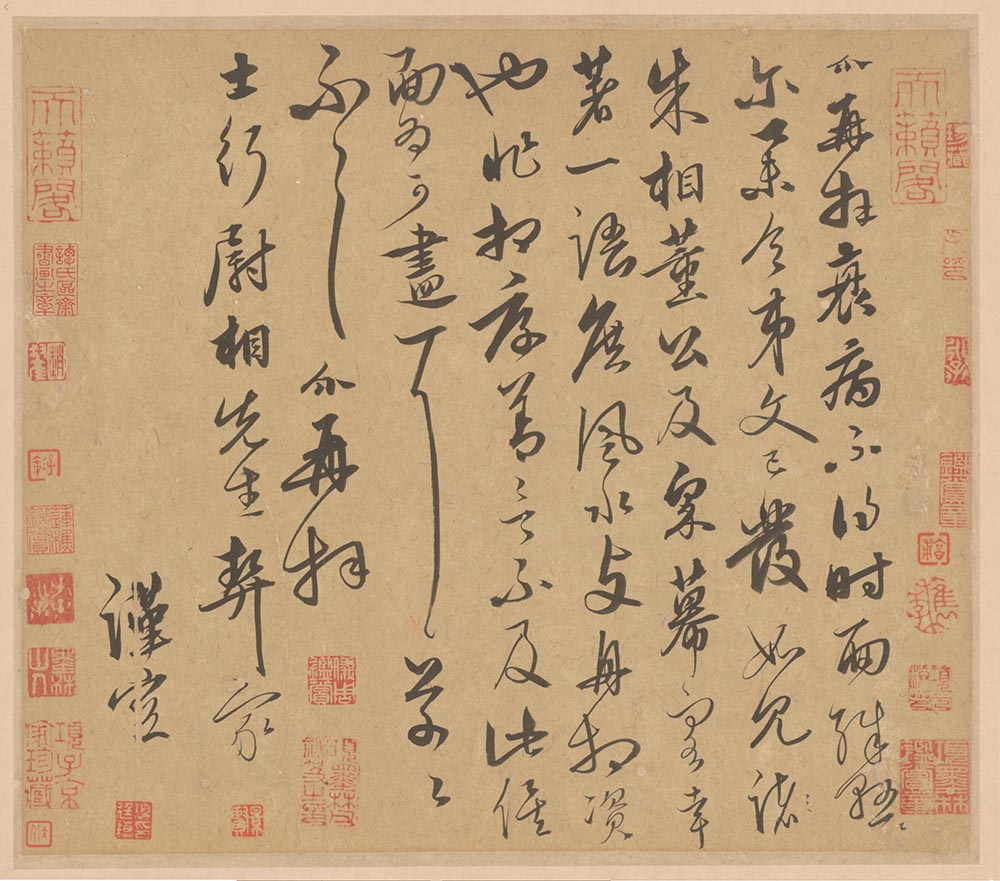
Rao Jie's surviving calligraphy "Shi Xing Tie Ye" (collected by the Palace Museum, Beijing)
(This article is based on relevant calligraphy literature, Sotheby's data, etc.)
Filed under

A landscape painting by Ni Zan from the Yuan Dynasty sold for nearly HK$160 million in Hong Kong.
On October 28, "Landscape at the River Pavilion", a masterpiece from the late Yuan Dynasty landscape painter Ni Zan, from a private collection in Nort...

Song to Qing bronzes in a New York special exhibition
Later Chinese bronzes from Song through Qing—archaism, ritual echo, and collecting in New York.

Zhejiang grotto statues: Wuyue peak to Yuan boom
From Wuyue patronage to Yuan workshops—how Zhejiang’s caves map two high points of stone sculpture.