
Minor Heat: warm winds and households drying sunflowers
Xiaoshu with Yuan Zhen—warm wind, noisy bamboo rain, and sunflowers drying in every yard.
Yuan Zhen’s Minor Heat poem hears warm wind, bamboo rain, and mountain thunder. The eleventh solar term is not yet the year’s hottest peak, yet every household feels the turn—sunflowers drying, air thickening toward high summer.
Among the people, there are customs such as "eating new food", "eating dumplings" and "eating fried noodles" in Xiaoshu. In many places, there is also the custom of eating lotus root in Xiaoshu. In addition, on the sixth day of the sixth lunar month, there is also the custom of drying calligraphy, paintings, and clothing, which is the so-called "every family is drying red and green."
There are young lotus roots in the painting
During the Slight Summer Season, grab a fan, brew a pot of herbal tea, watch the lotus flowers bloom, eat fresh and tender lotus roots, and cool off the fire. "Compendium of Materia Medica·Fruit Section·Lotus Root" records: "Picked tender in June and July, it is crispy and delicious when eaten raw."
In the Jiangnan water towns, there is a custom of eating honey-glazed lotus root during Xiaoshu. The fresh lotus root is simmered until it becomes mashed, sliced and eaten with honey. It is fresh, soft and glutinous, sweet but not greasy.
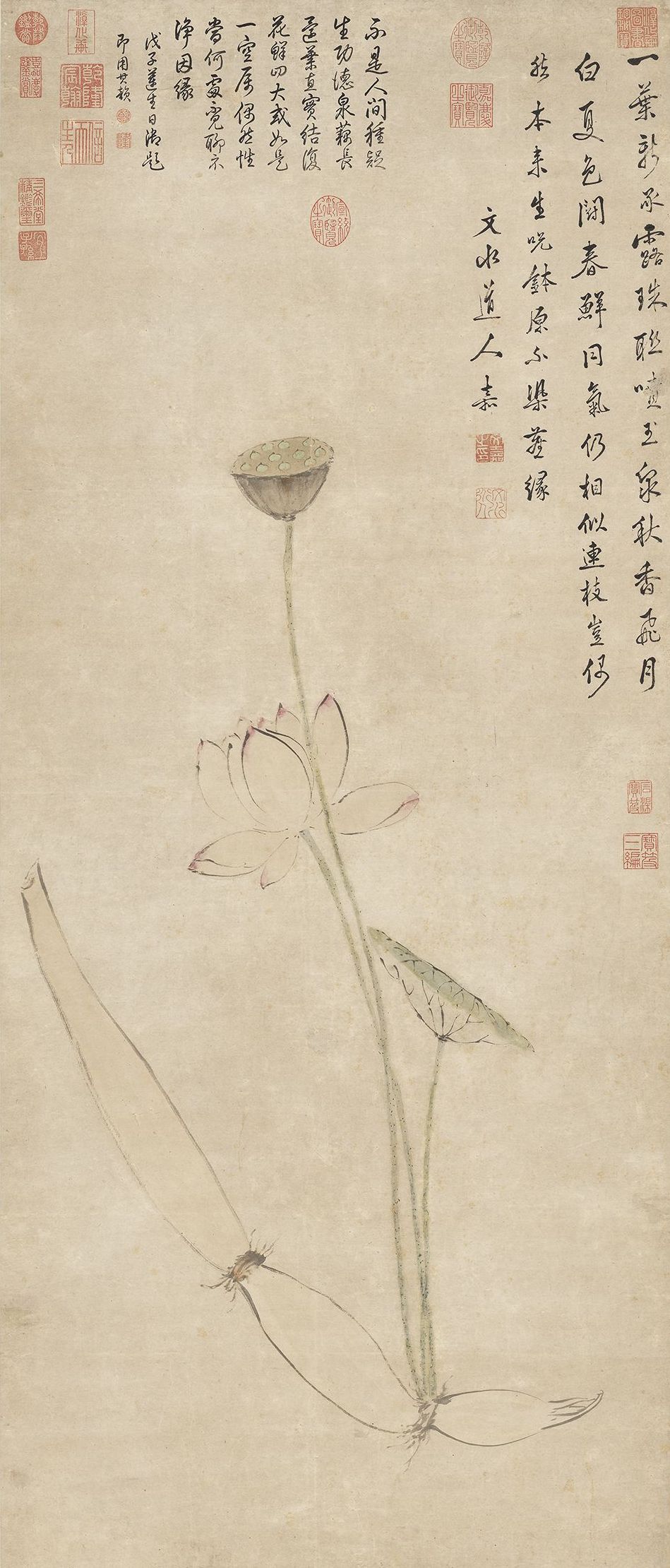
Ming Dynasty Jia Painting Lotus Root Silk Shaft Collection of the National Palace Museum, Taipei
There are many lotus roots in ancient calligraphy and painting works. Wenjia of the Ming Dynasty painted "The Pure Cause of Lotus Roots" (collected by the National Palace Museum in Taipei). In the painting, there is a lotus leaf, a lotus, a lotus pod, and three new sections of lotus roots. The painting gives you a refreshing feeling. Meaning.
Emperor Gaozong of the Qing Dynasty wrote an imperial title: "It is not a human species, and it is suspected to be a spring of merit and virtue. The lotus root is long and the leaves are straight, and the fruit is full of fresh flowers. The four major elements may be like this, and one of them is empty. Where to find the nature, it shows the pure cause and condition. Wuzilian Use the rhyme for the birthday title."
Yun Shouping's sketch book "Lotus Root" from the Qing Dynasty has a running script title: "Digging in the mud to hide pure jade, I broke out crisp and light strands of silk. The title of the Ouxiang Pavilion play."
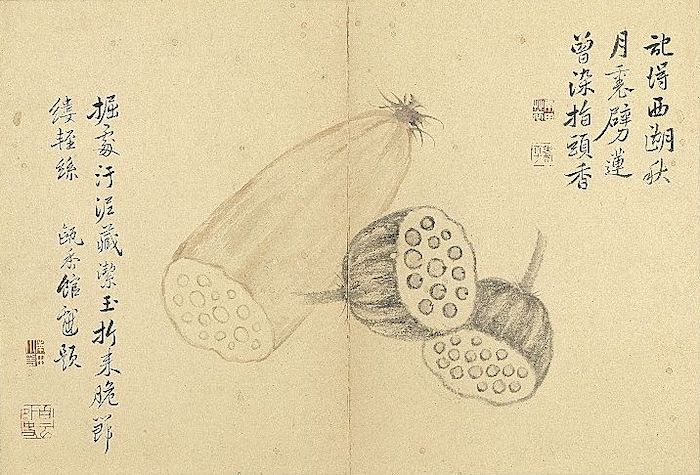
The sketch book "Lotus Root" by Yun Shouping of the Qing Dynasty is collected by the National Palace Museum in Taipei.
Qi Baishi, a master of modern painting, also likes to paint lotus roots. The lotus roots in his paintings are pure lines and dotted with insects, making the picture clean and concise.
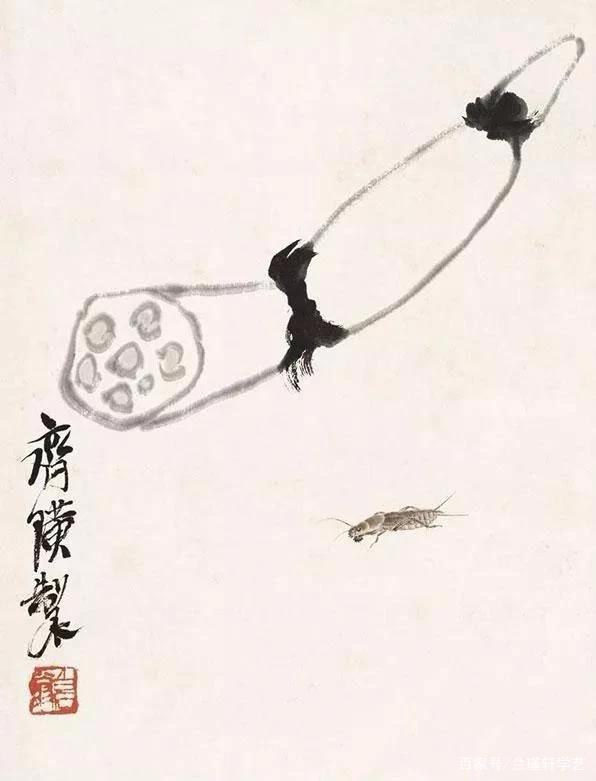
Lotus root written by Qi Baishi
Summer heat in calligraphy
Most of the literati of the past dynasties felt that the days were getting longer because of the summer weather. In fact, there was no lack of joy among the poets when they read the poems of the past dynasties. A poem by a Song Dynasty poet includes "Heavy Rain on the Eighteenth Day of Little Heat": "When I pray for the mountains and rivers, the rain will come, and when I am cultivating seedlings, I think of the deep fields. I am glad that the Little Heat can be like this, and I even hope that the new autumn will be like this. The early rice will bloom and the late crops will bloom. The leaves have not yet grown, and the sky cannot bear the pain, and it has been overcast since it was first planted."
However, in the letters written by Wang Xizhi of the Jin Dynasty, the physical weakness and loss of appetite of him and his friends can be seen in the letters describing the hot weather, such as "Great Heat Tie", "Today's Very Hot Tie", "Xu Summer Tie", etc. "Dare Tie" wrote: "It is very hot, and the ears can be heard late after one step. I suffer from this fever very much. I don't have enough strength." "Today's Very Hot Tie" records: "Today's heat is very hot. Please do not hesitate to step forward. I am exhausted and feel that I have no strength." There is also "Today's Hot Tie": "I feel deeply about the summer heat. After getting the book, I know how to stop it. "I'm tired. I'm not satisfied with my food. I'm not satisfied with my results."
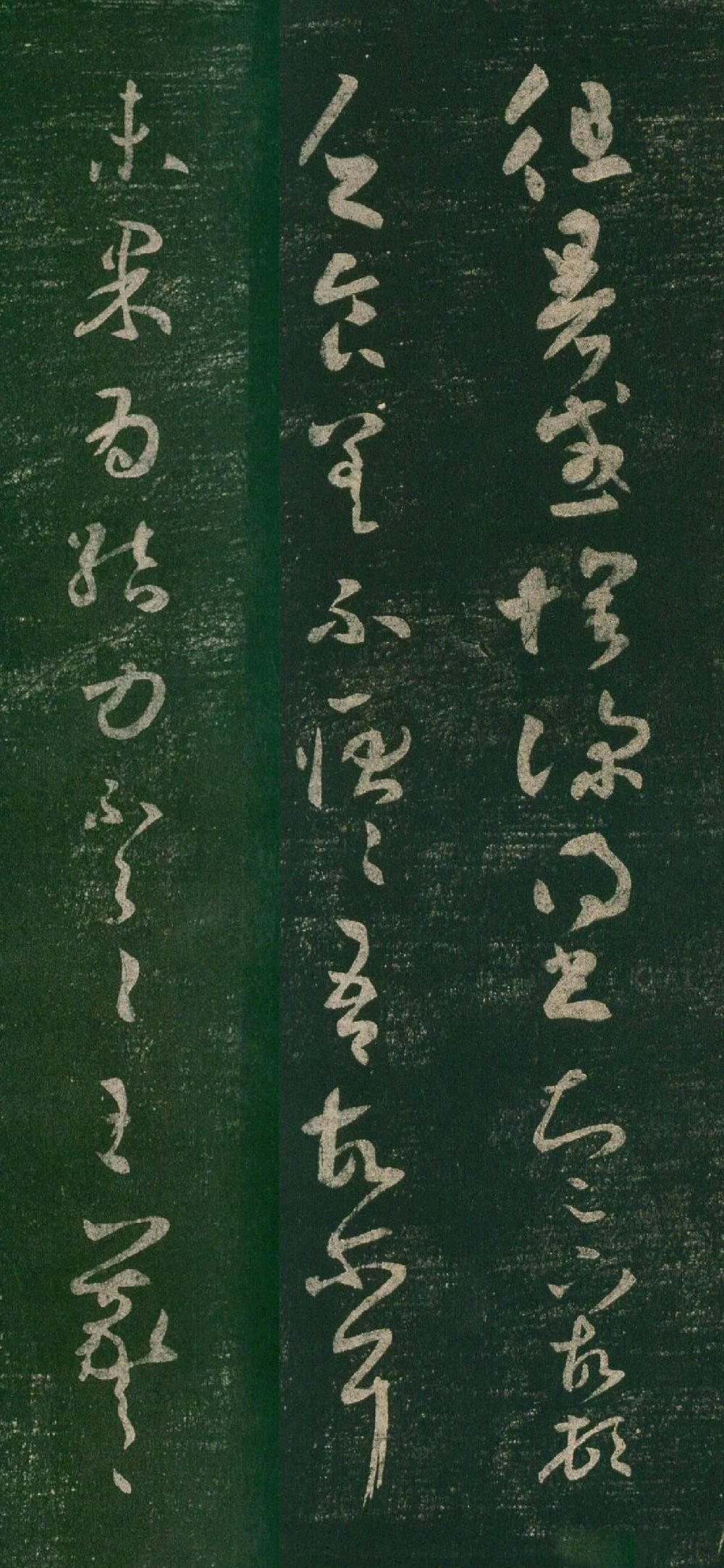
Eastern Jin Dynasty Wang Xizhi's "Xu Summer Tie" (the seventh Tie of Chunhua Pavilion)
Yang Ningshi, a calligrapher of the Five Dynasties, has "Xiare Tie" handed down from generation to generation, which is interpreted as "Ningshiqi: Xiare body wear is good, long □ crispy and dense water, that is, if you want to make a Dharma seat, bitter □□□ milk offering, crisp like Not as good as..."
This post is Yang Ningshi's only cursive calligraphy work handed down from generation to generation. The calligraphy is inspired by the calligraphy techniques of Yan Zhenqing and Liu Gongquan of the Tang Dynasty. The rich artistic changes of the calligrapher are one of the representative works of Yang Ningshi's calligraphy.
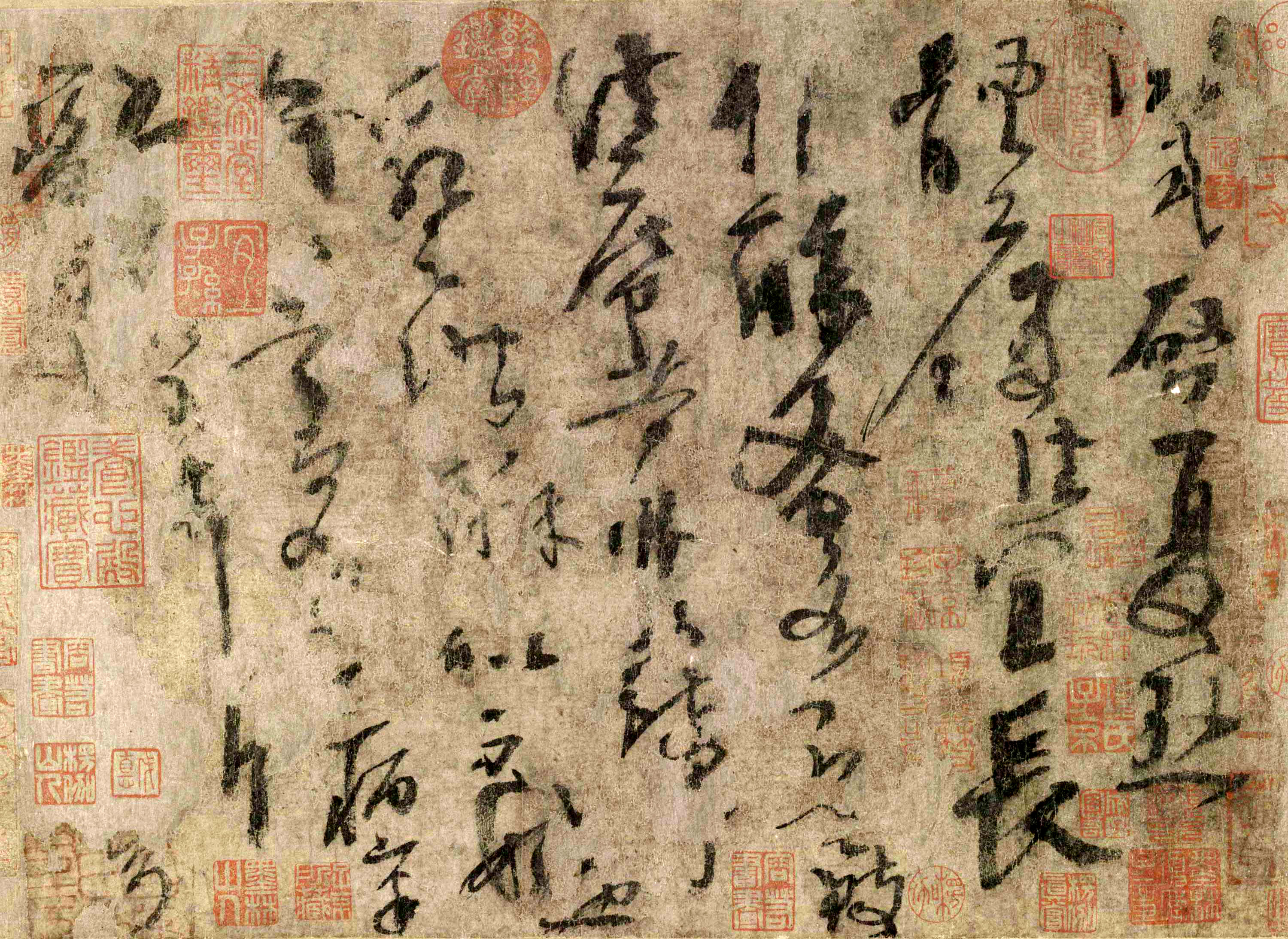
Five Dynasties Yang Ningshi's "Xia Re Tie"
Cooling off in murals
Many of the Dunhuang murals reflect the lifestyle during the Xiaoshu season.
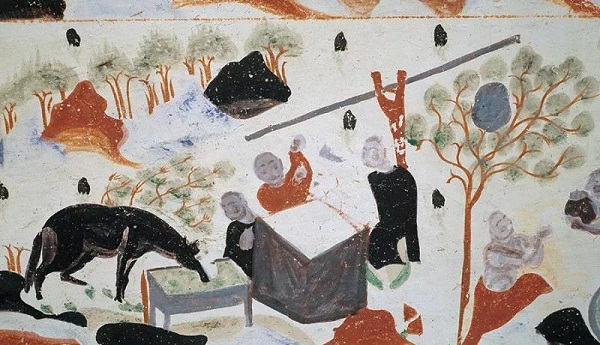
Mogao Grottoes Cave 302, the top of the cave is draped to the west, Sui Dynasty
Although there were no refrigerators in ancient times, pure natural well water could cool people instantly. Just being at the well is like opening the door of the "cold room".
The three people in the center of the picture in Cave 302 of the Mogao Grottoes are drawing water from the well through the Juju Principle (what we call the lever principle today). Among them, the man in red is pulling the rope hard to send the bucket down the well, with more and more water. The tail of the horizontal pole carrying the stones will rise high. After the water is filled, the lever principle and the gravity of the stones are used to transfer the water up.
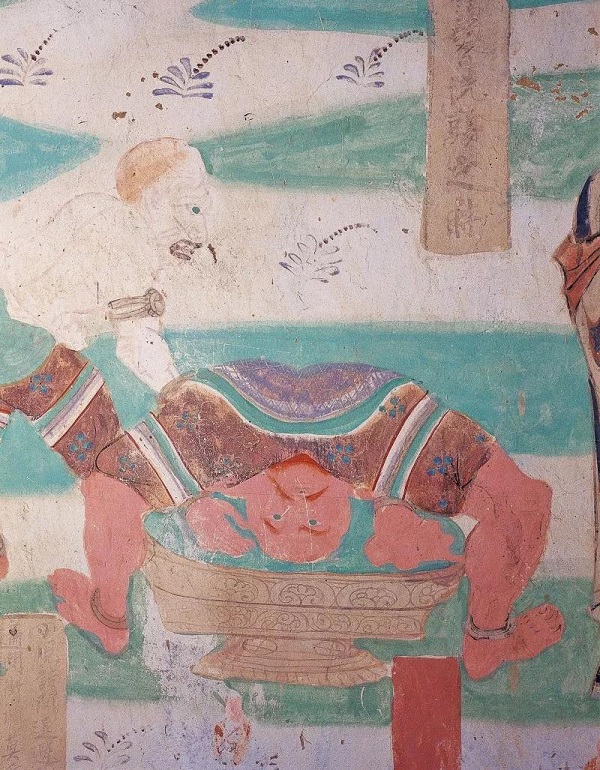
Mogao Grottoes, Cave 146, West Wall, Five Dynasties
If you can't take a shower every day, then wash your hair or body in a refreshing way while the well water is still hot. Pour the well water into a round basin with waist and high legs, bend down and plunge your head into the water. There is a picture of washing hair in Cave 146 of Mogao Grottoes.
There is also swimming. There are often children playing in the lotus pond of the Pure Land World in the Tang Dynasty mural in Cave 148 of the Mogao Grottoes. They don't even need to wear any clothes. The ripples on the water and the blooming lotus flowers are the best decorations.
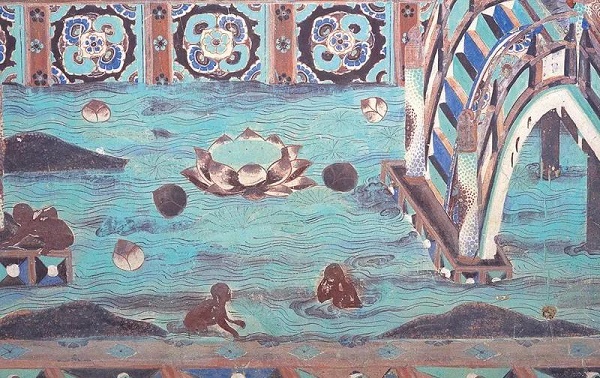
Mogao Grottoes, Cave 148, East Wall, Tang Dynasty
(This article is based on relevant folklore materials, Dunhuang mural documents and past reports )

Eating melons across dynasties in Chinese folk art
Great Heat and melons—cooling fruit as a long motif in folk art and excavated relics.

Summer Solstice coolness in carved Chinese paper-cuts
The 24 solar terms in folk art—Summer Solstice cut into cool patterns of carved paper.

The 24 Solar Terms | Summer Solstice: Enjoying Lotuses by the Waterside, and Living in the Mountains
Summer Solstice habits: lotus by the water, melon season, and mountain retreats.