
Guyuan relics: Zhou oracle bones to Sui–Tang murals
Ningxia Guyuan finds at Shanghai Museum—Western Zhou oracle bones and Sui–Tang tomb murals.
Shanghai Museum brings Guyuan’s frontier archaeology into the city: Western Zhou oracle bones, Sui–Tang murals, and related finds from Ningxia. The display follows the Silk Road corridor Wang Wei once mapped in verse—desert smoke, long rivers, and the Protectorate’s northern edge—now told through excavated things.
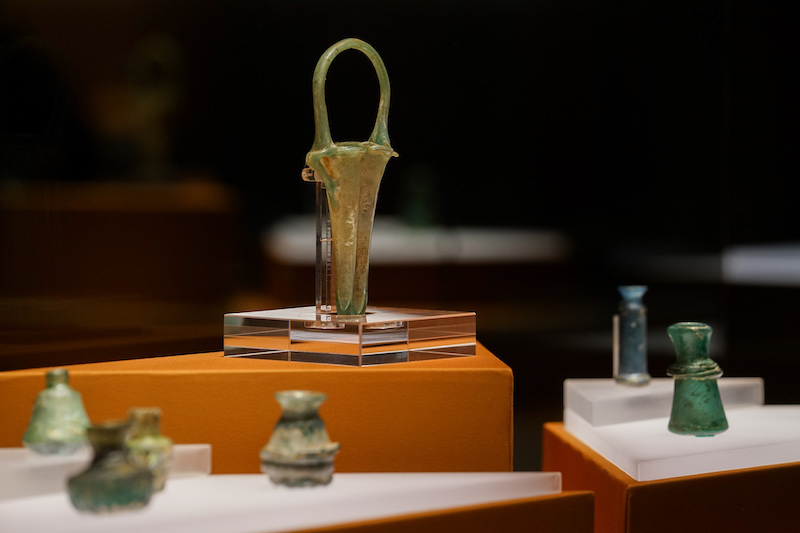
Exhibition View
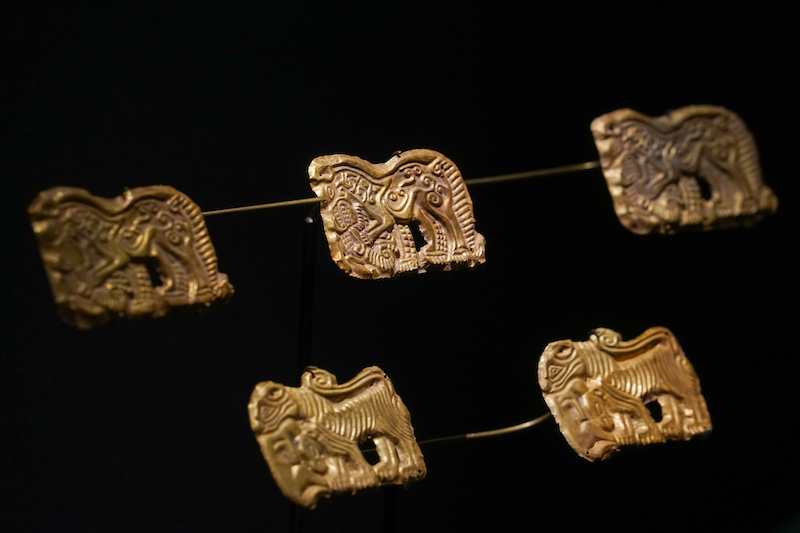
Exhibition View
Guyuan is located in the middle and upper reaches of the Yellow River, in the southern part of Ningxia Hui Autonomous Region, connected to Guanzhong Plain in the southeast, Hexi Corridor in the west, and desert grassland in the north. Since ancient times, it has been the intersection of Central Plains culture, grassland culture and Western Region culture, where multiple cultures blend. It is a key point on the ancient Silk Road, a thoroughfare connecting the east and the west, and is known as the "throat of the frontier".
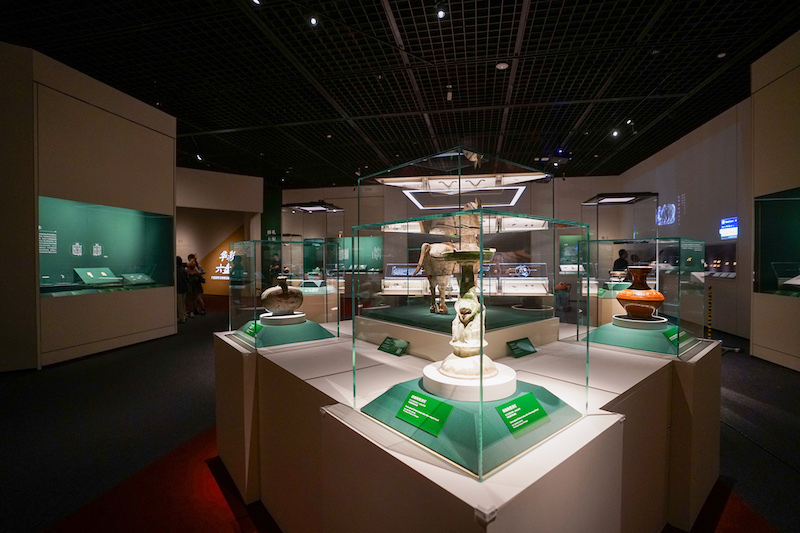
Exhibition View
The curator of this exhibition, Wang Yue, deputy director of the Bronze Research Department and research curator of the Shanghai Museum, told the press: "Among many Chinese cities, Guyuan is a particularly bright place. It has historical, cultural and artistic characteristics. We call it a model, that is, it has the most classic expressions of almost all civilizations. For example, it is a point in the northwest of Chinese civilization. Later, it also includes some classic cultural relics of Sogdian culture and Central Asian culture, as well as artistic expressions of the northern grasslands. This area is an excellent display window for the history of more than 1,000 years. It is like a slice of history and culture, which allows us to vividly and directly see the historical appearance of the diversity and unity of Chinese civilization."
This exhibition is divided into three parts: "Casting Rites in Dayuan", "Hu and Han Dance Together" and "Yuanzhou Style". It takes the Western Zhou period, Northern Dynasties period and Sui and Tang dynasties as the entry point of Guyuan, and shows the magnificent picture of the integration of multiple cultures in the ancient Guyuan area.
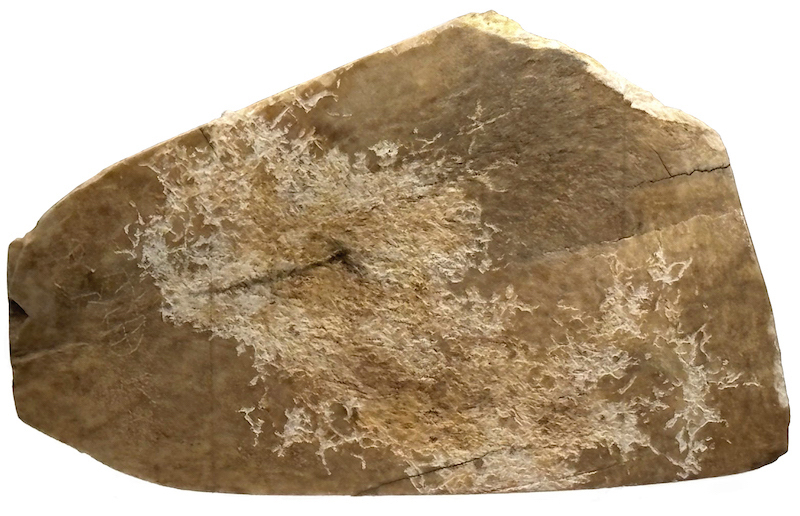
"Jiaji" Divination Bones
During the Western Zhou Dynasty, Guyuan was historically known as "Dayuan" and was a strategic location for the Zhou Dynasty. At the entrance of the exhibition hall, a display cabinet presents the "Jiaji" oracle bone, which strongly confirms the existence of the Western Zhou Dynasty's Huo State, which was enfeoffed under the Liupan Mountains, and also makes this site the most northwestern site of oracle bone discoveries in my country. This oracle bone was unearthed from the Yaoheyuan Western Zhou Site and is one of the "Top Ten Archaeological Discoveries in China in 2017". The Yaoheyuan Site is the capital city site of the most northwestern state of the Western Zhou Dynasty. The unearthed chariots and many car accessories, jade ritual vessels and other cultural relics, together with the bronze gui and other artifacts unearthed from the Sunjiazhuang Western Zhou Cemetery in the display cabinet on the left side of the entrance, jointly prove that the ritual and music system of the Zhou Dynasty was fully developed here.
From the Spring and Autumn Period to the Qin and Han Dynasties, Guyuan, as an important town in the northwest border defense, the Central Plains culture continued to deepen and develop here, and at the same time, it integrated the northern bronze culture represented by animal pattern plaques and bronze daggers, making the region present a prosperous development of multiculturalism. Since the Qin and Han Dynasties, the Central Plains system has become a climate here. During this period, the local political, economic system and even social customs developed synchronously with the Central Plains. In the exhibition hall, the Han Dynasty "Chao Na" inscribed bronze tripod witnessed the local administrative system in the early Western Han Dynasty; the "Yidao Ping Wuqian" copper coin and "Huoquan" money mold reflected that its monetary system developed synchronously with the Central Plains; and the animal pattern pieces displayed in groups showed the superb artistic achievements of the time.
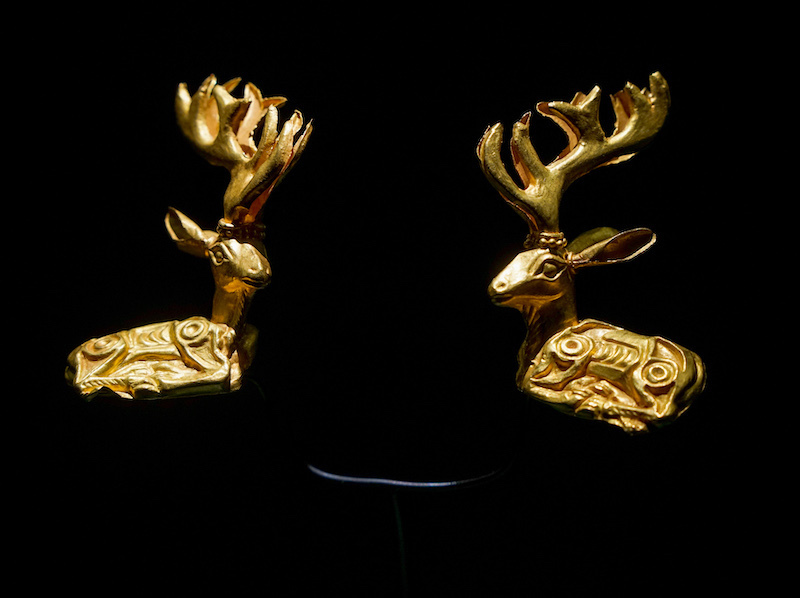
Exhibition site, animal pattern ornaments
Since Zhang Qian opened up the Western Regions, merchants, monks and envoys have been traveling on the Xiaoguan Ancient Road. During the Southern and Northern Dynasties, the Silk Road became more prosperous, and Guyuan became an important transportation hub on the northern route of the eastern section of the Silk Road. The second part of the exhibition, "Hu-Han Dances Together", is based on the unearthed cultural relics from the tomb of Li Xian, a general of the Northern Zhou Dynasty, showing the prosperous scene of Sino-Western cultural exchanges in Guyuan during the Northern Dynasties.
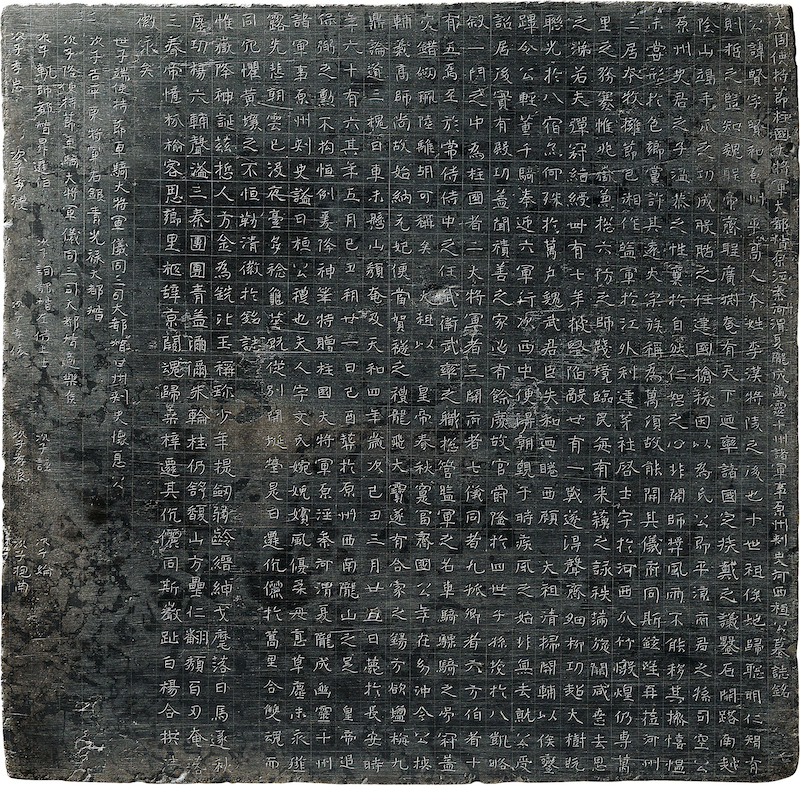
Tomb Inscription of Hexi Gong (Li Xian), the Pillar of the State
Li Xian was an influential figure in the Northern Zhou Dynasty. His tomb structure, epitaphs, murals and other unearthed cultural relics reflect the continuation of traditional Han burial customs. To view the display cabinet of Li Xian's epitaph, visitors need to walk through a mural corridor, which displays many murals unearthed from Li Xian's tomb. Most of the figures shown here are warriors, with round and plump faces, round eyebrows, straight noses, double eyelids, "eight"-shaped beards, large ears, long earlobes, short and strong necks and shoulders, and some warriors with their eyes slightly closed or looking down. The colors of the mural characters are mostly applied using the Western Regions shading method, which was called "concave and convex method" or "Indian legacy method". This one-stroke shading method was also commonly used in the Dunhuang Grottoes murals during the Western Wei and Northern Zhou dynasties. At that time, there may have been artistic exchanges between Guyuan and Dunhuang. The painted pottery figurines next to the murals show that the configuration of the pottery figurines at that time followed the old system of the Northern Wei Dynasty, and their shapes also reflect the characteristics of the times.
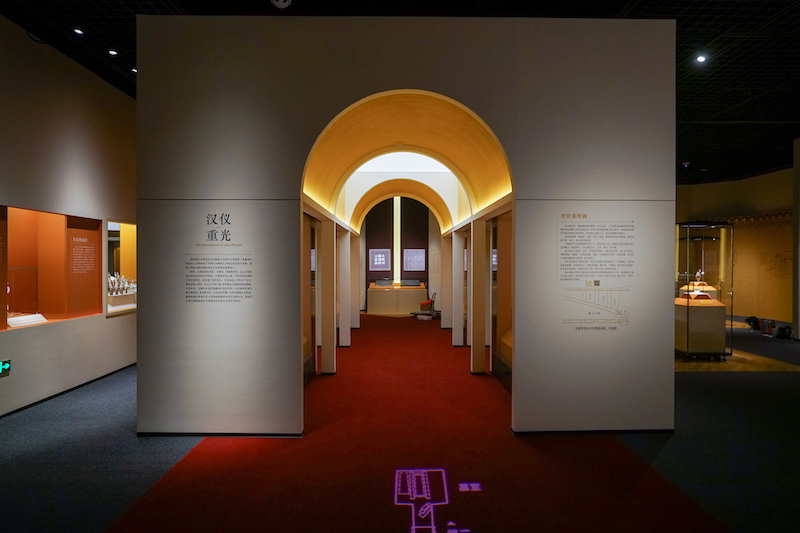
Exhibition site, corridor showing murals

Mural of Li Xian's Tomb, Maid Mural

Mural of Li Xian's tomb, mural of a warrior holding a sword
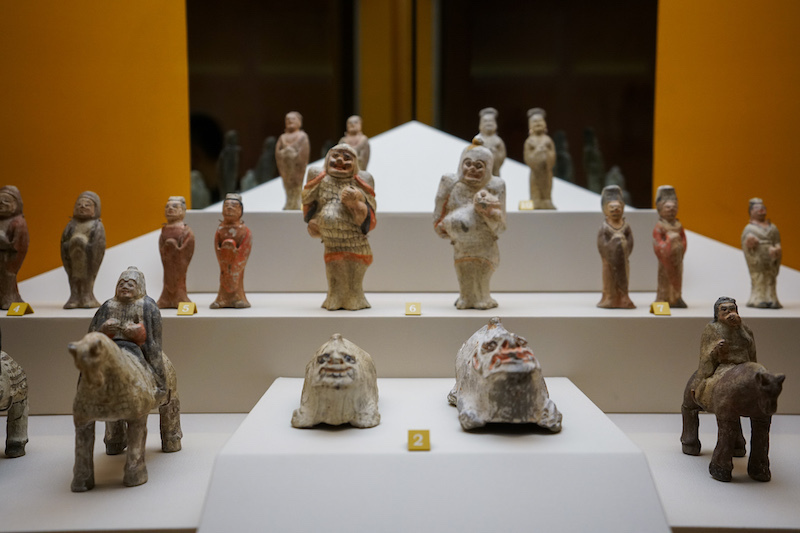
Exhibition site, painted pottery figurines
The gilded silver pot unearthed from Li Xian's tomb is a major discovery of Persian Sassanid gold and silver artifacts in my country. The artifact carries Greek stories and is decorated with Persian patterns. It was introduced to the Guyuan area through the Silk Road trade, connecting the Greek civilization, Persian civilization and Chinese civilization on the Eurasian continent.
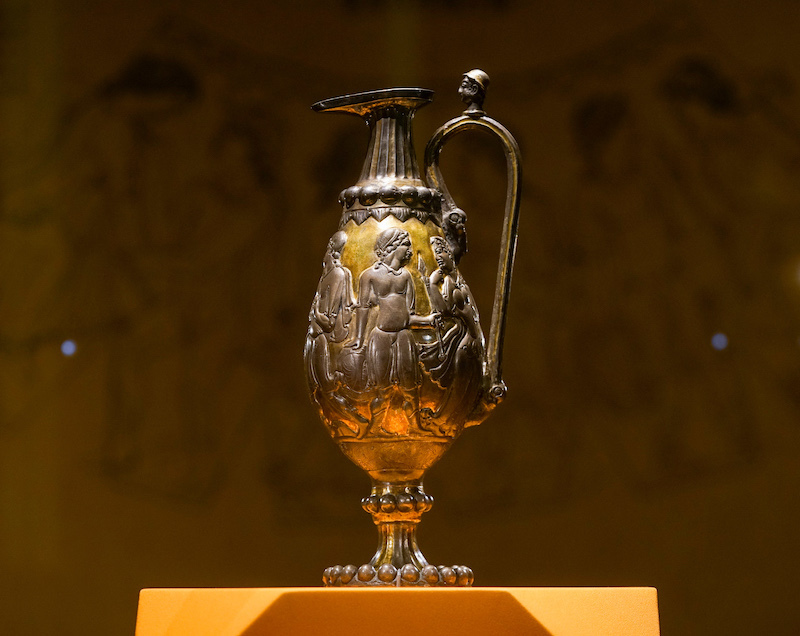
The gilded silver pot unearthed from Li Xian’s tomb at the exhibition site
Another studded glass bowl has a continuous rounded convex spherical surface on its outer wall, which is also a typical Sassanid style glassware. Wang Yue told reporters that even in Iran today, it is difficult to find glass bowls of the same style that are so well preserved. "The studded glass bowl and the multiple groups of glassware next to it indicate that Guyuan was an important trade route on the Silk Road at that time. There was a lot of trade here, and glass was probably one of the most important imported commodities."
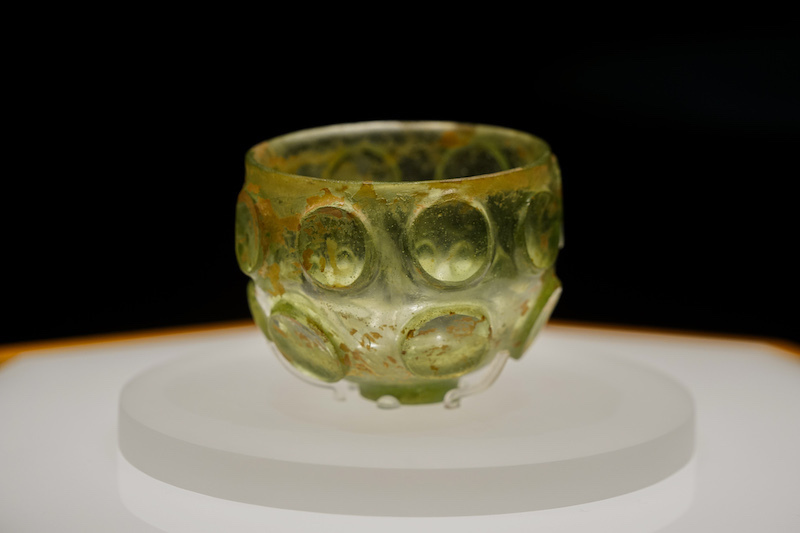
The exhibition site, a glass bowl with raised nails unearthed from Li Xian’s tomb
During the Sui and Tang dynasties, an open foreign policy was implemented. Guyuan was called "Yuanzhou" at that time. As an important town on the Silk Road and an important gateway from Chang'an to the Western Regions, its economy and culture achieved unprecedented development. At that time, many ethnic groups including Han, Turkic, Tiele, Tuyuhun, Qifu, Sogdian, and Dangxiang lived in Guyuan. Among them, the most distinctive surname was Shi, one of the "Nine Zhaowu Surnames" of the Central Asian Sogdians.
The third part of the exhibition uses the unearthed cultural relics from the Shi family tombs of the Sui and Tang Dynasties in Guyuan as a starting point to show the process of Sinicization of the Sogdians who came to China.
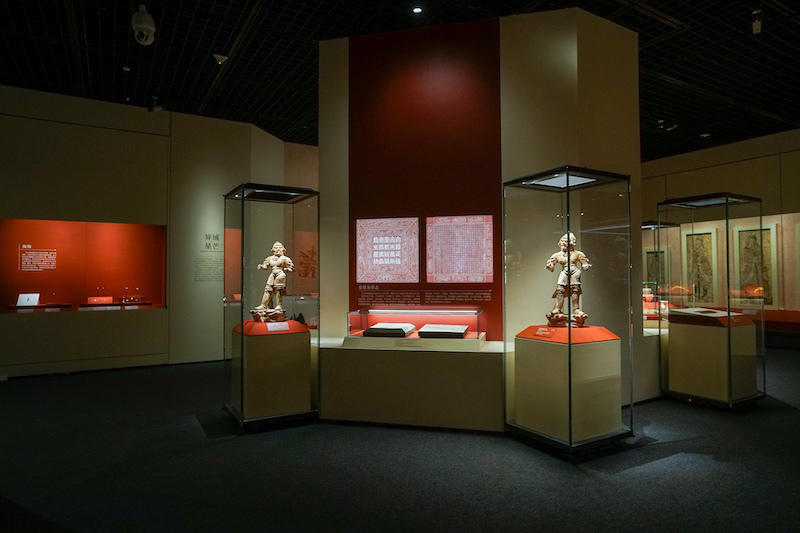
The third part of the exhibition is based on the unearthed cultural relics from the Shi family tombs in Guyuan during the Sui and Tang dynasties.
The Shi family cemetery of the Sogdians in Guyuan area is the first Sogdian tomb group from the Sui and Tang dynasties discovered in China. The unearthed epitaphs are all written in Chinese, and the four sides of the epitaphs are mostly decorated with images of the four gods and the twelve zodiac animals.
The figure modeling method in the murals of Shi Shewu's tomb is typical of the Central Plains style, with vigorous and powerful lines and rich variations. The figure modeling method in this mural is very different from that in Li Xian's tomb. Although the two tombs are located in the same geographical unit and were painted only 40 years apart, the characteristics of the figures and the modeling methods are very different.
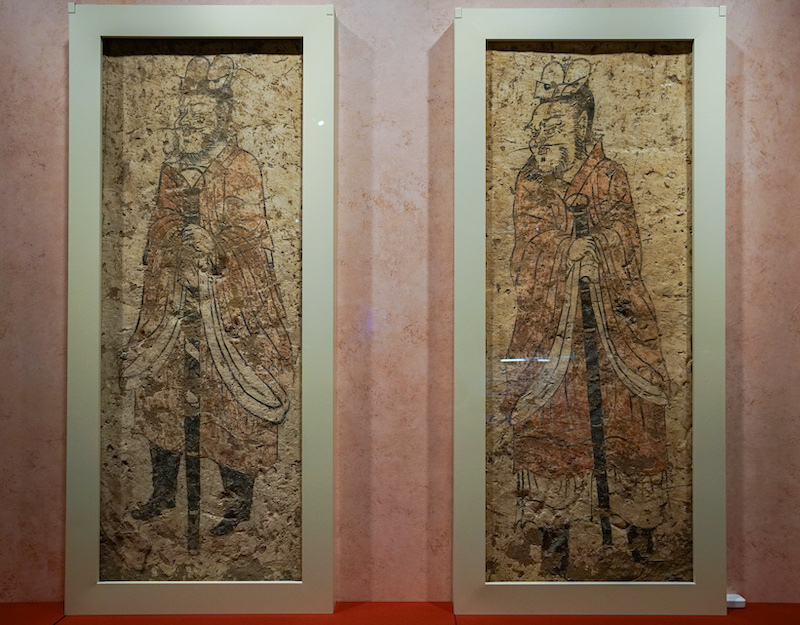
Figures in the murals of Shi Shewu's tomb
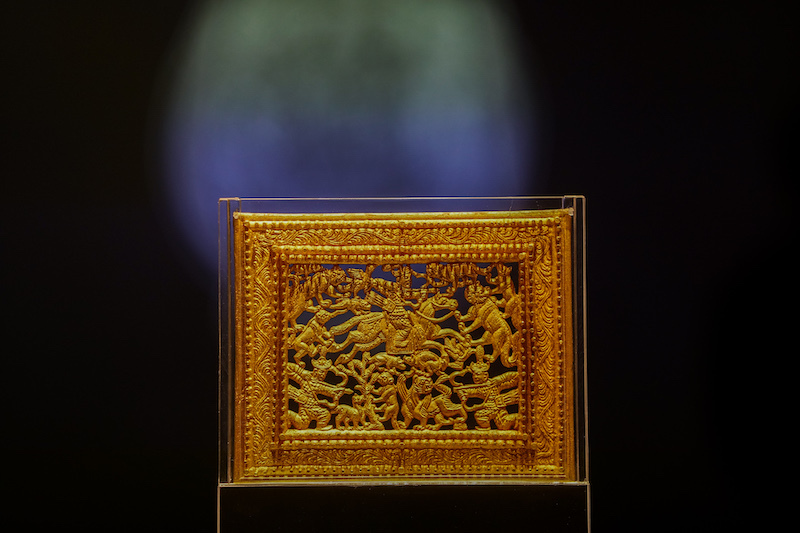
Exhibition site, Hunting Picture Jin Fangqi
The burial custom of the Sogdians who came to China, with their faces covered with gold ornaments and gold coins in their mouths, also reflects the preservation of some of their traditional customs. In the display cabinet, the hunting images on the gold square are exquisite, and the green-glazed pottery flat pot with music and dance witnesses that the music and dance of the Hu people were introduced into the Central Plains along the Silk Road, and eventually rose to become a vivid footnote to the prosperity of the Tang Dynasty. These cultural relics not only reflect the prosperity of cultural exchanges on the Silk Road, but also highlight the profound heritage of "harmony in diversity" in Chinese civilization.
The exhibition will run until November 17th.

Gao Menghe on the Hongshan special exhibition
Academic consultant Gao Menghe on Hongshan jades—and what the special exhibition wants to prove.

Hongshan jade dragons in a special exhibition line-up
Prehistoric jade dragons arrayed for Hongshan Culture—formation, ritual, and Neolithic shine.

Archaeology Shanghai opens under a museum skylight
Shanghai Museum East Hall’s permanent “Archaeology Shanghai” gallery—skylight as the room’s signature.