
"The pen and ink see the true chapter": Reading the ruler letters of Mi Fu and Cai Xiang in Song Dynasty in Taipei
In Taipei, Mi Fu and Cai Xiang letters join Yan Zhenqing and Ming hands in a refreshed calligraphy gallery hang.
The National Palace Museum, Taipei, has refreshed its “Brush and Ink See the Truth” calligraphy sequence with nineteen works, from a Tang rubbing of Yan Zhenqing’s Magu altar record to Song letters by Mi Fu and Cai Xiang, plus Ming pieces by Zhu Yunming and Shen Can. Mi Fu’s wild-cursive close and Zhu’s shifting models of Su Shi, Mi Fu, Huang Tingjian, and Zhao Mengfu show how later hands kept learning from Song masters.
The Sui and Tang dynasties were another critical period. Political unification led to the flow of calligraphy styles in the north and south, and the development of brushwork was perfected. After entering the Song Dynasty, in order to preserve the long-term spread of the calligraphy of the former sages, engraved posts became more and more popular. However, Song people were not satisfied with inheriting the tradition. Calligraphy was oriented towards expressing personal sentiment and gaining its natural charm.
After the Yuan Dynasty, the calligraphy tradition of the Jin and Tang Dynasties was continued. However, ideas that were not bound by tradition also became active, and in the Ming Dynasty there was an air of escape. Calligraphy in the Ming Dynasty was extremely diverse, and cursive script was especially lively and free, which was in contrast to those who followed the traditional rules at that time. Among them, the calligraphers who highlighted their individuality and formed their own style also walked out of the path of realizing themselves and were not engulfed by the trend of the times.
Since the Qing Dynasty, three generations of Qin and Han ancient scripts and scripts have been unearthed one after another, which can be called unique. Under the influence of a pragmatic academic atmosphere, the Qing people rubbed the tablet and used it with the engraved posts. The vision of calligraphy development was able to connect the past and the present, and finally they were able to learn from the past and innovate in seal script and official script, leading a new direction.
Tang Tuoyan Zhenqing Magu Fairy Altar Story
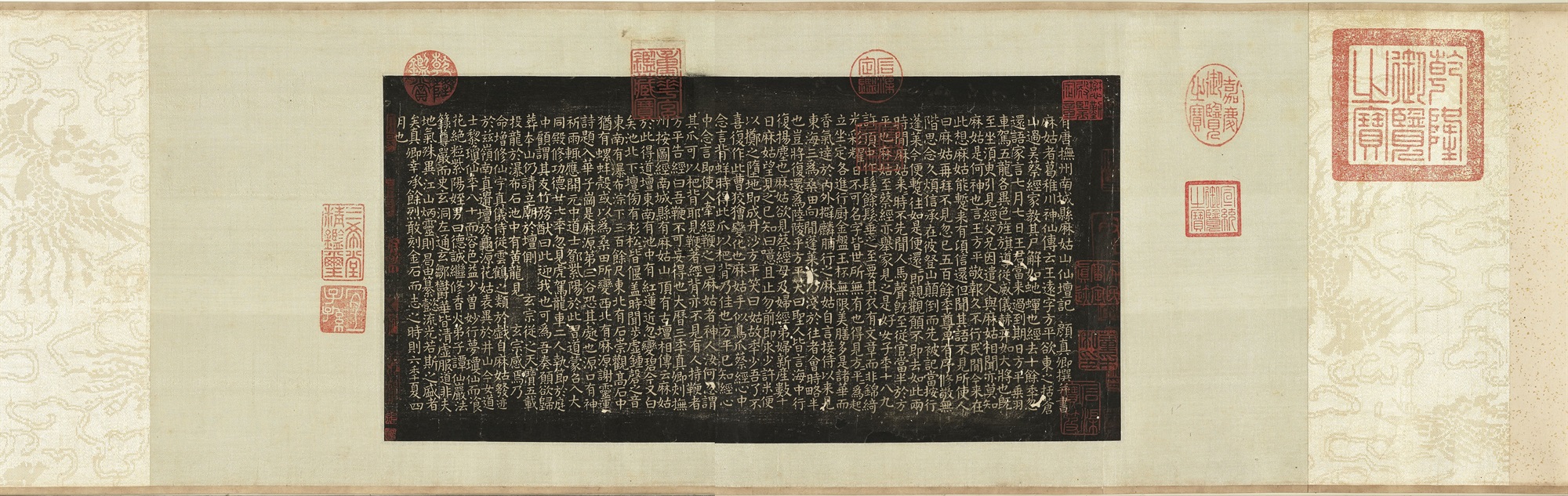
Tang Tuoyan Zhenqing Magu Fairy Altar Story
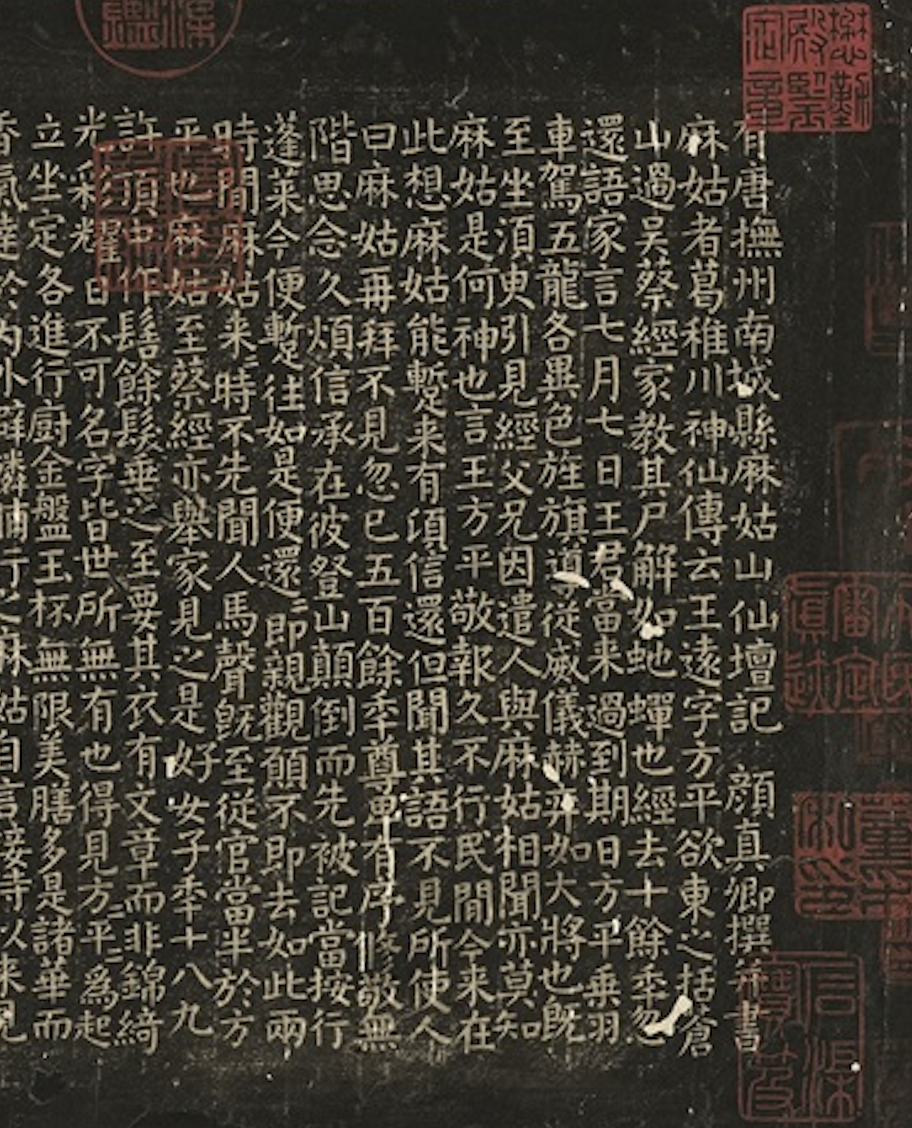
Tang Tuoyan Zhenqing Magu Fairy Tale (partial)
"Magu Xiantan Ji" is one of the best regular script handed down by Yan Zhenqing (709-785), which briefly records the legendary story of Magu's immortality. There are usually large-print and small-print books circulated. People in the world have no doubts about large-print books. As for small-print books, people have different opinions. People in the Song Dynasty believed that the small print version did not avoid the taboo of Tang Taizong's name, and suspected that it was not written by the Yan family. For example, the seventh line "folk" and the fifteenth line "there is nothing in the world". Due to the generous structure of the calligraphy of the small characters, and the characteristics of thick and thick face and center in the pen, the world still gives high praise.
Biography of Song Su Shi's Book Going Back and Coming
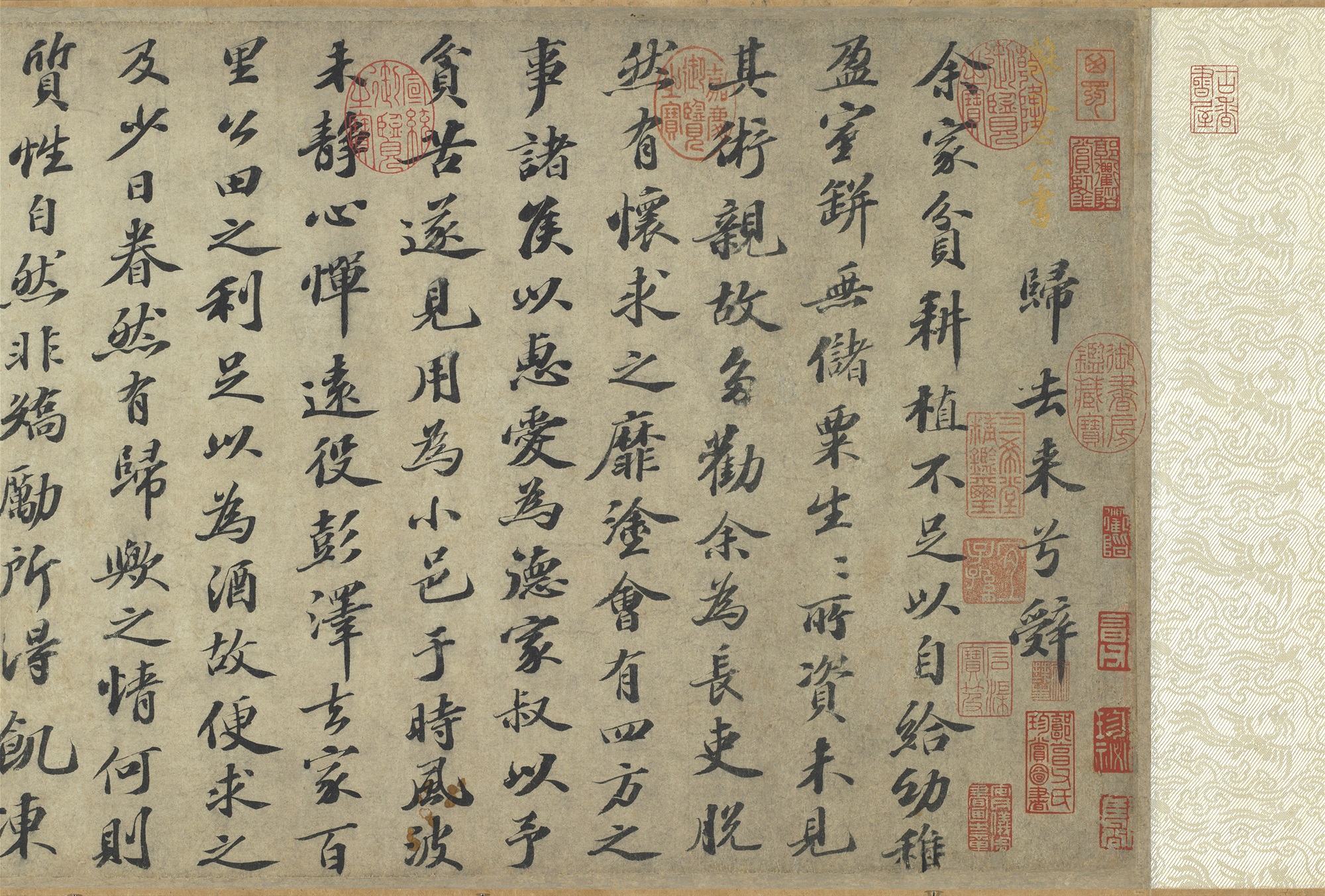
Biography of Song Su Shi's Book Going Back and Coming
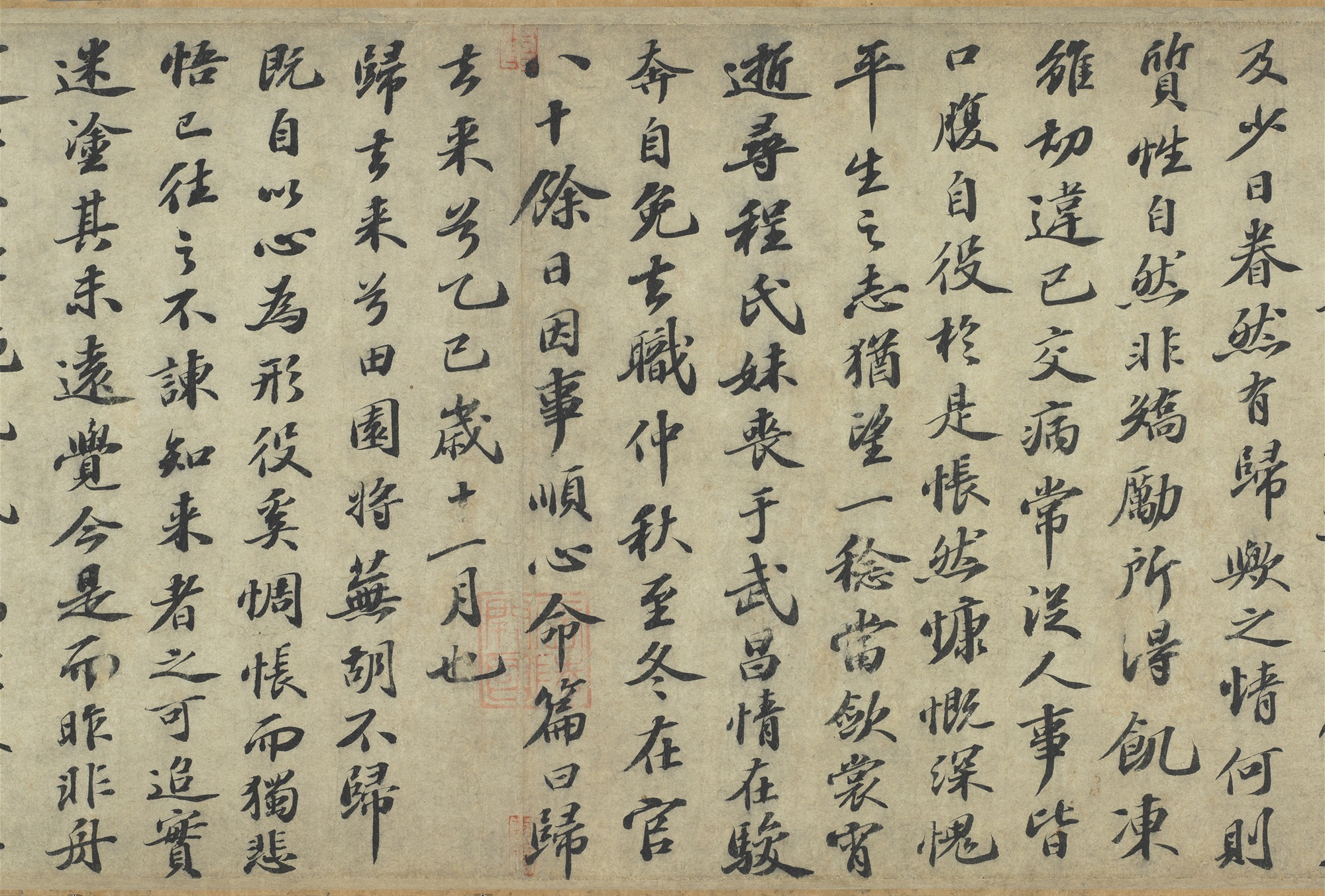
Biography of Song Su Shi's Book Going Back and Coming
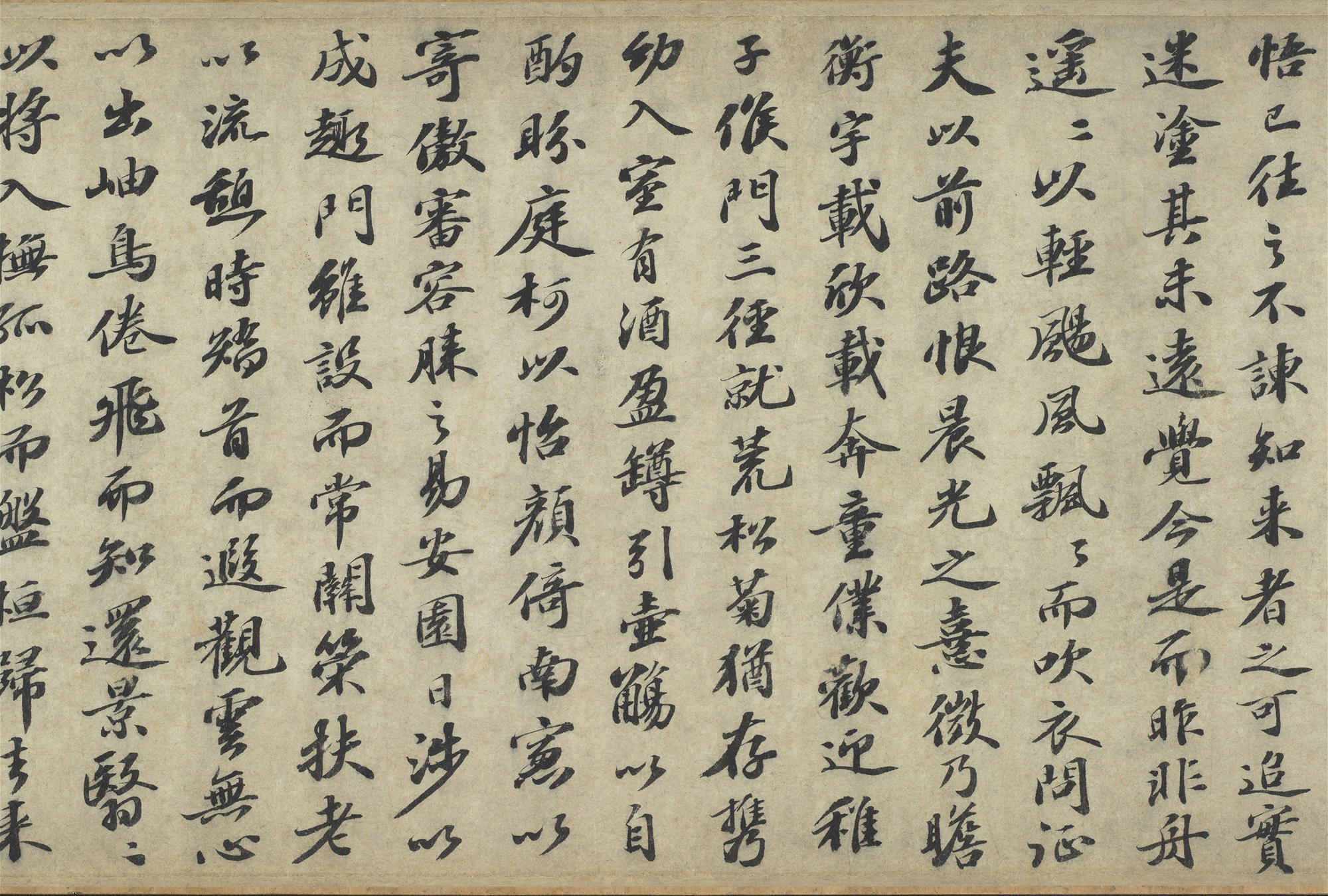
Biography of Song Su Shi's Book Going Back and Coming
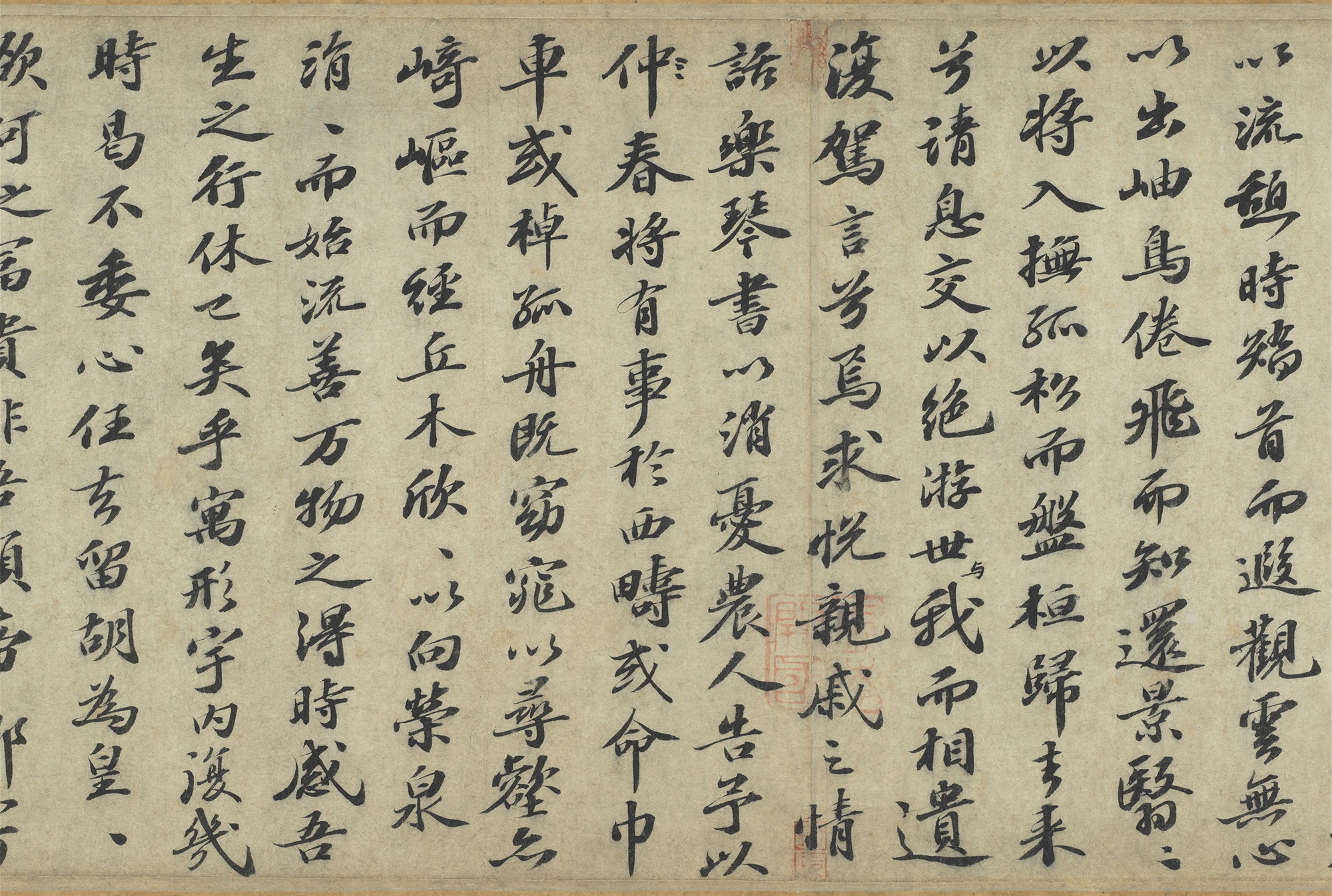
Biography of Song Su Shi's Book Going Back and Coming
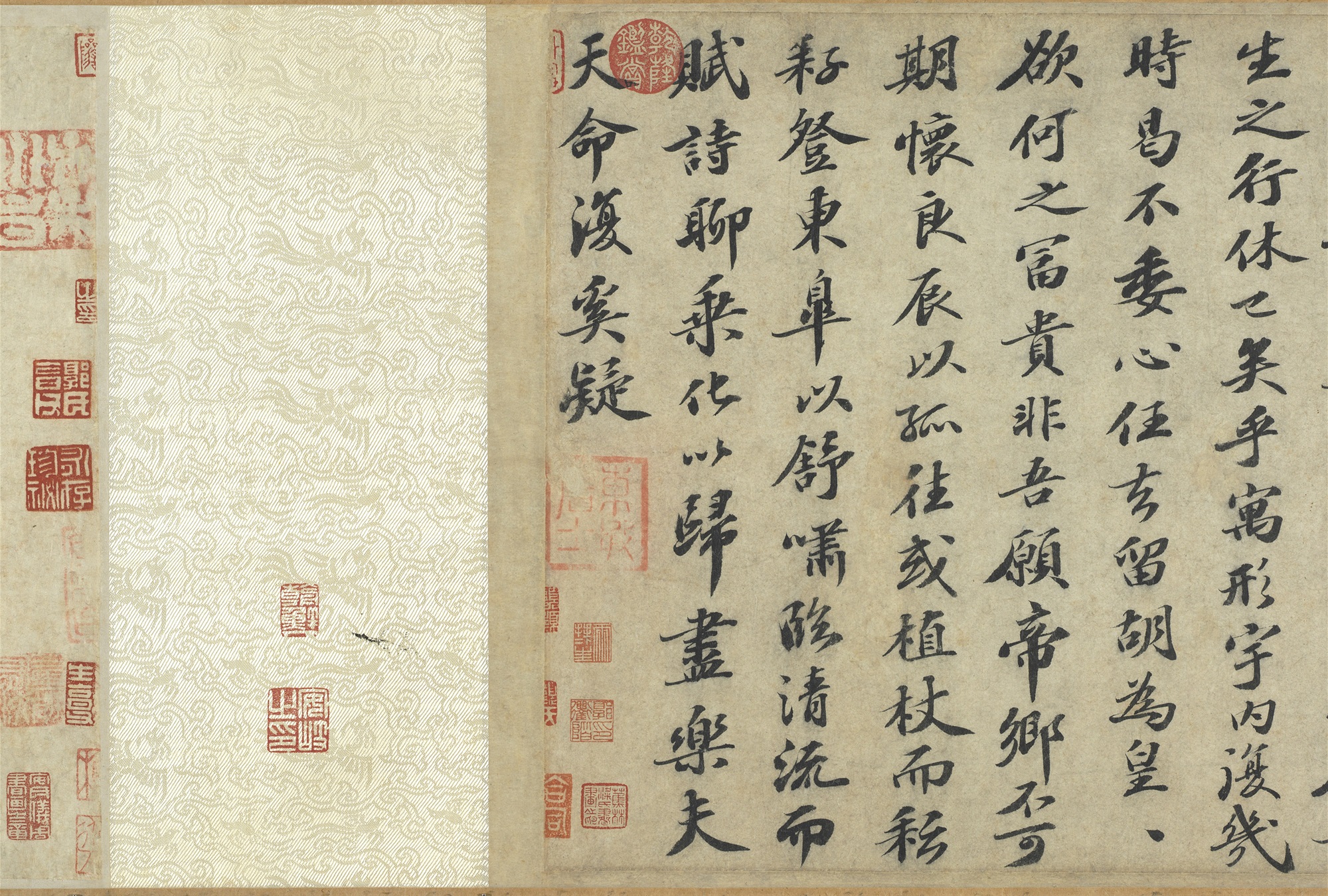
Biography of Song Su Shi's Book Going Back and Coming
The fonts in the whole volume are slanted, solid and dense, fleshy and strong, showing the characteristics of Su characters everywhere. Although it is an imitation of later generations, it faithfully preserves the characteristics and charm of Su Shi's calligraphy style. It is a masterpiece among the imitations of later generations. .
Su Shi (1037-1101), named Dongpo Jushi. Dongpo's calligraphy also has the strengths of the two kings, Yan Zhenqing (709-785), Li Yong (674-746), and Yang Ningshi (873-954).
Collection of the Four Great Masters of the Song Dynasty: Chidots of Song Mifu; Chidots of Song Caixiang (1)
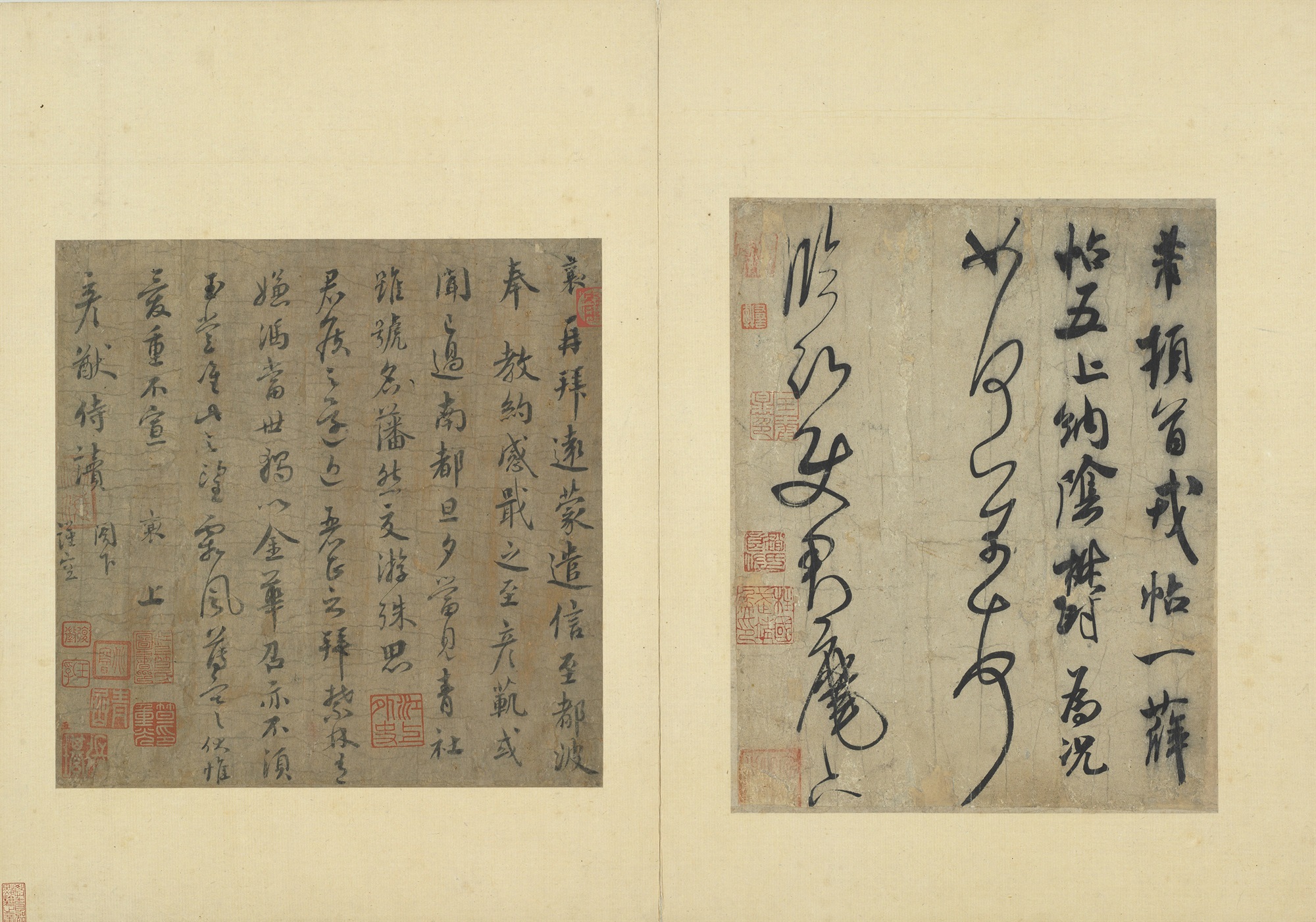
Collection of the Four Great Masters of the Song Dynasty: Chidots of Song Mifu; Chidots of Song Caixiang (1)
Mi Fu (1052-1108), a calligrapher, painter and connoisseur in the Northern Song Dynasty. It is called "Minan Palace". There are cleanliness, many strange stones. Because of his wild behavior, he is called "Mi Dian" in the world.
The strokes and cursive scripts have learned from the predecessors, and the brushwork is handsome and unrestrained. Cursive script: "Fu Dunshou. Rong Tie 1. Xue Tie 5. Shang Na. How is the gloomy situation. Fu Dunshou. Lin □ envoy's command." The last two lines are wild cursive, with the brush strokes and strokes, ink dripping, and the conclusion is stable and mature. Calligraphy performance is outstanding.
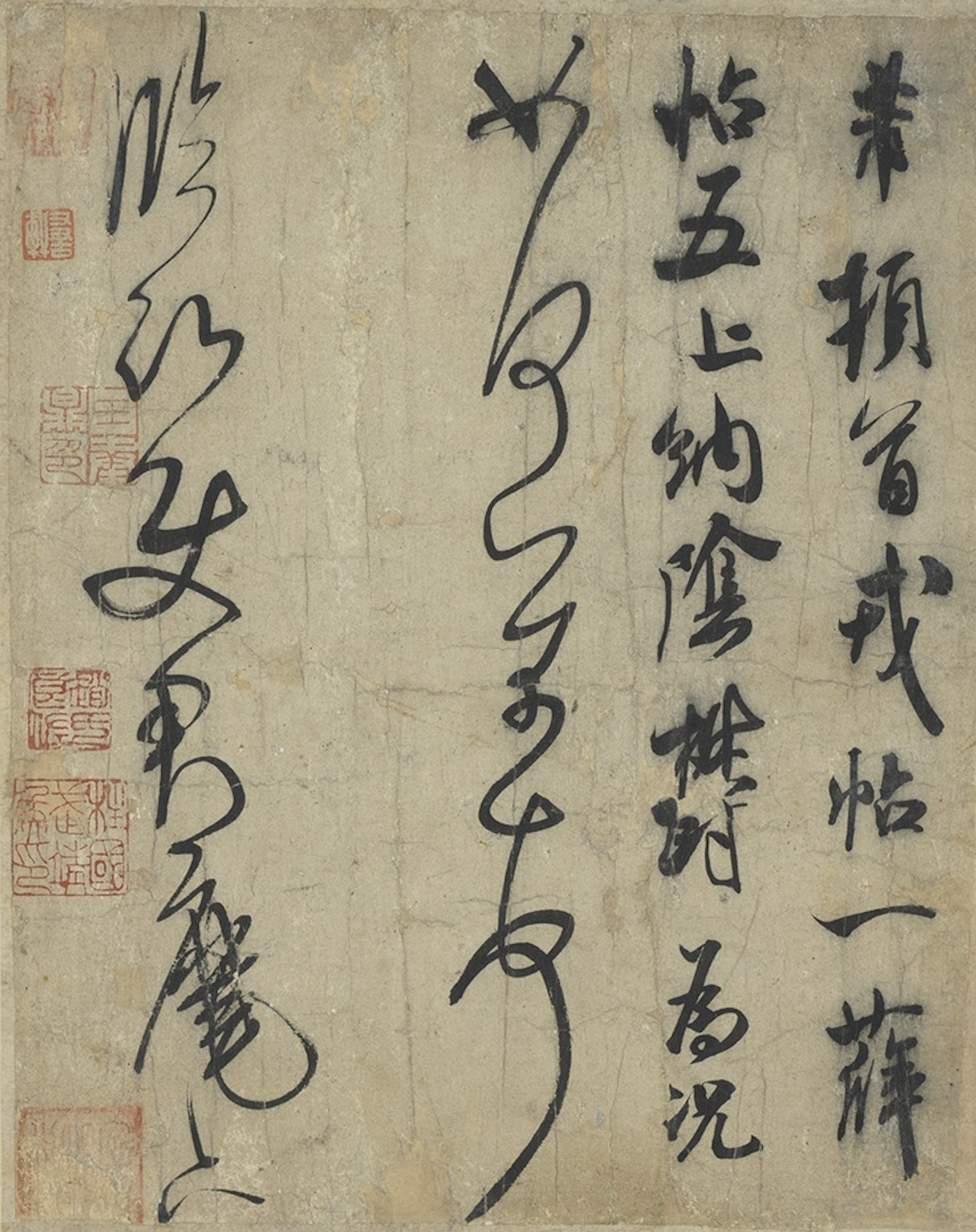
Collection of the Four Great Masters of the Song Dynasty
Cai Xiang (1012-1067), who worked in calligraphy, Cai Xiang was the oldest in the four families of the Song Dynasty, and the bamboo slips in running and regular scripts are elegant and beautiful.
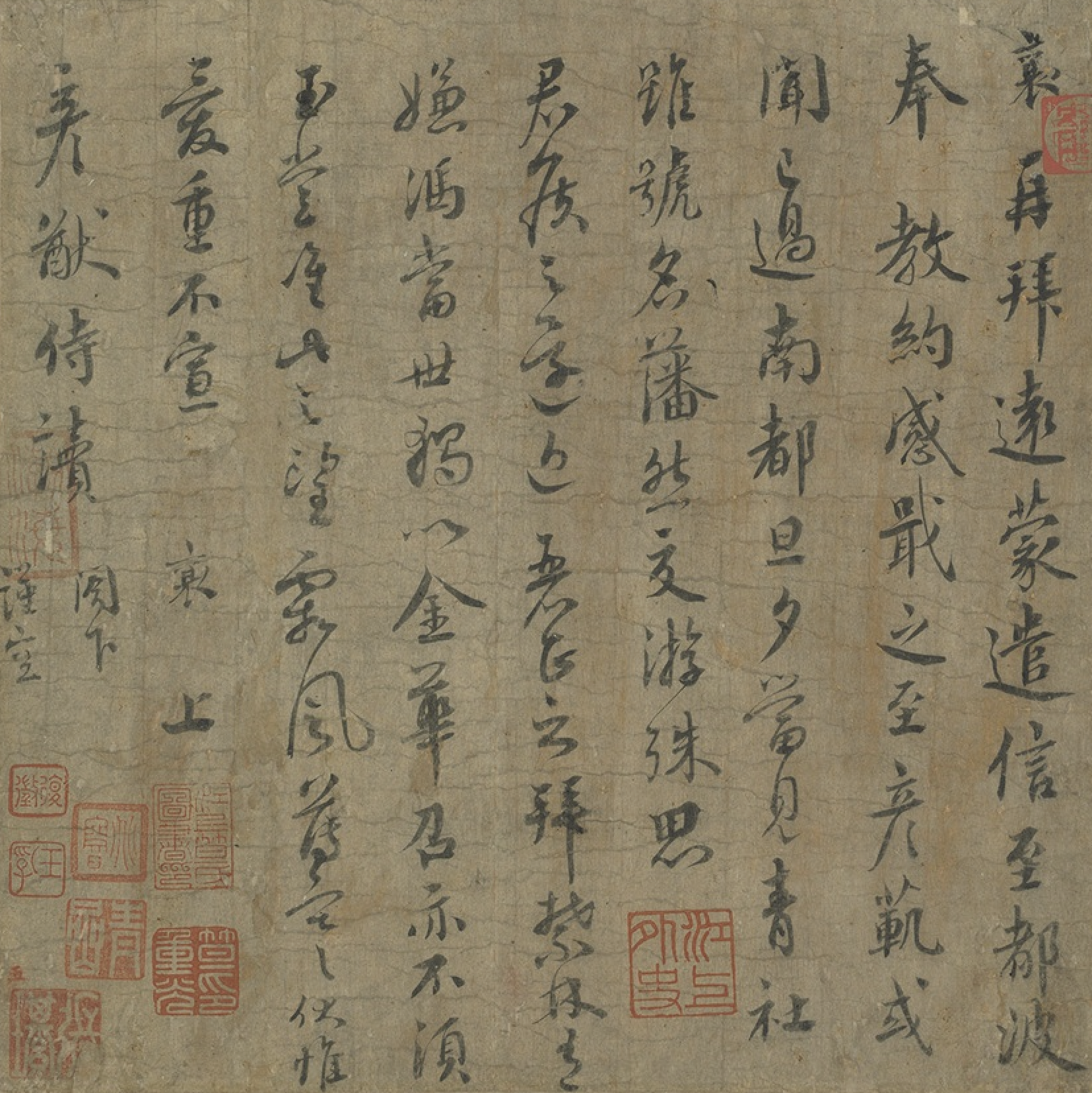
Collection of the Four Families of the Song Dynasty Cai Xiangshu on the Ruler of the Song Dynasty (1)
The brushwork is like a line, and the structure is like regular script. It is calm and unhurried, dignified but still meticulous. Cai Xiang's calligraphy has always been highly praised. His calligraphy is rich and plump like Yan Zhenqing (709-785). You can also go up to catch up with the Jin people. The cursive is as handsome as Wang Xizhi's (307-365) cursive.
Song Cai Jingshu Ruler
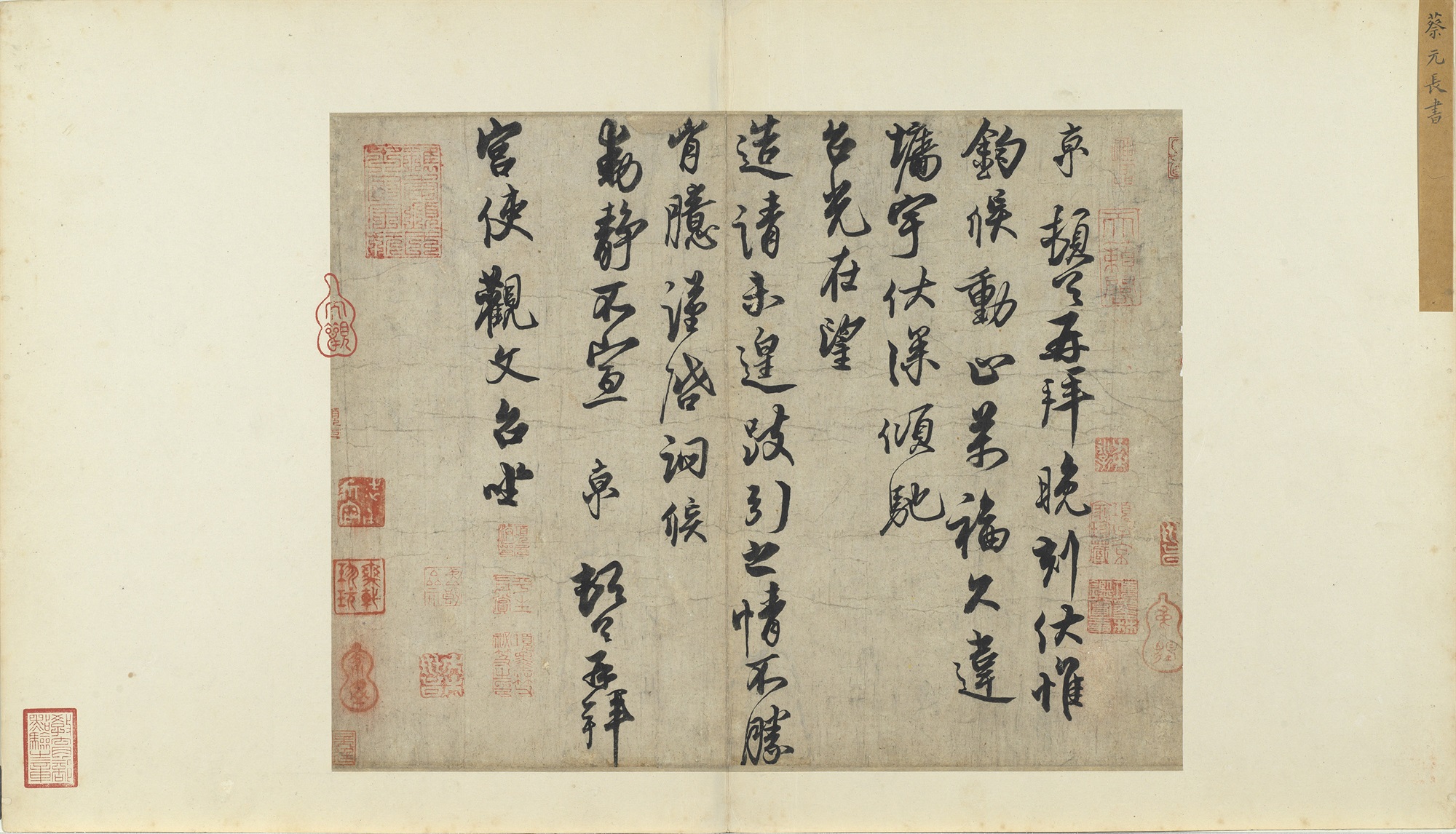
Song Cai Jingshu Ruler
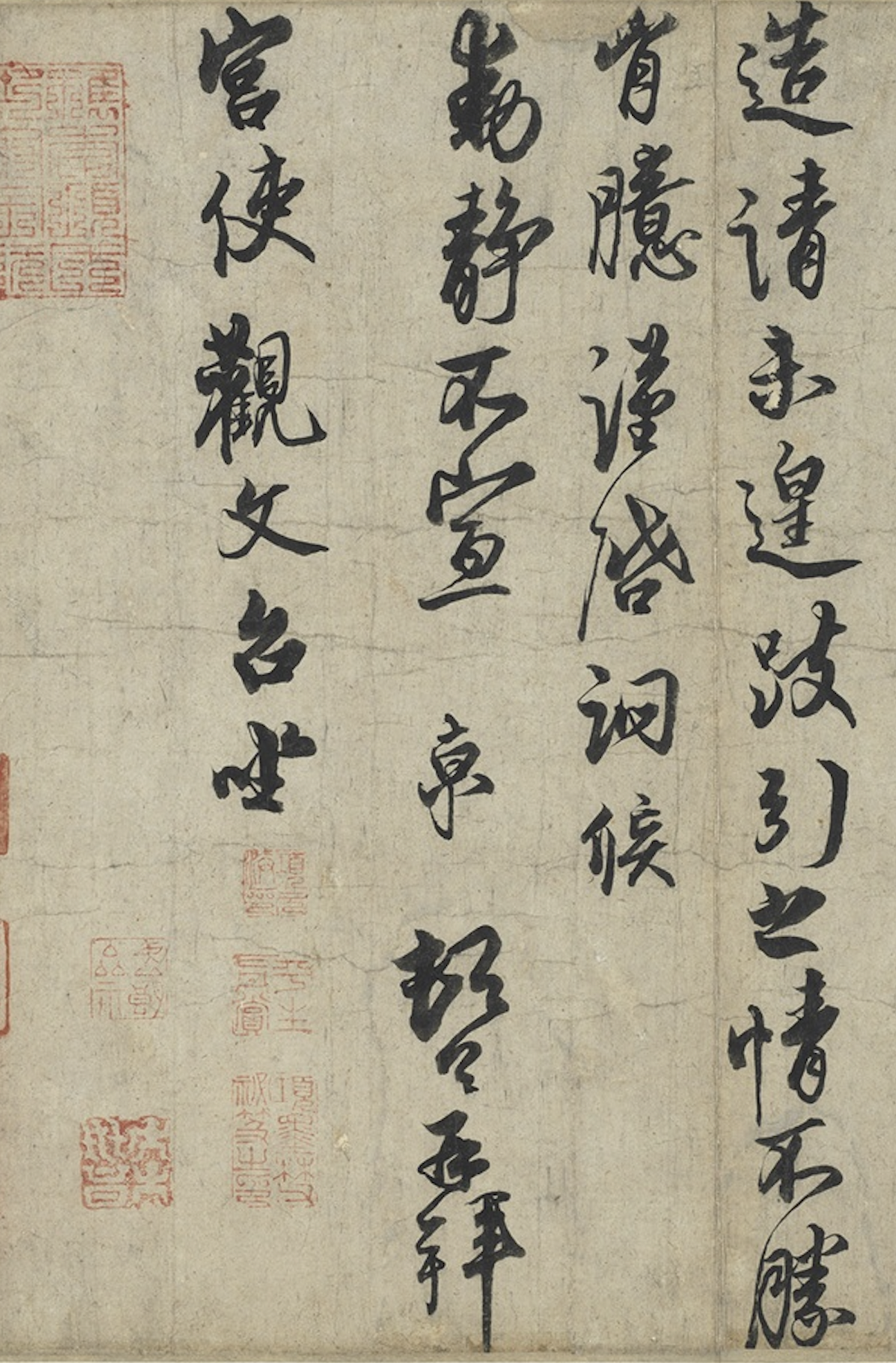
Song Cai Jingshu chido (partial)
Cai Jing (1047-1126). Gongshu, especially good at running calligraphy, has a charming and vigorous style of brushwork, and is unique in its own style.
This letter is free and easy, written with joy and composure, with concise and powerful lines, and the priorities of the brushes echo the changes in the structure. The overall layout is also quite unique, with quite personal characteristics. A closer look at his stippling shows a ostentatious writing style, but lacks stability and solemnity, coupled with too much sharpness between the lines, revealing the essence of exaggeration and vanity.
Ming Zhu Yun Ming Shihan
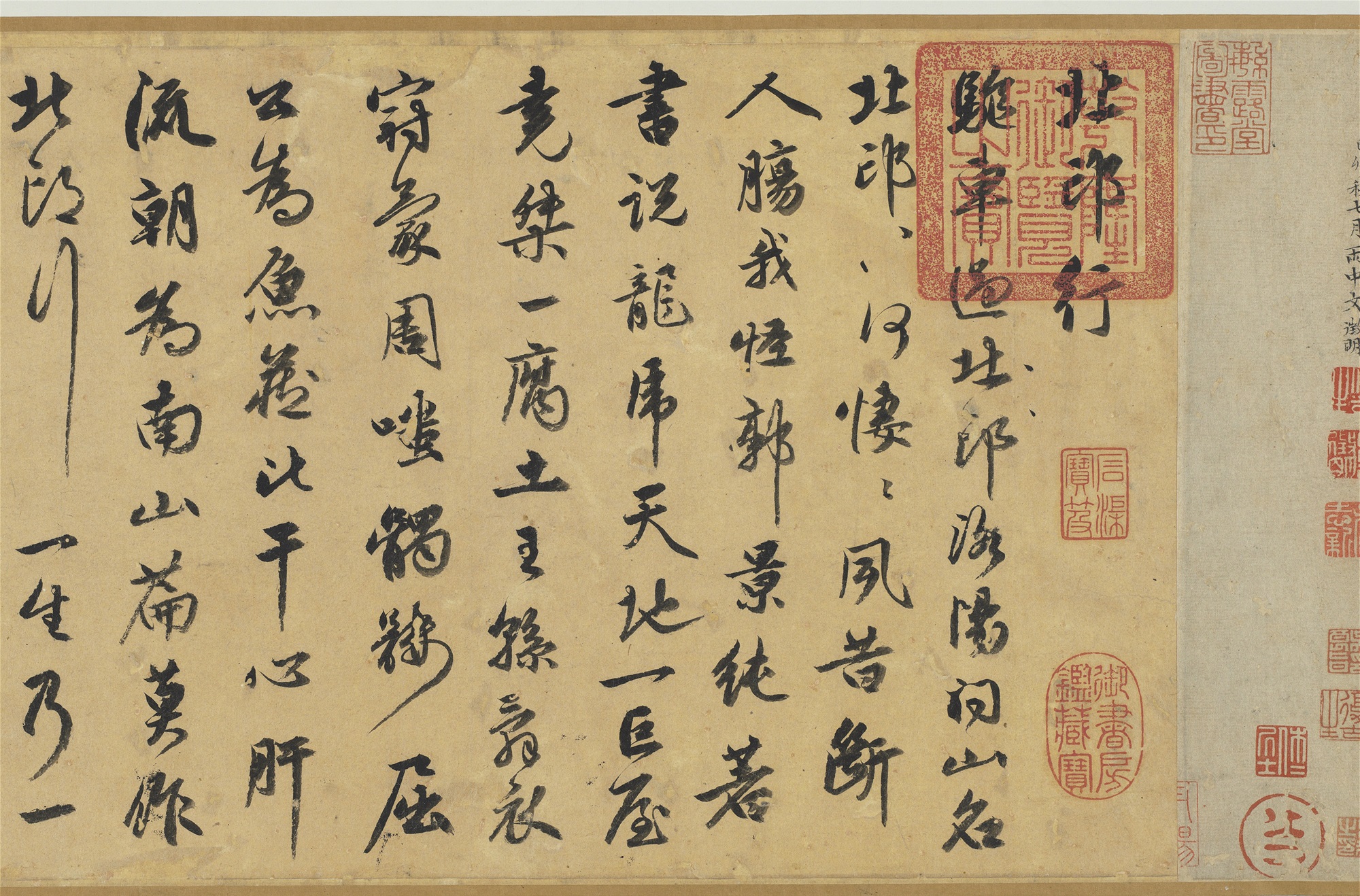
Ming Zhu Yun Ming Shihan
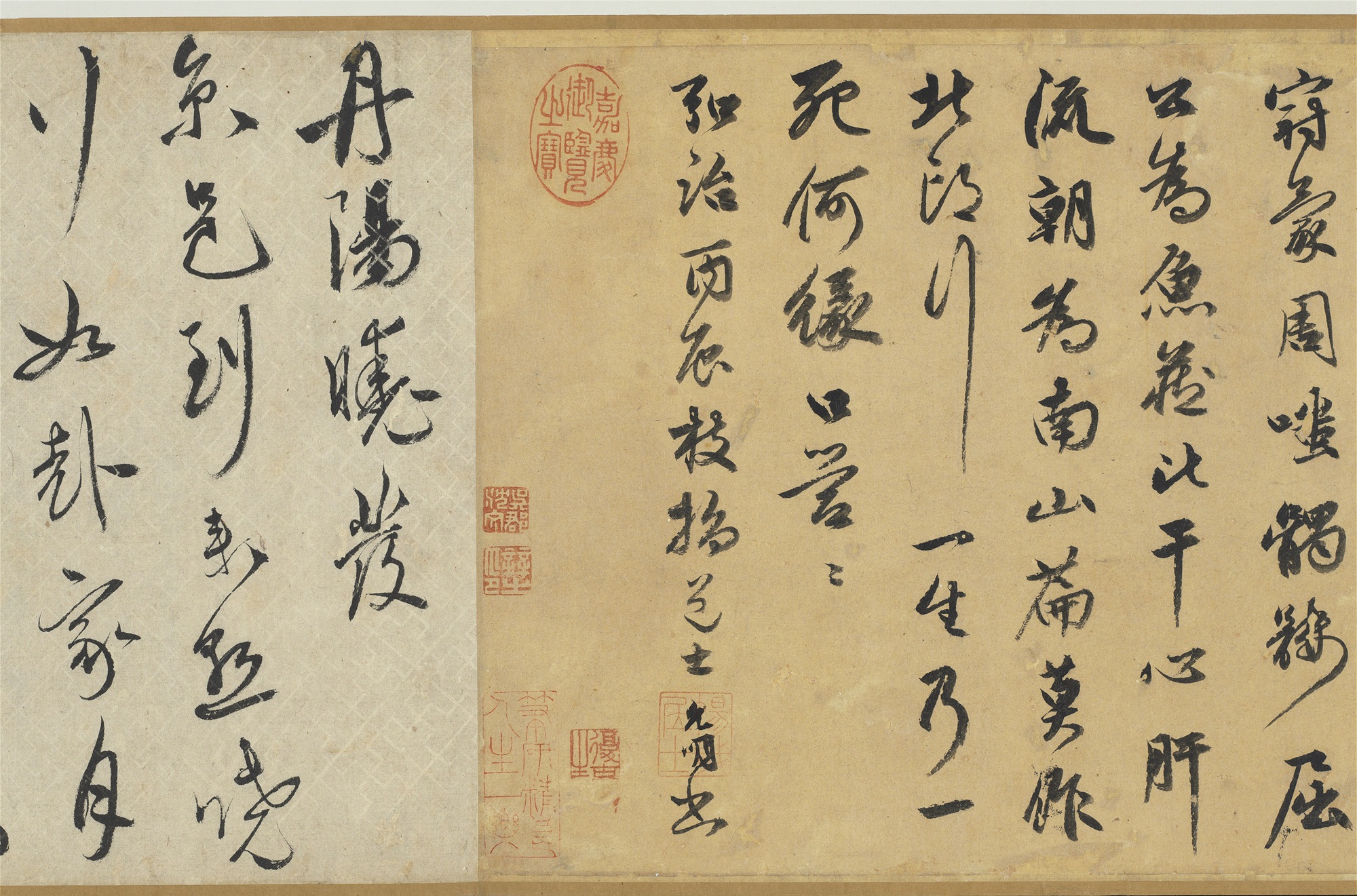
Ming Zhu Yun Ming Shihan
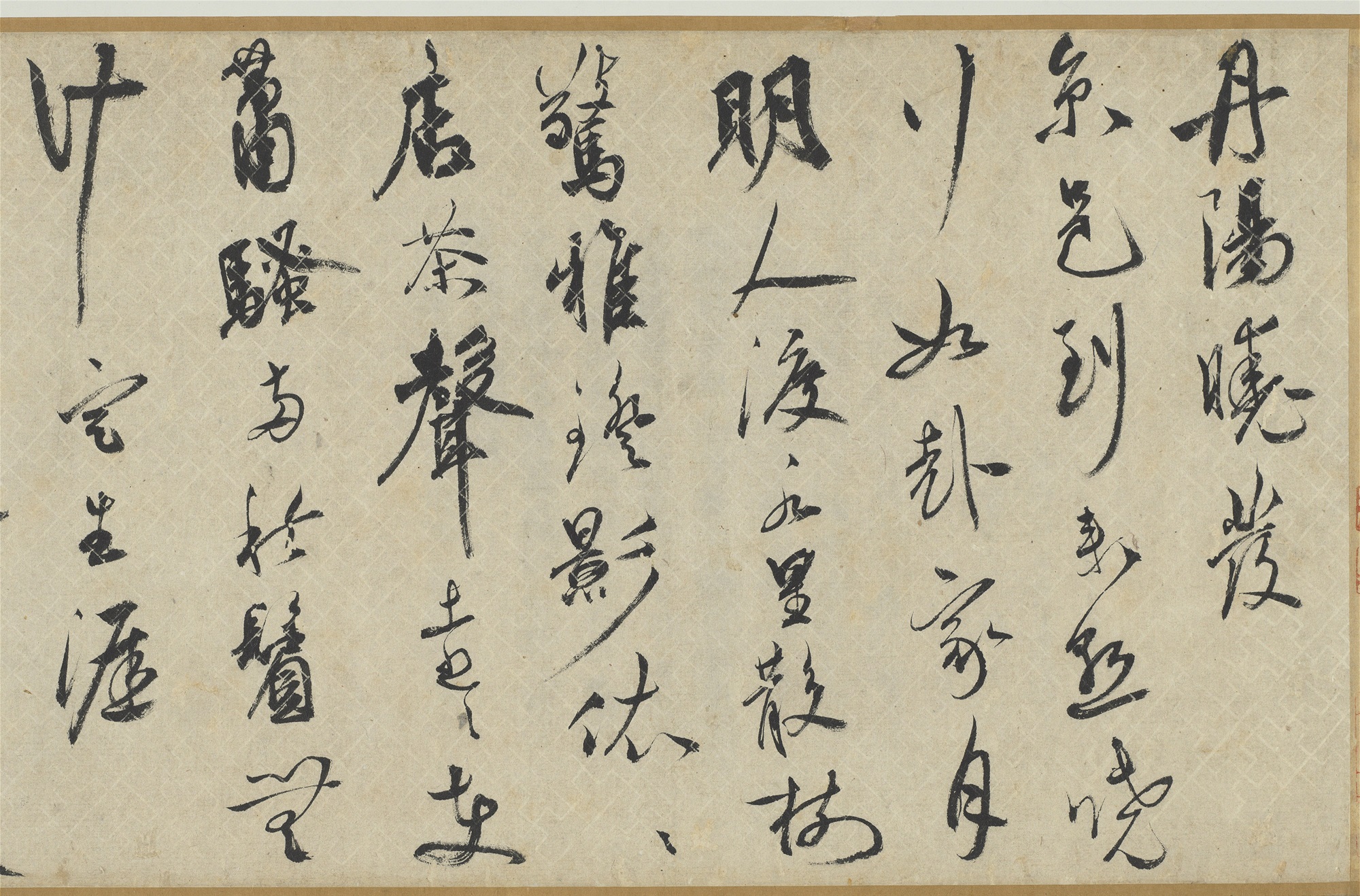
Ming Zhu Yun Ming Shihan
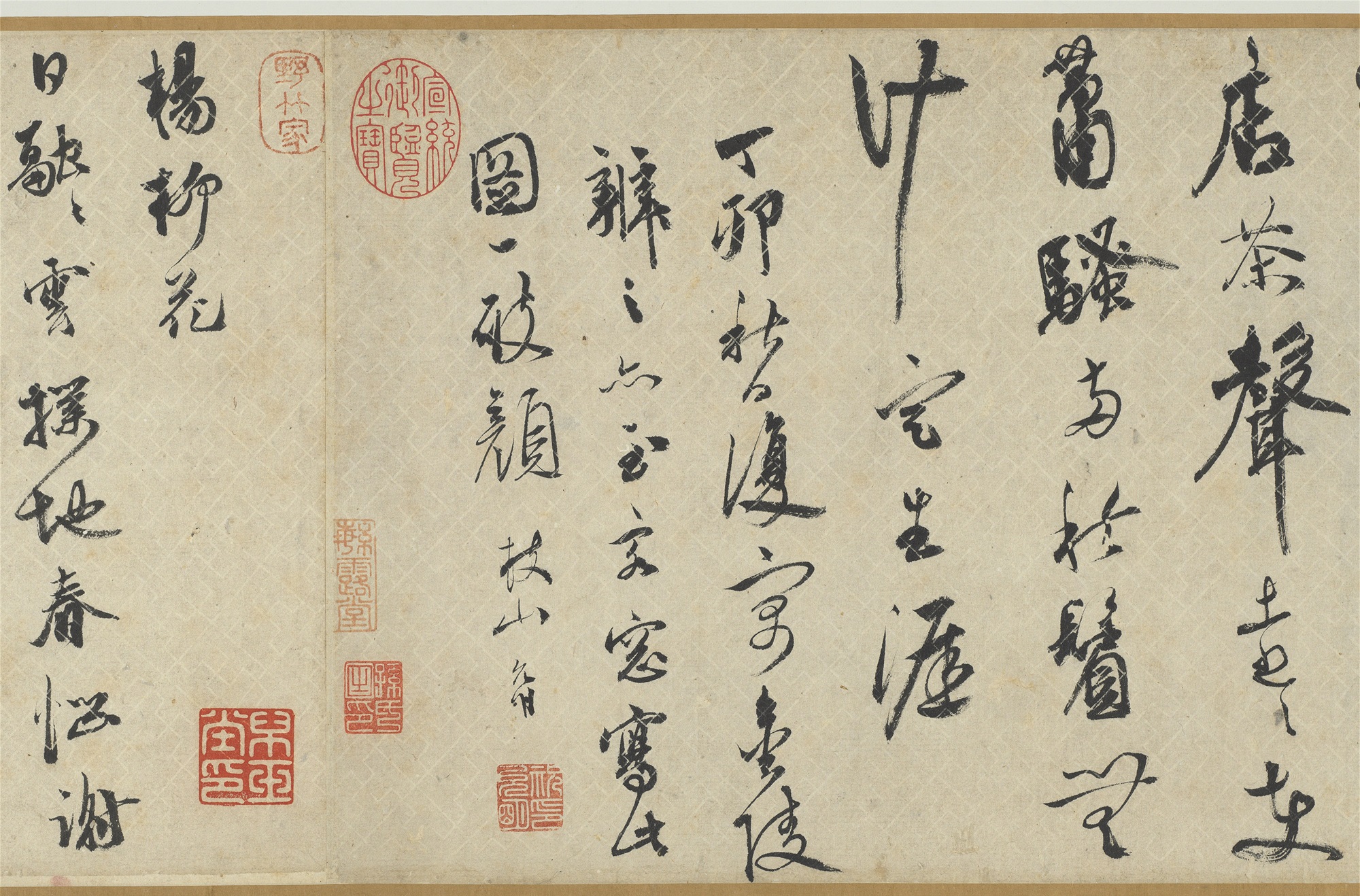
Ming Zhu Yun Ming Shihan
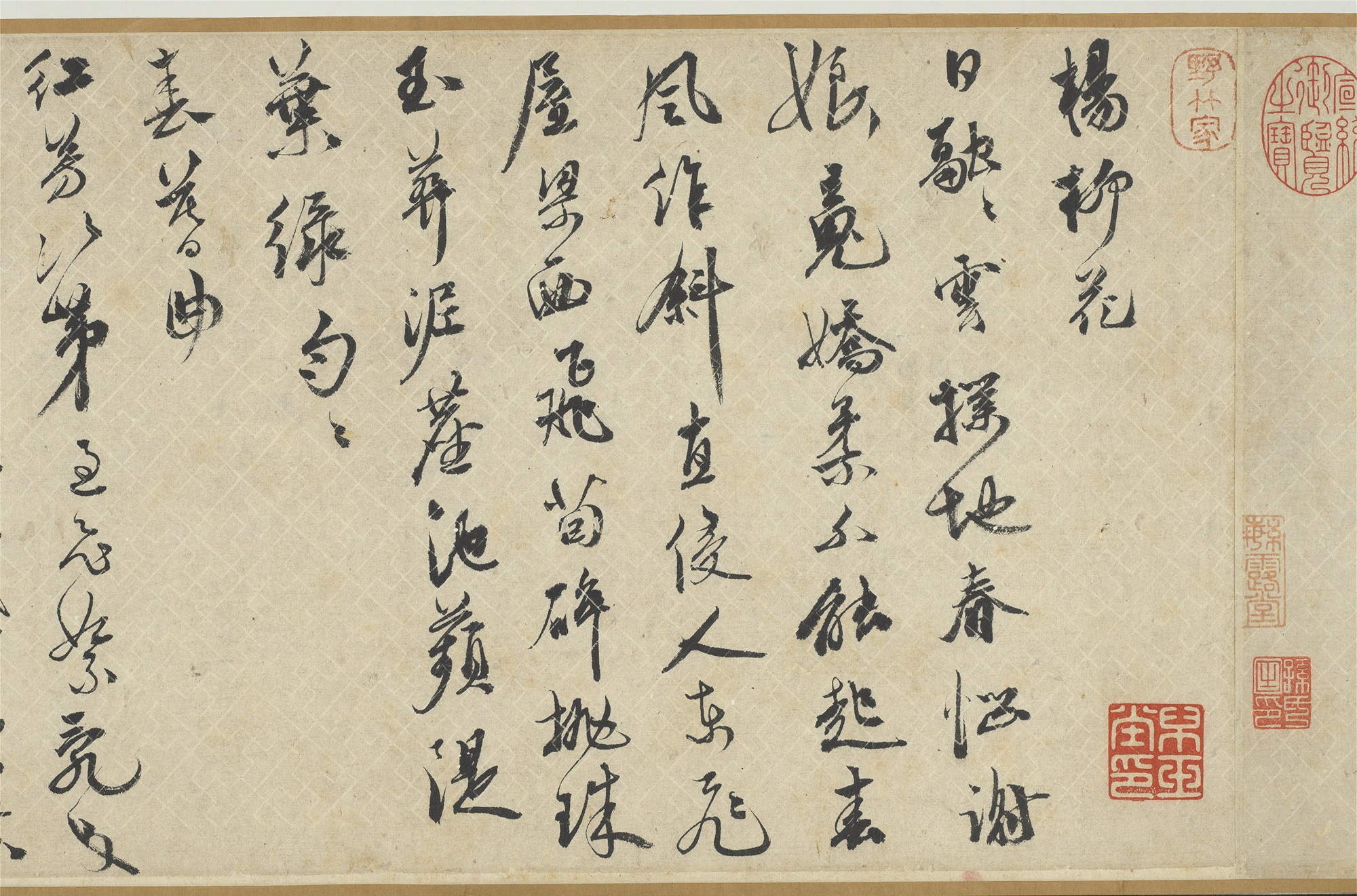
Ming Zhu Yun Ming Shihan
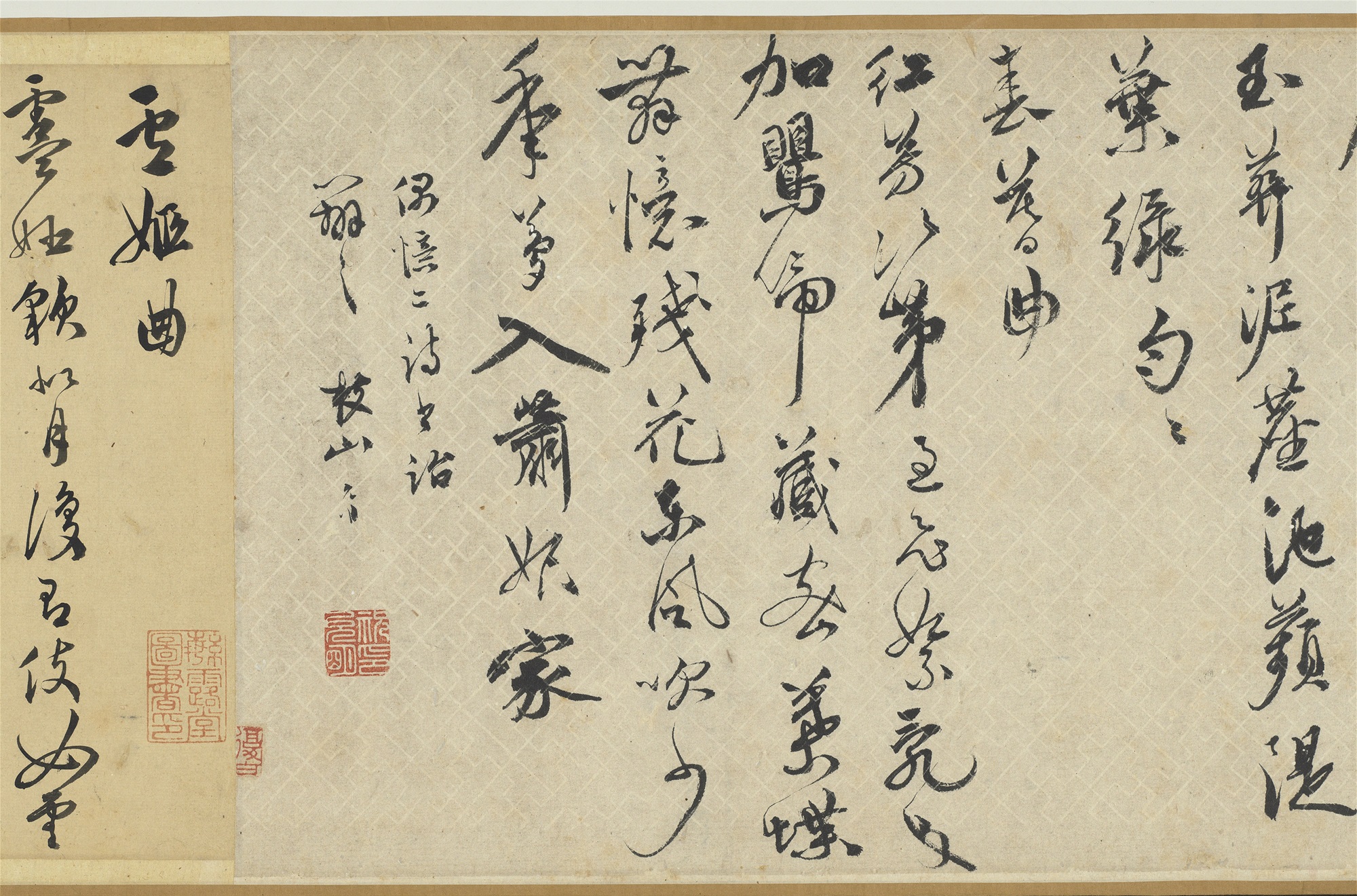
Ming Zhu Yun Ming Shihan
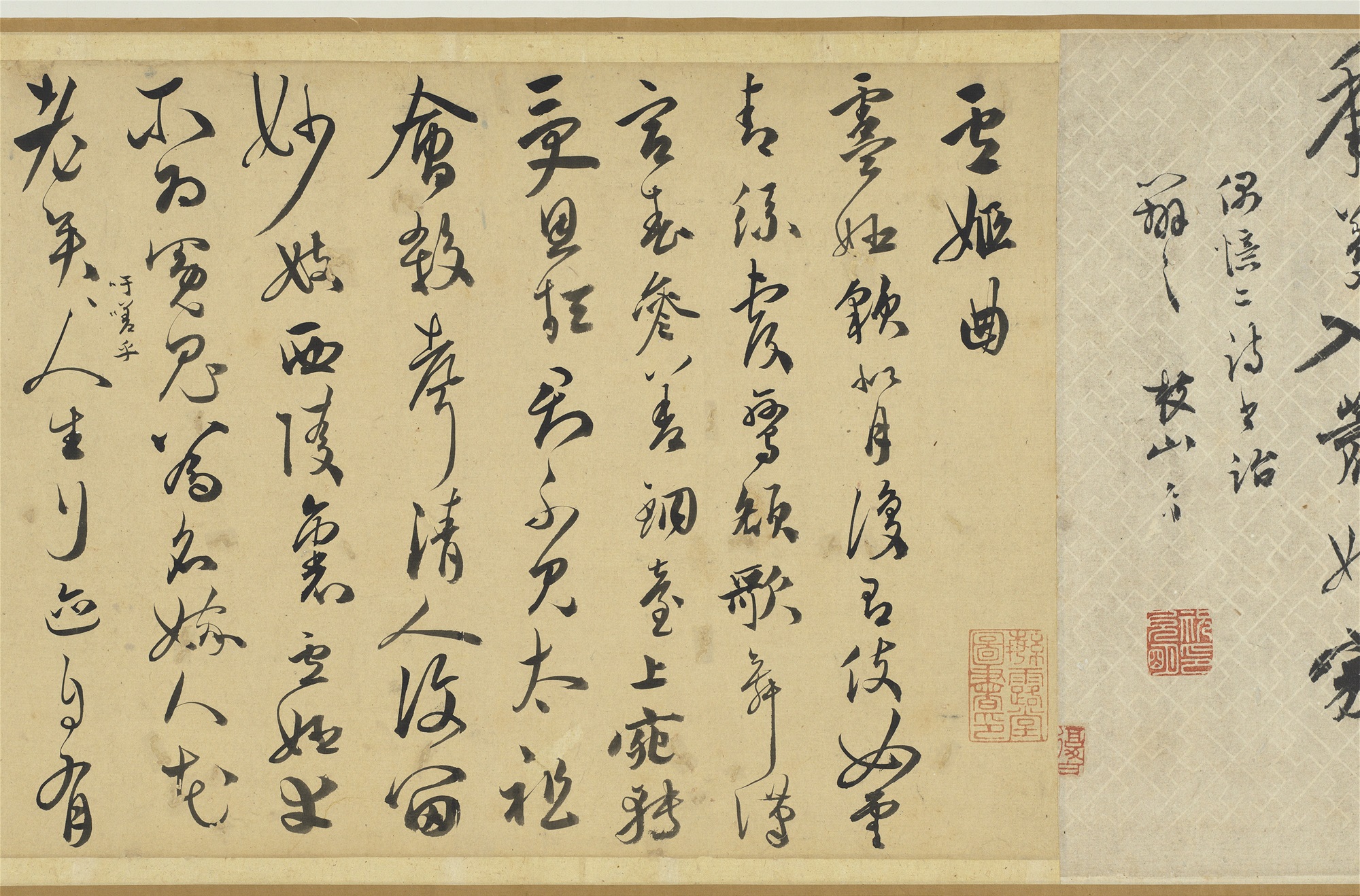
Ming Zhu Yun Ming Shihan
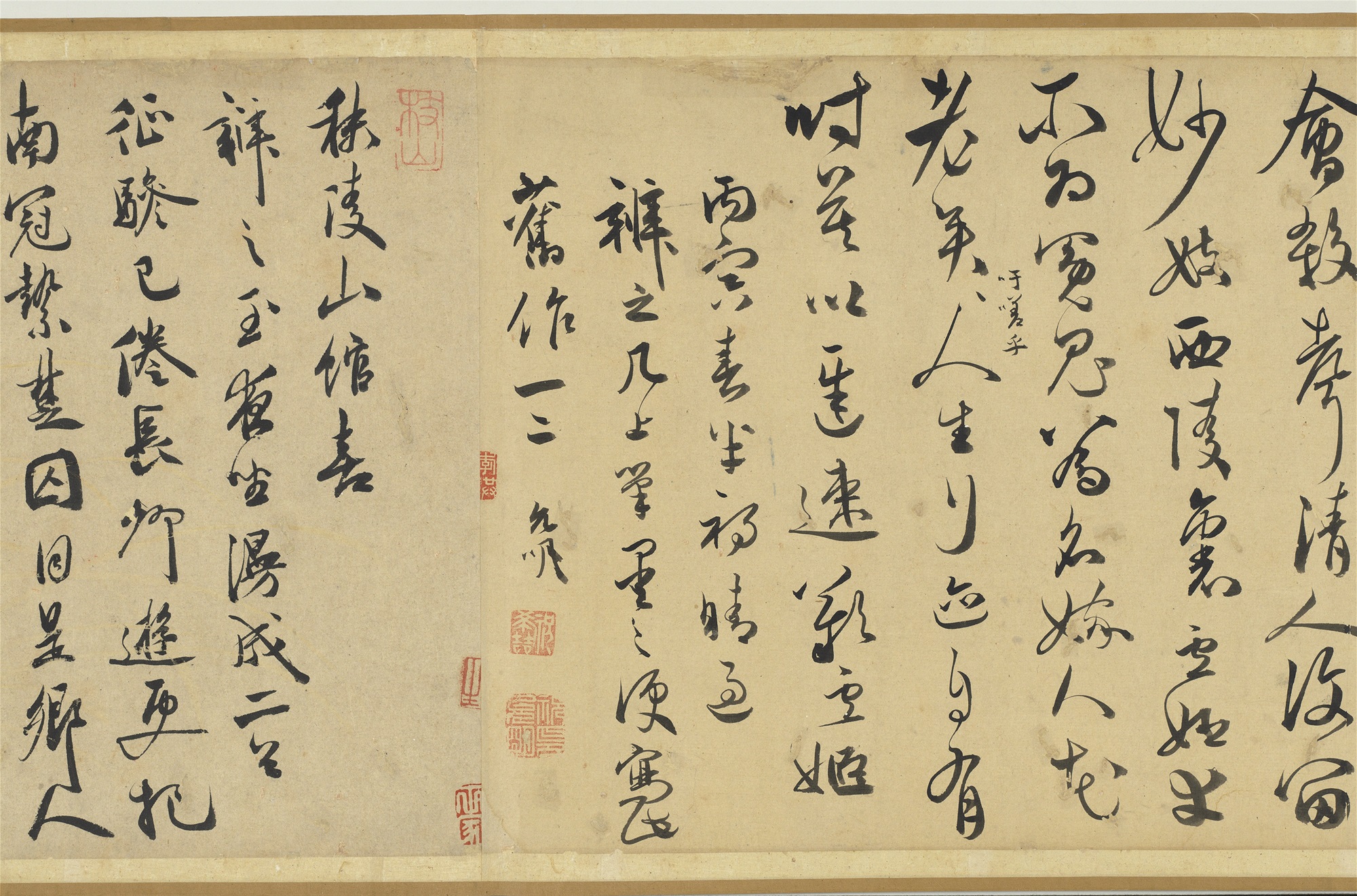
Ming Zhu Yun Ming Shihan
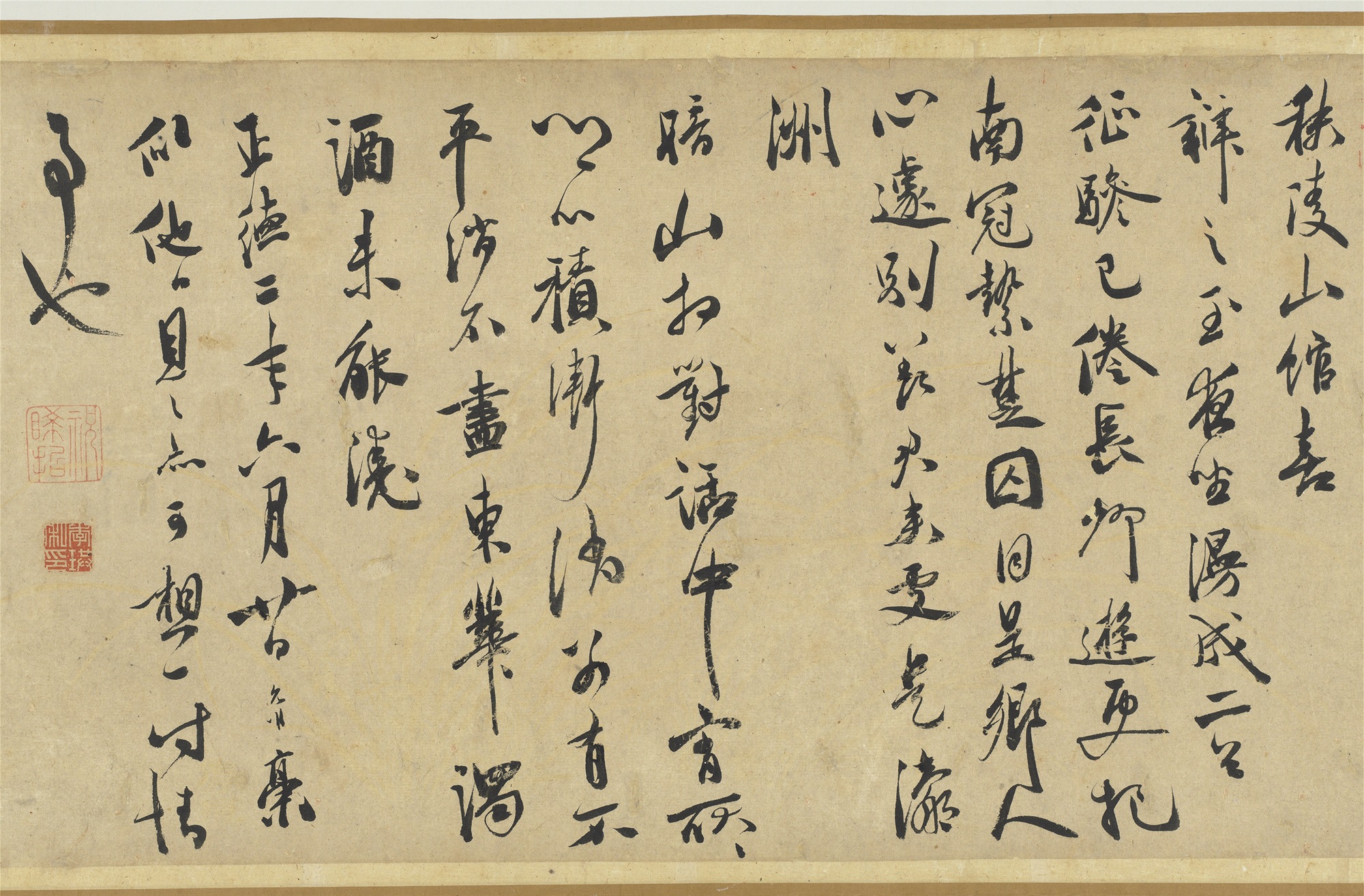
Ming Zhu Yun Ming Shihan
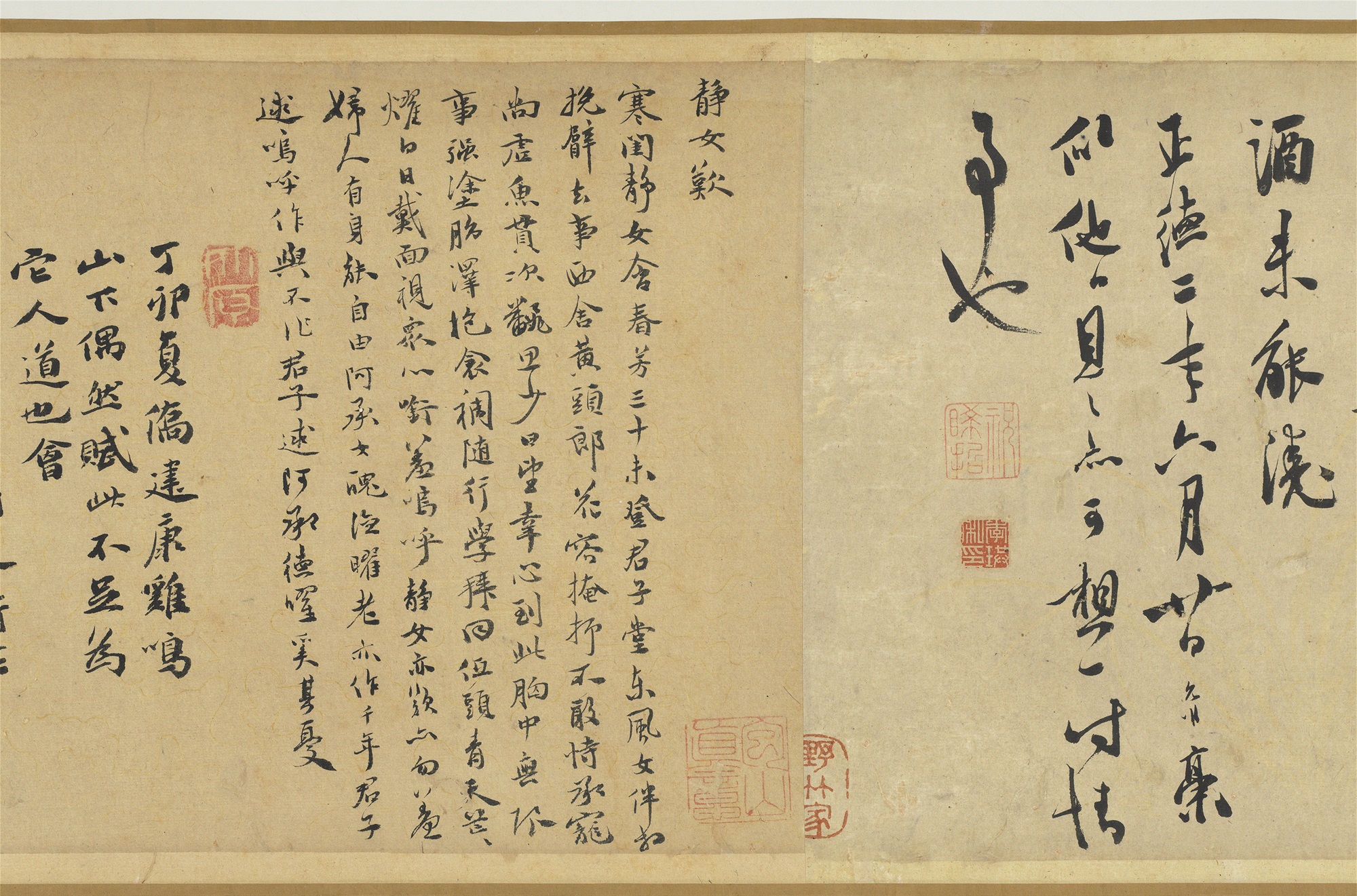
Ming Zhu Yun Ming Shihan
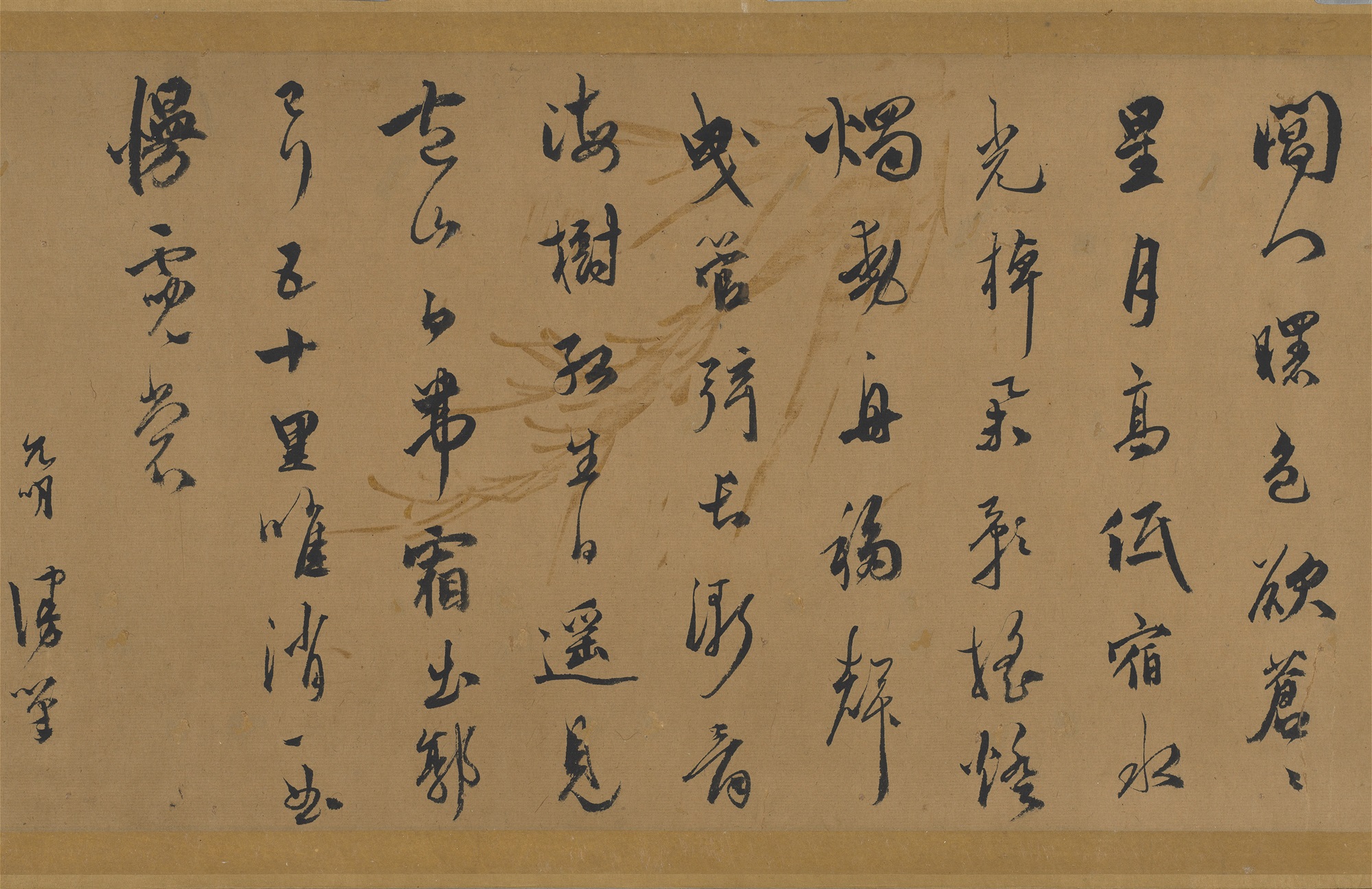
Ming Zhu Yun Ming Shihan
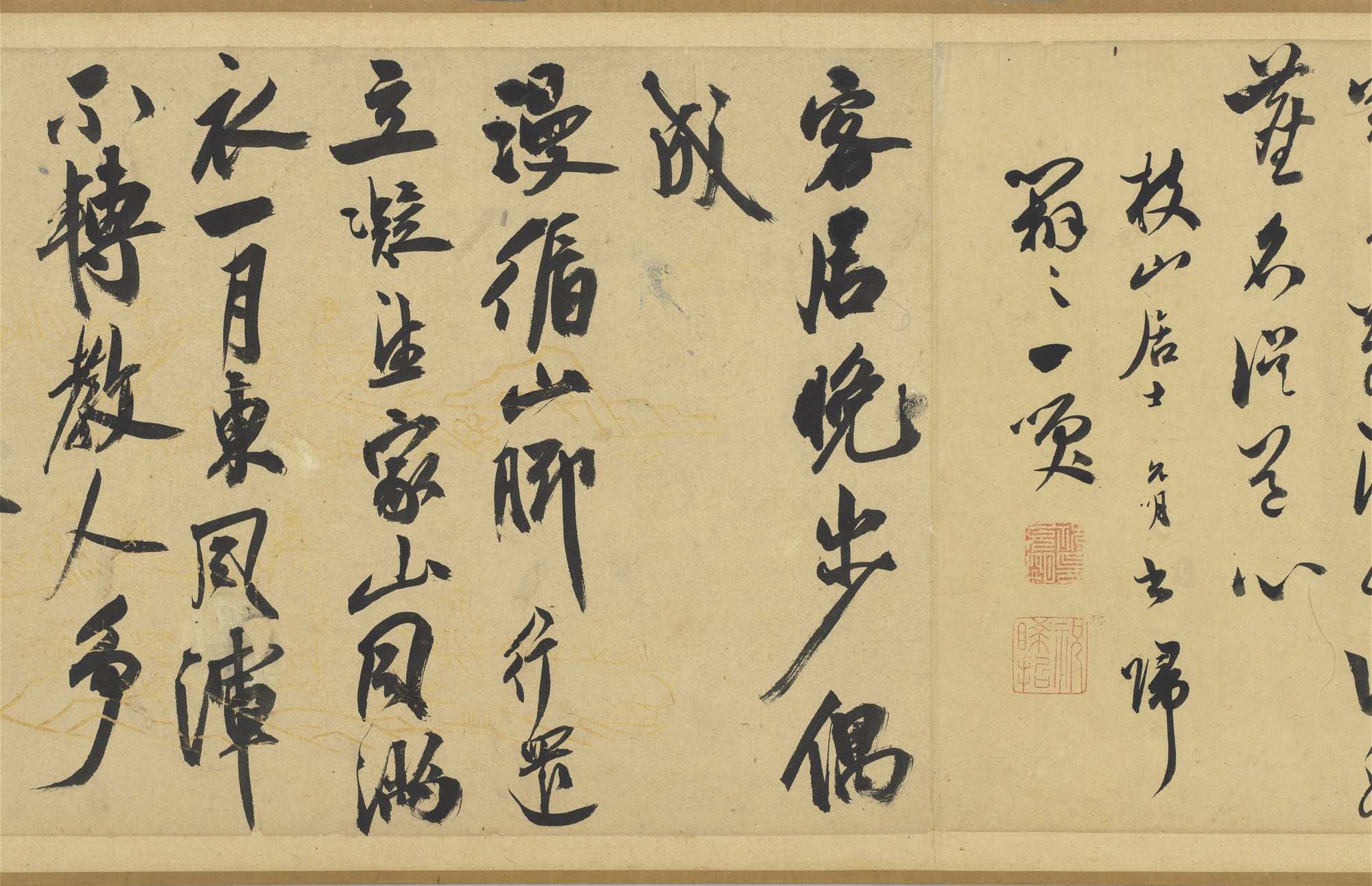
Ming Zhu Yun Ming Shihan
Zhu Yunming (1460-1526). He is good at Kai, Xing, and cursive scripts, and has the reputation of "learning everything and mastering everything".
This volume includes ten works, eight of which were written to Shen Yuwen, dating from about 1506 to 1507. Shen Yuwen, distinguished by characters, was an important bibliophile at that time. The texture of each piece of paper is different, and the calligraphy is also random. Among them are the styles of Su Shi, Mi Fu, Huang Tingjian, Zhao Mengfu, etc., which shows Zhu Yunming's extensive study of ancient calligraphers, and each handwriting presents a different appearance.
Shen Can's Book Yingzhi Poetry
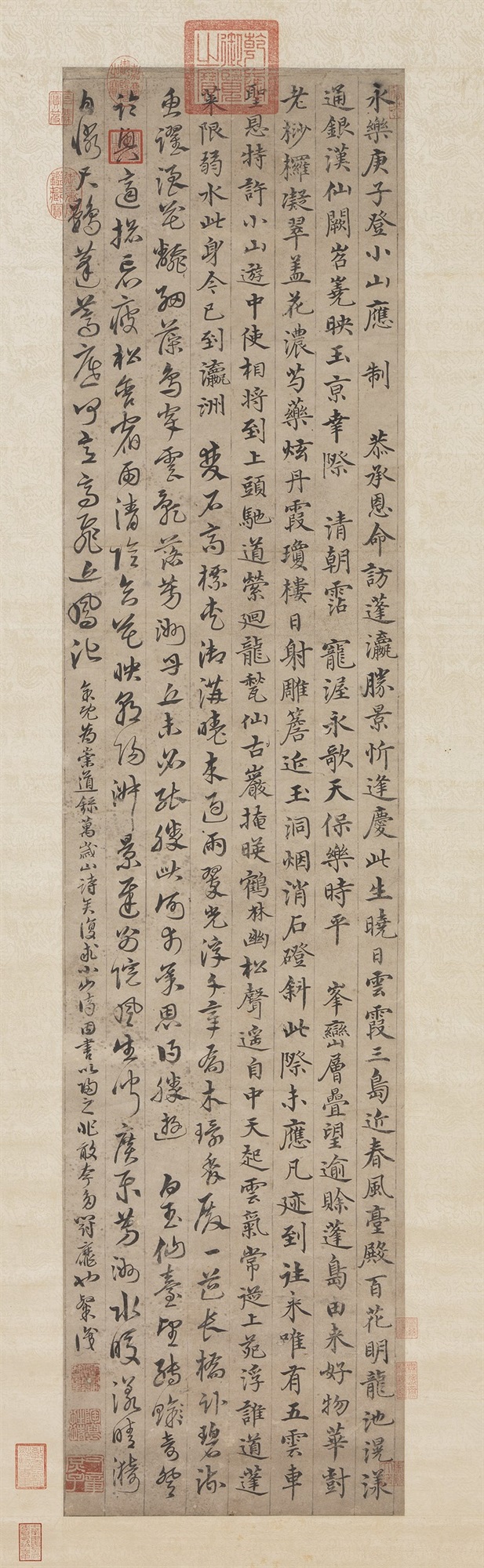
Shen Can's Book Yingzhi Poetry
Shen Can (1379-1453), together with his 22-year-old elder brother Shen Du (1357-1434), was called Er Shen, and served in the imperial court because he was good at calligraphy. Shen Can is good at cursive script. He learned from Song Jing (?-1380) and Song Ke (1327-1387) in the early Ming Dynasty, and participated in Zhong Yao (151-230).
This piece of content is written for a friend, describing the royal palace garden, and praising the five seven-character regulated poems of the royal garden. It is written in Xingkai script, Zhangcao and Jincao three-body script. .
The exhibition will continue until October 4.
(This article is based on relevant exhibition materials on the official website of the National Palace Museum in Taipei.)

See Chu Suiliang and Su Shi’s calligraphy passed down from generation to generation, Taipei’s “The Pen and Ink See the True Chapter” exhibition changes
Taipei’s calligraphy gallery turns again: Chu Suiliang, Su Shi’s Red Cliff, and Mi Fu letters in a new hang.

Huang Tingjian at 980: Song calligraphy still gathers scholars
On Huang Tingjian’s 980th anniversary—books, calligraphy, and why the Song master’s hand still draws crowds.

Su Shi and Lu You's calligraphy meets the West Lake, "Song Dynasty Calligraphy and Influence" will be exhibited
Beside West Lake, Zhejiang Art Museum gathers Song-to-Qing calligraphy, with Su Shi and Lu You near the center.