
The Grand Canal in Poetry and Painting
The Grand Canal in poetry and painting: how artists mapped a working waterway into cultural memory.
From Sui engineering maps to later poetry and painting, the Grand Canal is both infrastructure and imaginary—grain, travel, and the cities it tied together.
Images of locks, barges, and river towns show how painters turned a logistics spine into a shared Chinese landscape of movement.
Thinking on the Bian River: The waves soak in the setting sun, thousands of miles dissolveFacing the long history of the Grand Canal, poets are observers and feelers; they are commentators and recorders.
Chen Zhangcan believes that in the eyes of poets, the Grand Canal is a river of images, flowing with countless images. Some of the images are grand and some are specific, but they are all full of natural or humanistic and historical connotations. The larger ones are like Qiantang River, Yangtze River, Huaihe River, Yellow River, Bian River, Sishui, Jishui, Haihe and other water system images, the middle ones are space images such as ditch pools, ferry ports, bridges, pavilions, temples, Sui embankments, etc., and the smaller ones are like Qiong Landscape images such as flowers, Huaibai, Wujing, perch, and official willow. Through the excavation of poetry, these images have become increasingly rich, deepened from literary images into cultural images, and become important symbols of the scenery and historical culture along the canal.
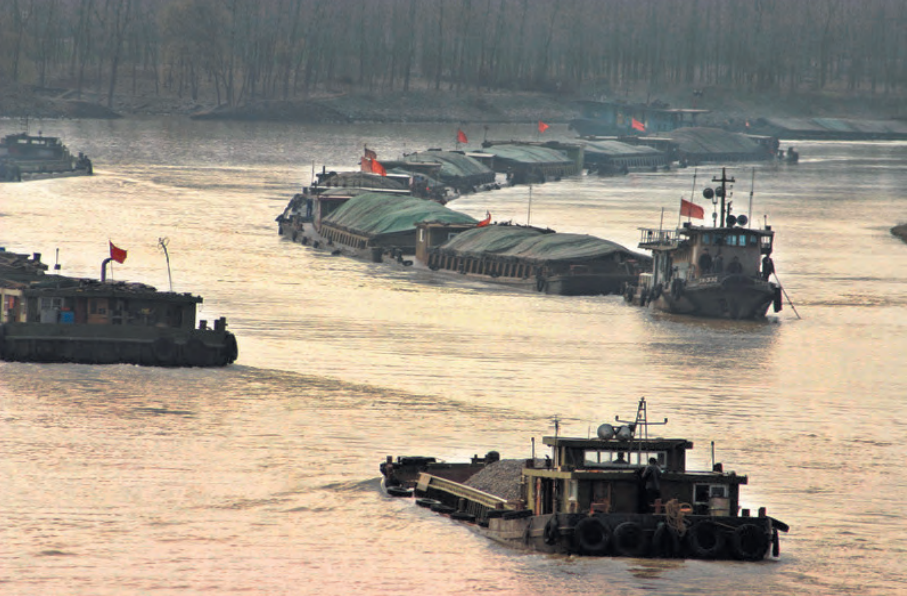
Merchant ships have always been on the canal
The Tongji Canal dug by Emperor Yang of Sui Dynasty was called Bian River by people in Tang and Song Dynasties. Because it connected with important cities such as Luoyang, Bianzhou City (Kaifeng), Suzhou, etc., it became the only way for people in Tang and Song Dynasties to travel. Bian Shui has also become the image that poets focus on the most.Because of a piece of "Yellow Crane Tower" with a long artistic conception and a unique form, Li Bai even sighed that "there is no scene in front of you, and Cui Hao inscribes a poem on it. " Last night, we went south to Chu, and now we are going north to the river. How many days can Kechou last? There are not many roads in the township. The scenery is clear and the trees are shaken, and the spring breeze is singing. "Spring Breeze" is the lightness and joy of writing scenery and poetry when approaching hometown.
When Tang Dynasty poet Meng Yunqing looked at the Bian River, he also felt a kind of joy. He wrote in "Bian River Blocking the Wind": "In the early morning from Liang and Song Dynasties, the Chu Jing on the banquet. I want to cross. The big river sprays the east, and the movement of the group is dark. The white fog is full of fish and dragon, and the black cloud is in the shape of an ox and horse. Xiang Xu is sincere. Leave the boat on the road ahead, and the southeast is still sunny.” Because the canal has to travel by large boats to transport food, the water is wide and the river is deep, so it is easy to have big waves. Meng Yunqing felt a very different experience from walking on gentle water. The wind was rising and the canal was turbulent, which made people emotional.
However, the thoughts of being in custody are always full of melancholy that is difficult to get rid of. Bai Juyi's "Feelings of the Bianhe Road" wrote: "Thirty years ago, on the road, the lonely boat returned. Keeping water, people not only see the mountains. The lapel and the sad temples are two spots on this day." Du Mu's "Bian River Blocks Frozen" wrote: "When the thousand-mile long river first freezes, the sound of jade, keyao and jade is uneven. Floating life is like the bottom of ice. The water flows eastward day and night, people don't know." Meng Jiao's "Bianzhou Staying Farewell to Han Yu" wrote: "If you don't drink the turbid water, the Bian River will be empty. Sit and see the water around the bank, and return to the waves. If you are not at home at four o'clock, There are many faults and disconnections. The distant guests are alone and haggard, and the spring heroes are swaying. The Bian water is flowing, and the wild sang has no straight leaves. But for the heart of a gentleman, sighs will end him." Drifting in a foreign country, wandering on the canal, the years are fading away. Like a rolling river, "the dead are so wise, they don't give up day and night".
The sorrow outside the capital and by the Bian River
During the Northern Song Dynasty, because the capital of the country was located in Kaifeng (Bianjing), many farewells and partings took place outside Kaifeng or on the Bian River along the way, which made the poems related to the Bian River stained with a strong sense of parting.
Liu Yong's famous "Raining Bells": "The chilling cicadas are mournful, the long pavilion is late, and the showers are beginning to rest. The Dumen tent has no clue, and the nostalgic place, the Lanzhou urges it. Holding the palm and looking at the tearful eyes, I choked without a word. When you read and go, thousands of miles of smoke and waves, the twilight is deep and the sky is wide...." The "thousand-mile smoke waves" in it can just describe the infinite horizon of the canal.
Ouyang Xiu wrote in "Wen Mei Er Returning to the South in the Sickness": "Wen Jun is leaving the boat, and the autumn water is flowing. Going out, the willows are divided into the Bianhe River. The color of Chu is still green, and the river is smoked for half a night. The hospitality is far away, and the clouds are restored from Huaining. Xuancheng is so beautiful, when did you hear about your conversion?" The difference outside the capital is the canal. It seems to be an integral part of the poem.
By the time of the Southern Song Dynasty, the old ministers in the side-an corner could no longer hold hands and look at each other outside the capital and beside the Bian River, and could no longer write poems at the scene, and "Qin Guan Bian Shui" was dyed with the smell of Mai Xiu's separation, and it became a kind of sympathy for the past. Nostalgia for the lost country and regime. Wang Yuanliang wrote: "Things go to the emptiness of the East Bian water, and sorrow comes to the West Lake and the moon. Who knows, the sea is crying, and the water is missing." Zhu Dunru wrote: "The full moon and the Mid-Autumn Festival. The west of the South China Sea. Accept. Bei Ke meets and sits in tears, sharing hatred and grief. There is no wine to sell. But let’s talk about Huangzhou. Tianjia Palace Que Restaurant. Tonight should only clear Bian water, whimper and flow eastward.” Sadness is also the same as the memory of Bian. Like water, it is endless.
In the article "Tang Poems and Song Poems and the Grand Canal", the author Miao Jing pointed out that some river names, place names and their related appellations and scenic spots in the canal water system formed by the opening of the river have become the cultural symbols often used by people in the Tang and Song dynasties when creating poems. . For example, Song Zhiwen's "Crossing the Wusongjiang River at Night" and Wu Rong's "Thirty-two Rhymes of Zhu Feng" are all about the scene of passing through the South Canal. They wrote respectively: "Sufan Zhenzekou, Xiaodu "Songjiang Pu" and "Songjiang flows beside it, and there are many bitter waters in spring and summer" , the "Songjiang" here actually refers to the South Canal. Another example is Bai Juyi's "Long rain is boring, chanting to wine puppets" about Luoyang, in which the poem "desolate rain and dark bronze camels, curling cool winds rise Caohe", describes the "Caohe" as the representative scenery of Luoyang. Mou Rong's "Send to Fan Shijun": "The autumn is the end of the autumn, and the Loujiang Road is just a short distance away" , Xue Feng's "Send Liu Lang Zhongmu to Hangzhou": "The water of the Wujiang River is wide and the embankment is wide, and the sound of pounding is separated. Returning to the Shore" and Weizhuang's "Crossing Yangzhou": "The twenty-four bridges are empty and silent, and the green poplars destroy the depreciated Guanhe". The "Loujiang", "Wujiang" and "Old Guanhe" written in these poems are all The specific names of the canal water system in different reaches.
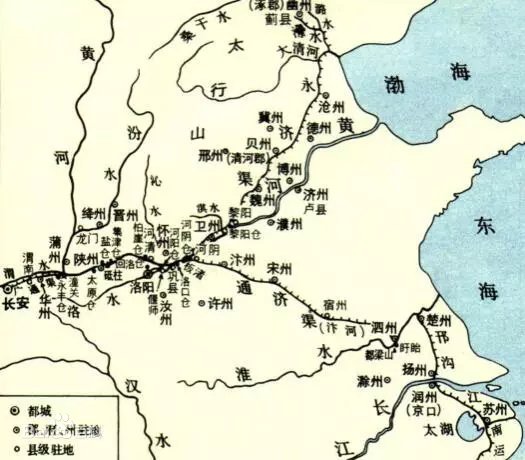
Indication of Tongji Canal in the historical map
What was the grand occasion of the Bianhe River in the Northern Song Dynasty? We can perceive one or two from the famous "Along the River During Qingming Festival".From the Tang Dynasty onwards, the dynasties centered on the Central Plains depended on the supply of rice grains and other agricultural products from the Yangtze River and Huaihe River basins. By the Northern Song Dynasty, most of the rice grains needed by the huge cities were transferred from the Yangtze River to the Huaihe River via the Grand Canal and then to the Bianjiang River. River transport into the capital. In "A River on the Qingming Festival", there are many kinds of boats moored or traveling on the Bian River, such as Caoboats, passenger ships, general cargo ships, cruise ships, passenger and cargo ships, and small boats (miscellaneous ships) for bulk activities. Because of the geographical location of high north and low south and weak wind in the navigable season from May to October, most canal boats have no sails. .
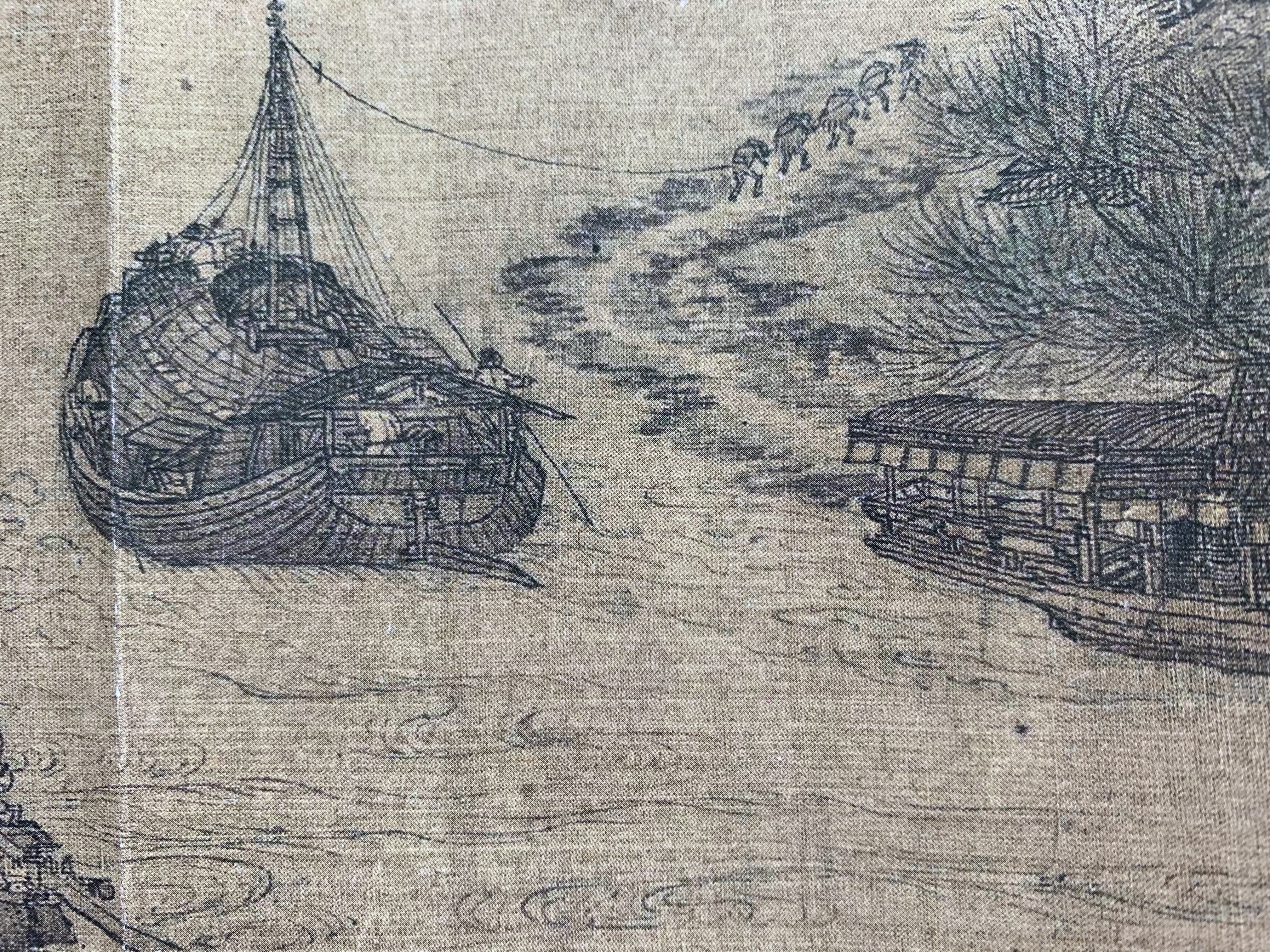
artificially drawn watercraft
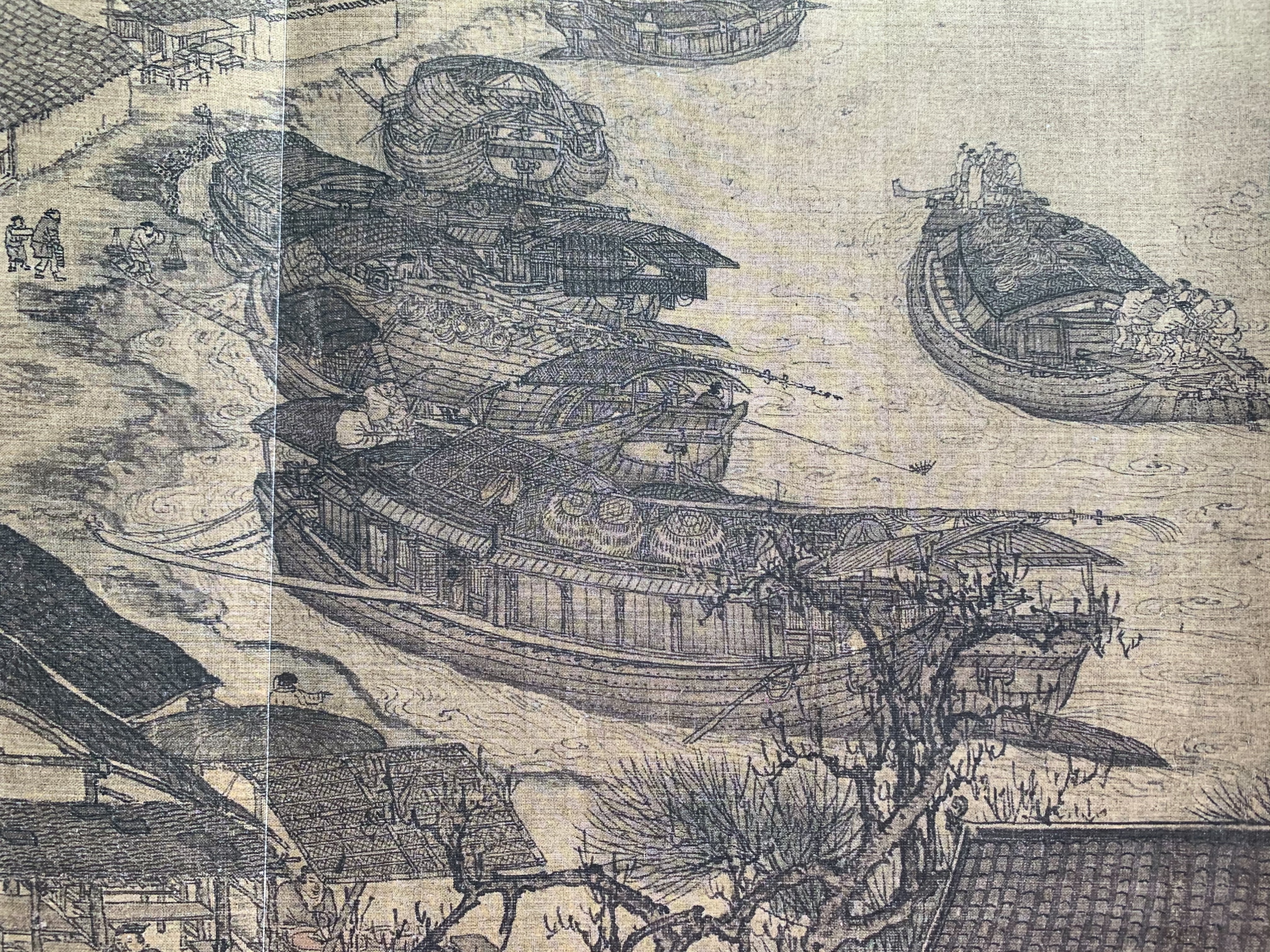
Bianhe boats moored on the shore of the big pier
Zhou Bangyan, a poet of the Northern Song Dynasty, praised the prosperity of Bianjing with the words of Jinli in the "Biandu Fu", in which he also wrote about the transportation of Caoyun in the Northern Song Dynasty: "So from Huai to the south, what the state admires, what the people lose, Jingu Wealth and silk are often adjusted at the age of Festival."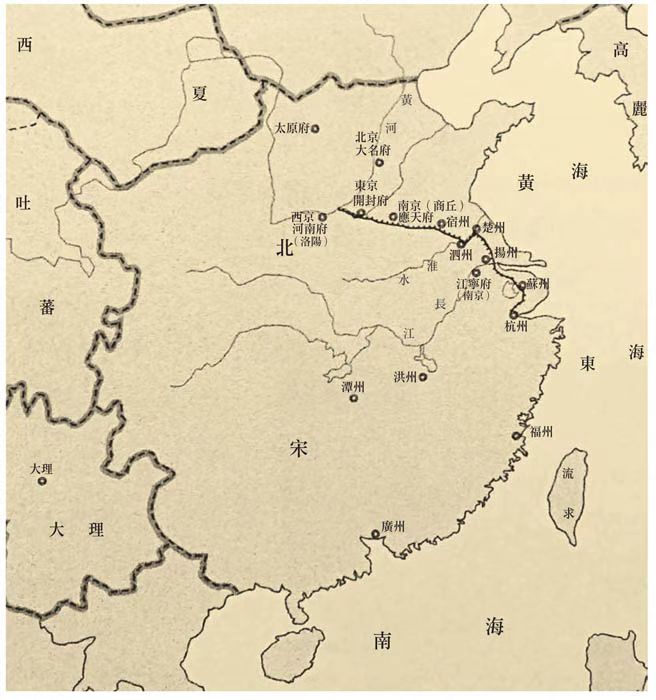
Map of the Territory and Canal in the Northern Song Dynasty
The southern section of the canal, writing down the beauty of the south of the Yangtze RiverRegarding the Grand Canal, there is another picture that has to be said. The Tongzhou District Library has a collection of "The Complete Map of the Beijing-Hangzhou Canal" in the Qing Dynasty, which is a schematic diagram of the surveying and mapping of the Grand Canal, but along both sides of the canal, 13 prefectures such as Suzhou Fu and Shuntian Fu, 50 counties and 12 residences, such as Suzhou Fu and Shuntian Fu, which the canal passes through, are marked in detail along the canal. Each state station is also marked with many sluices and dams and the mileage between them. Today, based on this map, we can "see the map according to the map", and we can clearly understand which places the canal has connected in history.
In the southern section of the Grand Canal, there were the most prosperous cities at that time, such as Huaian, Yangzhou, Gaoyou, Zhenjiang, Suzhou, etc. in the Jiangsu section, as well as Jiaxing, Huzhou, and Hangzhou in Zhejiang Province. These prosperous cities have business and travel exchanges, and the literati and writers have left countless poems.
Taking Yangzhou as an example, in the ninth year of Emperor Kaihuang of Sui Dynasty, Emperor Wen of Sui changed Wuzhou to Yangzhou and ordered to "open up mountains and Yangdu to transport Cao" in Yangzhou, to Emperor Yang of Sui, and then "cross the Jiangnan River, from Jingkou to Yuhang, It is more than eight hundred li and more than ten zhang wide, so that dragon boats can be connected, and the Post Palace, Caodun, and Huiji in the east are placed side by side.” So far, the five major river systems of the Yangtze River, the Yellow River, the Huai River, the Haihe River and the Qiantang River are connected by a grand canal that runs through the north and the south, and Yangzhou has thus become a place where "the north and the south are big, where the department stores gather", the economic and cultural center of the southeast and the center of foreign trade. important port.
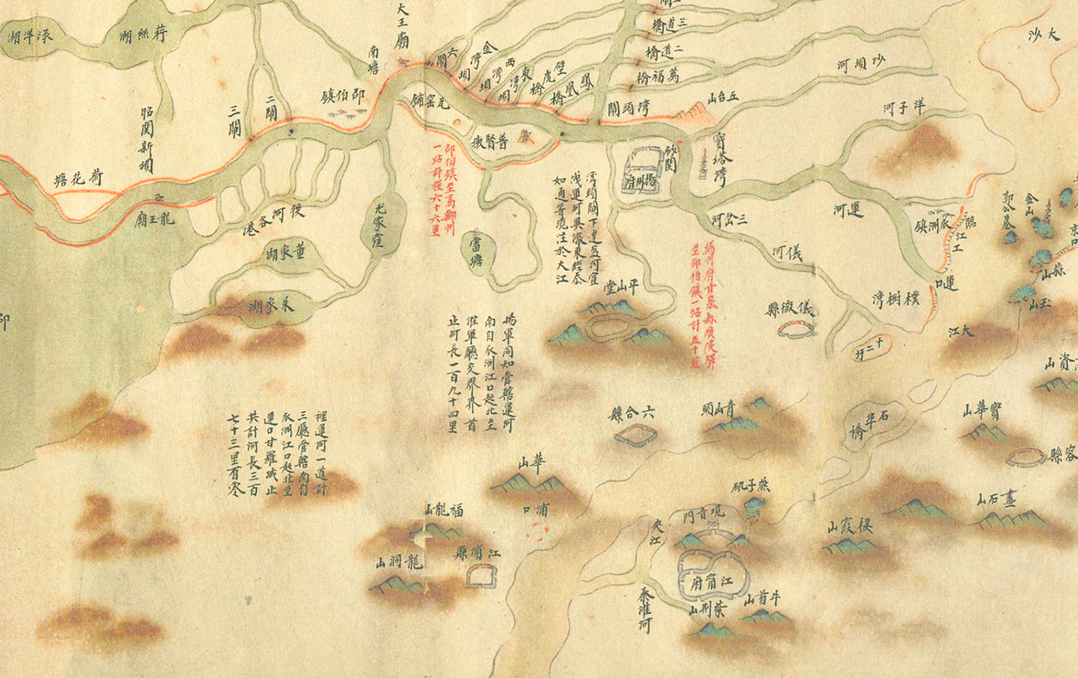
The Yangzhou Palace in "The Complete Map of the Beijing-Hangzhou Canal"
Yangzhou, a city revitalized by the canal, appears prosperous and dreamy in the poet's writings, such as "the old man bids farewell to the Yellow Crane Tower in the west, fireworks go down to Yangzhou in March", "the world is three parts of the moonlit night, and two parts of the rogue are Yangzhou", "the spring breeze is ten miles in Yangzhou." On the road, it is better to roll up the beaded curtain.” “Ten years of dreaming of Yangzhou, and winning the fortunate reputation of a brothel”, “Speaking through the mountains and passing through Chuze, and seeing Yangzhou with shallow and deep mangroves”, “I dream of Jiangnan is good, and the expedition to Liaoning has been lost.” Wait. Zhang Hu, a poet in the Tang Dynasty, also wrote: "The ten-mile-long street is well connected, and the gods can be seen on the Yueming Bridge. Life is only in line with Yangzhou's death. Buried in Yangzhou, this shows his love for this city of canals.Prosperous cities also give birth to high-quality culture. Yangzhou poet Zhang Ruoxu's "Spring River, Flowers and Moonlight Night" is "lonely". Some people say that this poem was written in Guazhou Town, and some people say that it was written in the ancient Qujiang land of Guangling. In short , which is a product of the Yangzhou Canal Cultural Center. There is also the well-known song "Boat on Guazhou": "Between Jingkou and Guazhou, Zhongshan is only separated by several mountains. The spring breeze is on the south bank of the green river, when will the bright moon shine on me?" Wang Anshi wrote for Jiangsu Province Scenery of Guazhou Town, Hanjiang District, Yangzhou City.
The Suzhou section, the Baodai Bridge and Huqiu Mountain that we are familiar with today are marked. Suzhou House is marked with symbols representing the city wall, surrounded by a moat, and even the surrounding rivers and peaks are clearly depicted. On the top of Suzhou Mansion, there is an inscription "One stop from Suzhou Mansion's Gusuyi Station to Wuxi County, a total of ninety miles".
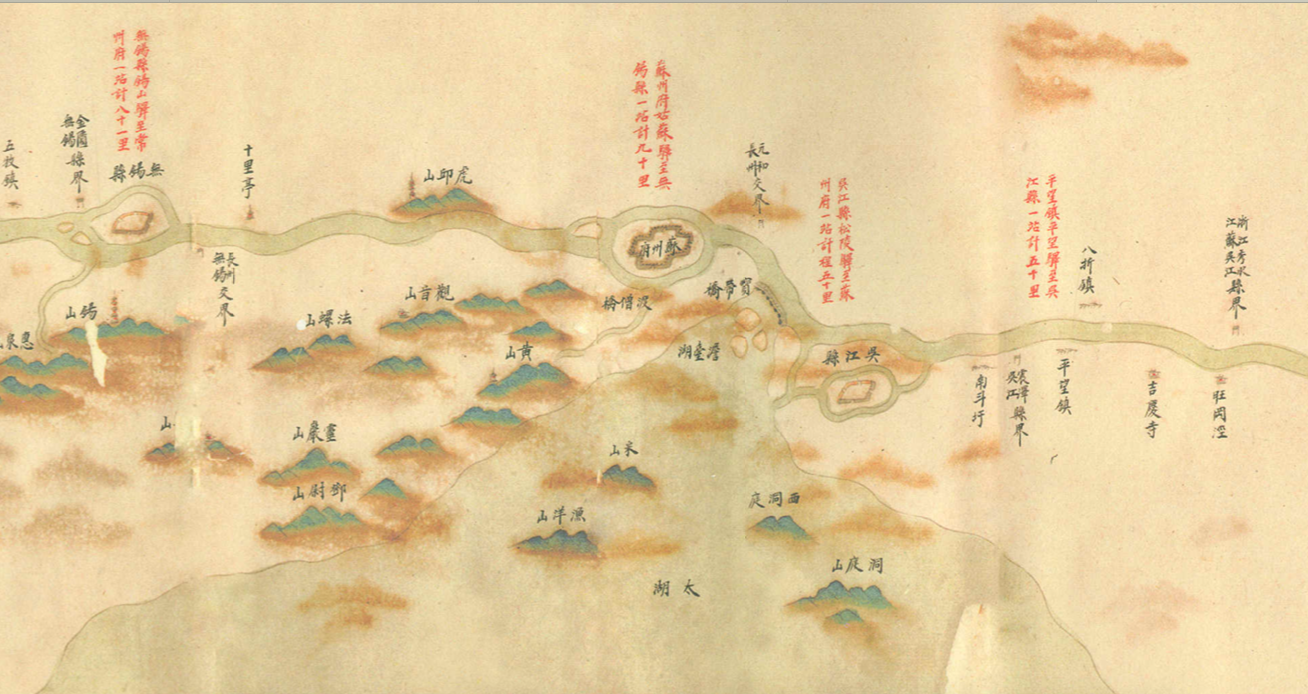
Suzhou House in "The Complete Map of the Beijing-Hangzhou Canal"
The canal seems to be gentle and gentle as it travels to the south of the Yangtze River. The Tang Dynasty poet Zhang Ji wrote in "Night Mooring on the Maple Bridge": "The moon is falling and the sky is full of frost. Passenger ships." Cheng Zhangcan thought: "Only when combined with the background of the Grand Canal, and only in the dynamic night boats, will it be particularly wonderful. The city is getting farther, the mountain temple is getting closer, the sound in the silence, the switching of time and space, Many people's travel experience on the Grand Canal night cruise has been endorsed by this short poem."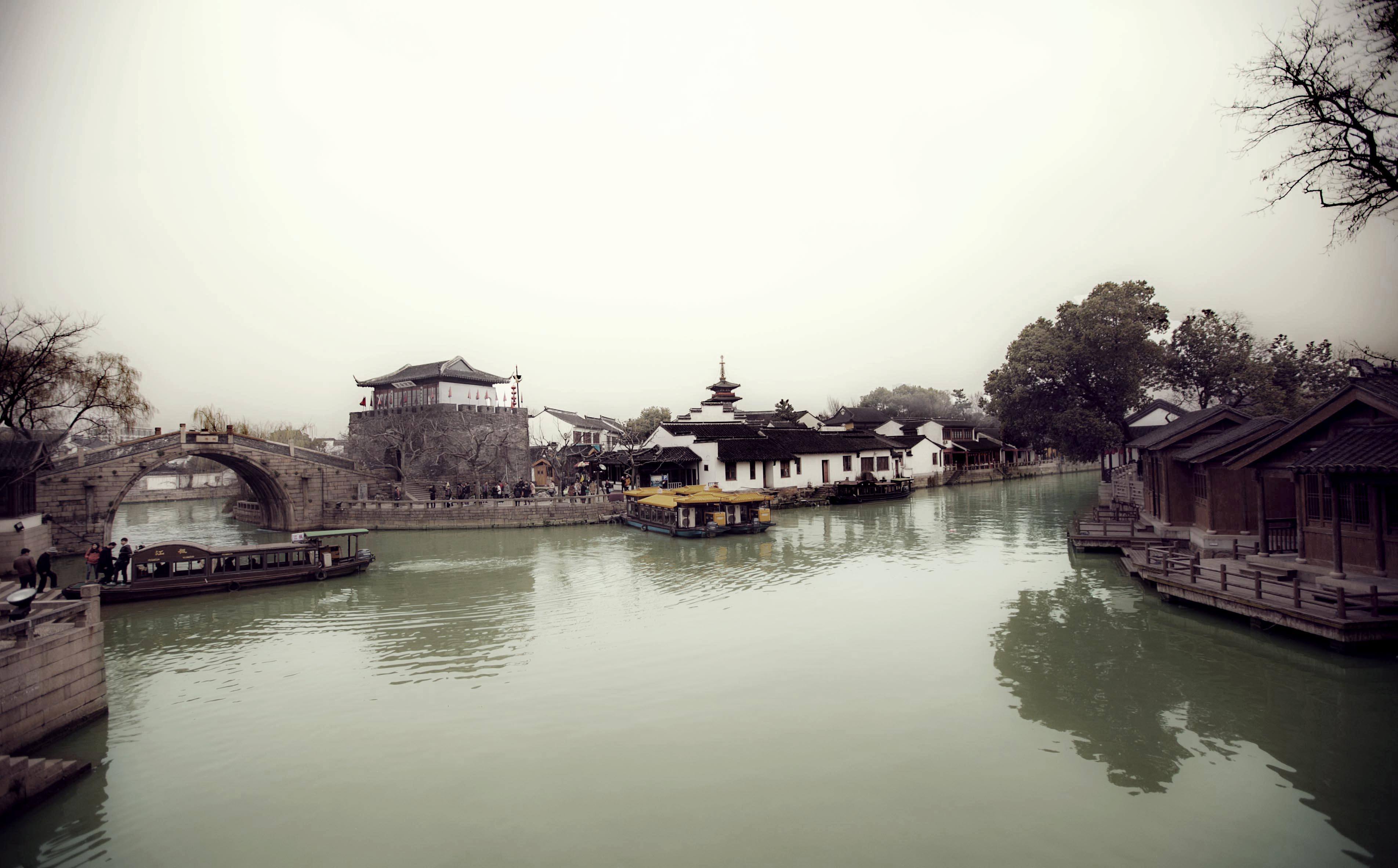
Suzhou Fengqiao Night Park Scenic Spot
Qianlong's Southern Tour and the CanalIn addition to the themes of nostalgic chanting, prison travel, farewell, and other themes related to the Grand Canal, a considerable part of the poems related to the Grand Canal are also entered from the historical and political perspectives at that time. The overthrow of Zuo was associated with the pleasures of the emperor, the huge fortifications of the country, or the use of military force.
The huge canal left in the Sui Dynasty made the Tang Dynasty poets feel panic at first. Emperor Yang of Sui and the canal were bound together, Bai Juyi wrote in "Sui Di Liu": "The domestic financial resources are exhausted at this time, when will the song in the boat stop. It was not long before the ups and downs were in trouble, and the sects and societies were in danger." As the Sui Dynasty became farther and farther away from the current dynasty, the story of Emperor Yang became an allusion and emotion of ancient times, such as Du Mu's "Bian" "He Huaigu" wrote: "The Jin cable dragon boat Emperor Yang of the Sui Dynasty, the platform restored the road to the king of Liang Liang. The tourists are free to think about the previous dynasty, and the "Zhe Liu" is solitary and heartbroken."
Another emperor who was closely related to the canal was Emperor Qianlong, who lived in the sixteenth year (1751), twenty-two years (1757), twenty-seven years (1762), thirty years (1765), and forty years of Qianlong respectively. Five years (1780), forty-nine years (1784), six southern tours.
According to the book "The Court on Horseback", according to Qianlong's first tour, Emperor Qianlong and his concubines traveled by land, via Zhili, Shandong, and northern Jiangsu, to the Yellow River and Dalian in Qinghe County (today's Qingjiang). Canal Junction. Emperor Qianlong inspected the comprehensive water conservancy facilities such as dams, ponds and weirs there. After crossing the Yellow River, Qianlong and his entourage took a boat along the Grand Canal to go to major counties and prefectures, such as Baoying, Gaoyou, and Yangzhou. Just south of Yangzhou, the Royal Boat crossed the Yangtze River and stopped in important cities along the line such as Changzhou, Wuxi, Suzhou, etc., and then arrived in Zhejiang. In Zhejiang, the emperor's party continued south, past Jiaxing House, and then on to the provincial capital, Hangzhou, where Emperor Qianlong held a summons, inspected local troops and toured the city's attractions, including the famous West Lake.
Qianlong's first southern tour was recorded by Qing Dynasty painter Xu Yang with a complete set of 12-volume scrolls called "Qianlong's Southern Tour". A pontoon bridge near Texas crosses the canal. In the picture, the water of the canal is extremely wide.

Part of the second volume of "Qianlong's Southern Tour"
The fourth volume of "Qianlong's Southern Tour" describes the scene of the emperor viewing the fortifications of the Huanghuai River. After the Emperor Qianlong crossed the Yellow River, he inspected the scene of the dangerous project at the confluence of the four major water systems of the Yellow River, Huai River, Canal and Hongze Lake on the same day and the next day. The turbulent waves at the confluence of water systems are a unique landscape for canal fortifications.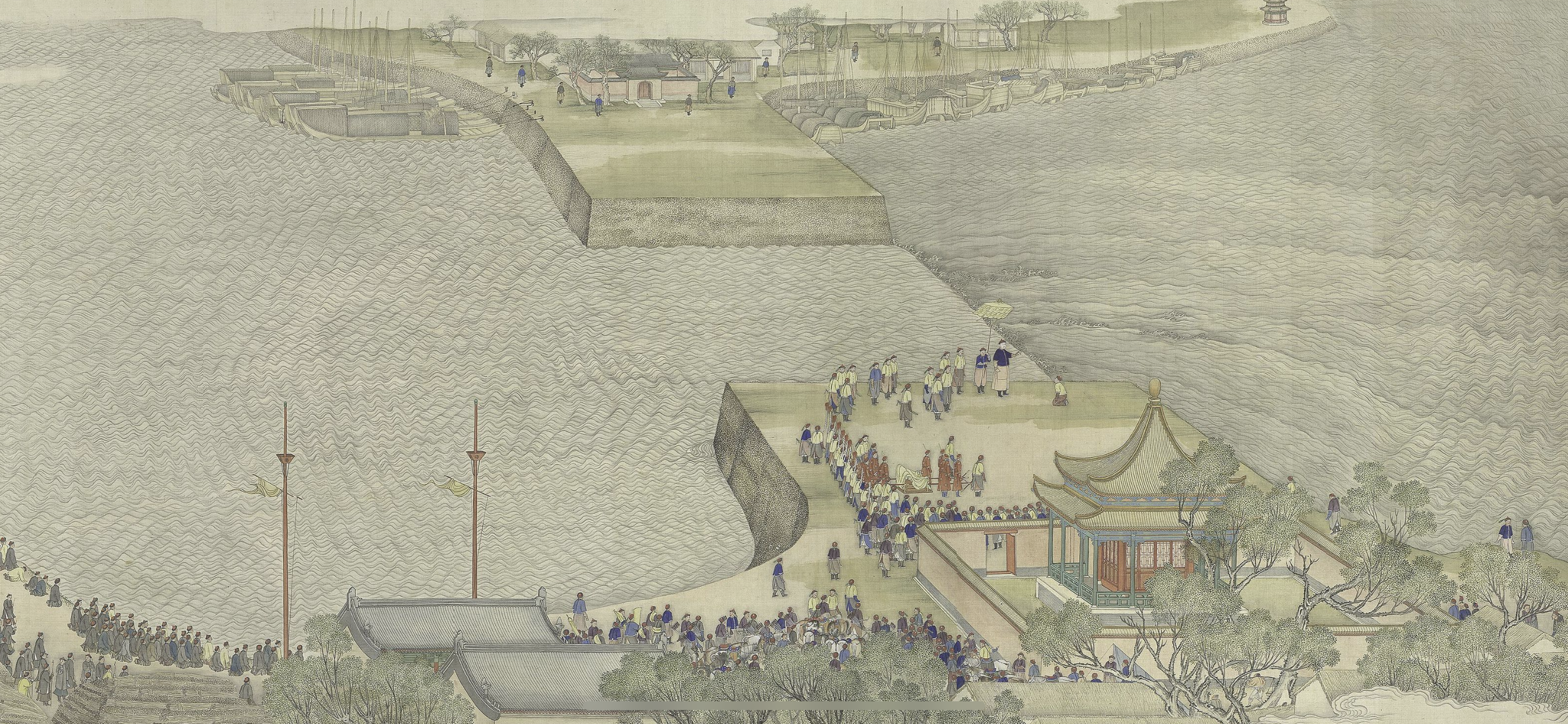
Part of the fourth volume of "Qianlong's Southern Tour"
Qianlong thought it was very important to inspect river engineering and coastal defense, and he recalled in his later years: "Six patrols in Jiangsu and Zhejiang, the importance of people's livelihood, not the river engineering and coastal defense, all the ways to make up for the shortcomings according to the conditions of the times are also hard-working and hard-working. It is important to pay no attention to tens of millions of dollars, and to ensure that it is done once and for all, and that it is a plan for the eternal safety of trillions of lives."The water conservancy projects on the canal have always been the objects of poets' recitation. For example, the Lianhu Gate, an important water conservancy project along the Grand Canal in the Song Dynasty, was opened when the water level of the canal was low. Yang Wanli's "Release the Gates in Lianhu Lake (Part 1)" describes the scene of opening the gates and releasing water: "The sound of thunder in the ears is full of thunder, and the silver waves are seen through the window to open the boat. Only one inch of water is released in the Lianhu Lake, and it jumps into a glacier and snowdrifts."
Some of the content is compiled from:
Chen Zhangcan: Eternal Flows - Preface to "Three Hundred Poems on the Grand Canal"
Miao Jing: Tang Poems and Song Poems and the Grand Canal
Xue Fengxuan: "Across the River During Qingming Festival" and Urbanization in Northern Song Dynasty
Lin Jiling: "Qianlong's Southern Tour and Its Influence on the Canal Area"
Filed under
Three Absolutes in Japanese collections of Chinese art
Poetry, calligraphy, and painting—“three absolutes” explored through Japanese museum holdings.

Biluochun in poetry and Ming tea culture
Poetry and painting ask after Biluochun—Dongting tea in a Ming cup of Jiangnan taste.

Folklore of Poetry and Painting | Third day of March: Orchid Pavilion is repaired, but it is time to go up
Today is the third day of March, the Shangsi Festival, which is an ancient Chinese traditional festival. The ancients offered sacrifices to their ancestors ever...